

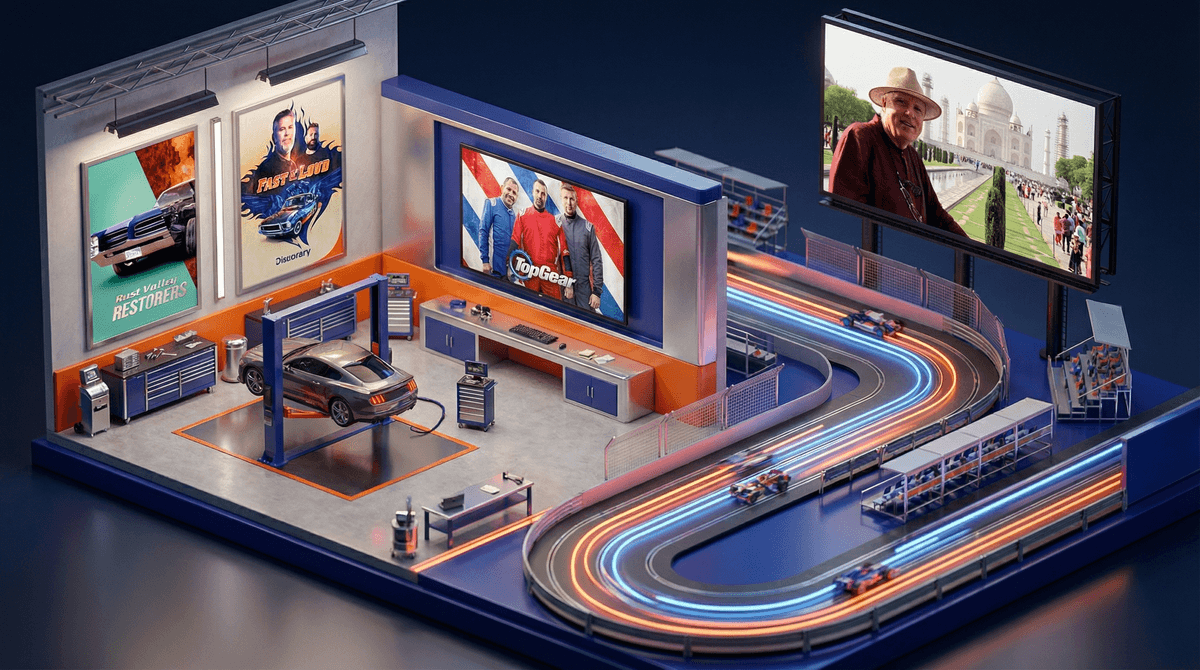
Car TV shows are exactly what they sound like—TV programs centered around automobiles, whether it's building custom hot rods, restoring classics, racing supercars, or just watching charismatic hosts do ridiculous things with vehicles. Think Top Gear, Fast N' Loud, The Grand Tour, and newer entries like Fastest Car on Netflix.
These shows range from educational restoration series where you actually learn about engines and fabrication, to pure entertainment where grown adults crash expensive cars in the name of "science." Some are family-friendly. Others... not so much.
The appeal is universal: cars are cool, speed is thrilling, and watching skilled craftspeople transform a rusted heap into a gleaming machine is genuinely satisfying. But as with any content, not all car shows are created equal when it comes to what your kid should be watching.
Cars are inherently exciting. They're loud, they're fast, they represent freedom and power. For kids who are years away from a driver's license, car shows offer a window into that world.
The transformation element is addictive. Whether it's a restoration show or a custom build, there's something deeply satisfying about seeing a junker become a masterpiece. It's like watching a really long, really expensive craft project.
The personalities matter. Hosts like Richard Rawlings, the Top Gear trio (Clarkson, Hammond, May), or the Diesel Brothers have become celebrities in their own right. Kids connect with their humor, their expertise, and yes, their occasional stupidity.
It can spark genuine interests. Some kids who start watching car shows develop real passions for mechanics, engineering, or design. That's not nothing.
Let's be real: car TV shows exist on a spectrum from "educational and wholesome" to "absolute chaos with questionable decision-making."
The Good: Shows like Rust Valley Restorers or Car Masters: Rust to Riches actually show the work, the problem-solving, and the craftsmanship. Kids can learn about welding, paint jobs, engine mechanics, and business negotiations. There's real educational value here.
The Questionable: Many car shows glorify reckless driving, dangerous stunts, and a "rules don't apply to us" mentality. Top Gear, while entertaining, has literally been criticized for environmental insensitivity and occasionally dangerous on-screen behavior. The Grand Tour continues this tradition with bigger budgets and more explosions.
The Actually Problematic: Some shows feature constant profanity (even if bleeped), sexist commentary about "car girls," toxic masculinity energy, and a complete disregard for safety. Street Outlaws, for example, literally glorifies illegal street racing. That's... not great for impressionable kids.
Ages 5-8: Stick with animated car content like Cars or Blaze and the Monster Machines. Real car shows at this age are likely too intense or boring (lots of waiting around for paint to dry).
Ages 9-12: This is when real car shows can work, but be selective. Rust Valley Restorers, Car Masters, and Hyperdrive (a Netflix obstacle course racing show) are relatively family-friendly. Watch together and skip the episodes with excessive drama or sketchy behavior.
Ages 13+: They can probably handle Top Gear/Grand Tour's humor and occasional mayhem, but it's worth having conversations about the difference between entertainment and real-world consequences. Street racing is illegal for a reason. Crashing cars for laughs is only possible because of extensive safety equipment and professional stunt coordinators.
These shows can be surprisingly expensive to love. If your kid gets really into cars, you might find yourself funding model kits, Remote Control cars, go-karting, or eventually (gulp) actual car projects. Have a conversation about realistic expectations.
The culture around car shows can be... a lot. Online car communities can veer into gatekeeping, sexism, and toxic behavior. If your kid is engaging with car content online, check in occasionally about what they're seeing in comments and forums.
The environmental angle is real. Many car shows celebrate gas-guzzling, pollution-spewing vehicles without acknowledging climate impact. That doesn't mean your kid can't enjoy them, but it's worth contextualizing. "Yes, that 1969 Charger is beautiful, but let's also talk about why we drive a hybrid."
Some shows are better than others for learning. If your kid is genuinely interested in how cars work, steer them toward shows that actually explain the mechanics rather than just showing the finished product. Mighty Car Mods on YouTube is excellent for this—they show real DIY projects with explanations.
Watch together when possible. Car shows are actually great co-viewing content. You can talk about what's realistic vs. Hollywood, discuss the business decisions being made, or just enjoy some quality time watching people do cool stuff with cars.
Car TV shows aren't inherently good or bad—they're a mixed bag that requires some parental curation. The best ones can inspire genuine interest in engineering, design, and craftsmanship. The worst ones glorify dangerous behavior and perpetuate some less-than-great cultural attitudes.
Start with the more wholesome options like Rust Valley Restorers or Car Masters, watch together, and gauge your kid's interest and maturity level. If they're just in it for the speed and crashes, maybe redirect to Formula 1: Drive to Survive, which has all the drama and racing but within the context of professional motorsports.
And hey, if this becomes a real passion? There are worse things than a kid who wants to learn about mechanics and engineering. Just maybe keep them away from Street Outlaws until they're old enough to understand why illegal street racing is a terrible idea.
- Browse age-appropriate car content on our car shows guide
- Set viewing boundaries around which shows are okay and which need to wait a few years
- Follow up with hands-on activities like model building or a trip to a car museum if their interest is genuine
- Check out alternatives to car shows if you want similar energy with different content