

Look, we all remember middle school. The desperate need to fit in, the friend group drama, that horrible feeling when everyone else got invited to the party except you. Now imagine navigating all of that while also managing group chats, social media, and the pressure to have the "right" everything.
Books that help kids navigate social pressures are stories that tackle the real emotional work of growing up: handling peer pressure, dealing with friendship conflicts, standing up for yourself, and figuring out who you are when everyone seems to have opinions about who you should be. These aren't preachy after-school specials in book form—they're compelling stories that happen to give kids language and frameworks for the social challenges they're facing.
The best ones? Kids don't even realize they're learning. They're just reading about characters who feel real, facing situations that feel familiar, and maybe—just maybe—picking up some tools along the way.
Here's the thing: social pressures haven't gotten simpler. They've multiplied.
Your kid isn't just managing face-to-face dynamics at school. They're also navigating Discord servers, Roblox friend groups, and whether posting that selfie will get the "right" reaction. The social stakes feel higher, the audience is bigger, and the evidence (screenshots, anyone?) lives forever.
Research shows that social-emotional learning through literature actually works. When kids read about characters facing tough choices, their brains light up similarly to when they experience those situations themselves. They're essentially getting practice runs at hard conversations and difficult decisions in a safe space.
Plus, books give you something concrete to talk about. Instead of "how was school?" (fine) followed by silence, you can ask "do you think Auggie should have told the principal about Julian?" Suddenly you're having a real conversation about bullying, loyalty, and when to ask adults for help.
Elementary (Ages 6-10)
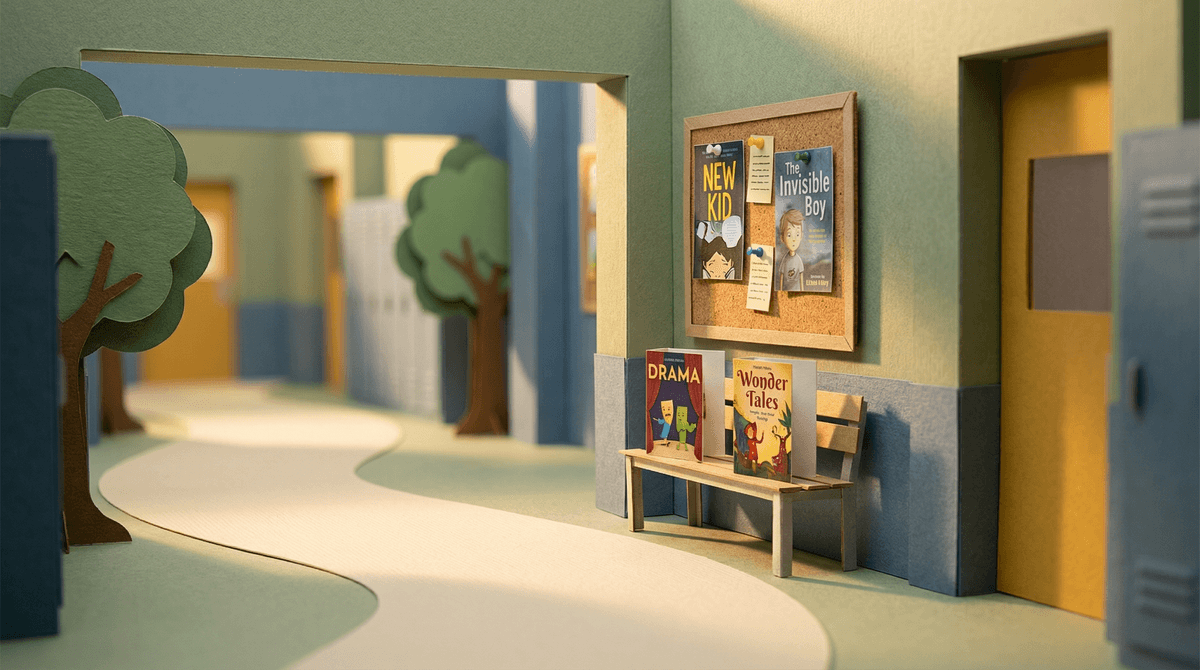
The Invisible Boy by Trudy Ludwig - Perfect for younger kids learning about inclusion and noticing who gets left out. Brian feels invisible at school until a new kid shows him kindness. Great for talking about how small actions matter.
Wonder by R.J. Palacio - The gold standard for elementary social pressures. Auggie has a facial difference and just wants to be treated like a normal kid. Multiple perspectives show how the same situation looks different to everyone involved. Warning: you will cry.
Each Kindness by Jacqueline Woodson - A tough one because the main character doesn't get a redemption arc. Maya regrets not befriending the new girl, and then it's too late. Powerful for discussing missed opportunities and how our choices affect others.
Chrysanthemum by Kevin Henkes - For the younger set dealing with teasing about being different. Chrysanthemum loves her name until kids at school make fun of it. Classic for a reason.
Middle Grade (Ages 9-13)
The Crossover by Kwame Alexander - Basketball, family, and what happens when your twin brother gets a girlfriend and suddenly you're not the center of his universe. Verse novel format makes it accessible even for reluctant readers.
New Kid by Jerry Craft - Graphic novel about Jordan, one of the few kids of color at his fancy private school. Navigating code-switching, microaggressions, and finding your people. Funny and real.
Smile by Raina Telgemeier - Raina falls and damages her front teeth right before starting middle school. The dental drama is just the backdrop for friendship betrayals, fitting in, and figuring out who your real friends are. Any of Telgemeier's graphic novels work here—Drama and Sisters are also excellent.
The Hundred Dresses by Eleanor Estes - An older classic about bullying and bystander behavior. Wanda claims to have 100 dresses at home, and the other girls mock her. The guilt that follows is real and important.
Fish in a Tree by Lynda Mullaly Hunt - Ally has been hiding that she can't read, using behavior problems to deflect. About learning differences, yes, but also about the masks we wear and finding people who see the real you.
Young Adult (Ages 12+)
Speak by Laurie Halse Anderson - Melinda stops speaking after a traumatic event at a party. Heavy content (sexual assault) but incredibly powerful about finding your voice and the cost of silence. Read it yourself first and decide if your kid is ready.
The Hate U Give by Angie Thomas - Starr witnesses her friend's death at the hands of police. About code-switching between her neighborhood and her fancy school, speaking up when it's dangerous, and the pressure to be a perfect victim. Essential reading.
Eleanor & Park by Rainbow Rowell - Two misfits fall for each other on the school bus in 1986. About finding someone who gets you when you don't fit anywhere else. Some mature content but beautifully done.
They Both Die at the End by Adam Silvera - In a world where you get a call on your last day alive, two strangers find each other. Sounds dark but it's really about living authentically and what matters when time is limited. Great for discussing FOMO and social media performance.
Read together or separately, but talk together. You don't have to do a full book club (though some families love that). But checking in with "where are you in the book?" and "what do you think about X?" opens doors.
Ask open-ended questions. Not "was that character right or wrong?" but "what would you have done?" or "why do you think she made that choice?"
Connect to their world without being obvious. "This reminds me of when friend groups split up in 5th grade" works better than "IS THIS HAPPENING TO YOU RIGHT NOW??"
Let them see you reading too. Whether it's their book or your own, modeling that reading matters and books help us understand people is powerful.
Don't force the lesson. Sometimes a good story is just a good story. The processing happens internally, and that's okay.
These books can be emotional. Kids might cry, get angry, or want to talk about their own experiences. Make space for that. Some of these stories will hit closer to home than you expect.
Content warnings matter. Books dealing with bullying, exclusion, or trauma can be triggering. Many of these books have content guides online—Find specific content warnings for any title.
Representation matters differently to different kids. Some kids need mirrors (seeing themselves in stories), others need windows (seeing different experiences). Both are valuable. Pay attention to what your kid gravitates toward.
Graphic novels and verse novels count. If your kid will read Smile but won't touch a traditional novel, that's a win. The format doesn't matter; the engagement does.
The "right" book timing is real. A book that bounces off a 10-year-old might be perfect for that same kid at 12. Don't force it, but also don't be afraid to reintroduce titles later.
Books aren't going to solve all your kid's social problems. They're not going to prevent hurt feelings or friendship drama or that inevitable moment when they realize their friend group is shifting.
But they can give your kid language for what they're feeling, examples of different ways to handle hard situations, and the reassurance that other people—even fictional ones—have survived this too.
In a world where so much of kids' social lives happen through screens and can feel performative and permanent, books offer something different: a private space to explore messy feelings, practice empathy, and figure out who they want to be when the pressure is on.
Start with one book. Pick something age-appropriate that connects to what your kid is dealing with (or might deal with soon). Your librarian is your friend here—they know which books kids are actually reading and can recommend based on your child's interests.
Make it available, not required. Put it on their nightstand, mention it casually, or listen to the audiobook in the car. Sometimes the less pressure, the more likely they'll pick it up.
Get recommendations based on your kid's specific age, interests, and what they're navigating right now.
Check out your library's digital options. Many kids will read on a device when they won't pick up a physical book. Libby and other library apps make this easy.
Remember: you're not trying to fix your kid or prevent them from ever feeling uncomfortable. You're giving them tools, language, and the knowledge that navigating social pressures is hard for everyone—and that's actually part of growing up.