

Look, we all want our kids to grow up believing they're capable, worthy, and able to handle whatever life throws at them. But between social media comparison culture, academic pressure, and the general chaos of growing up, that's getting harder.
Here's the thing though: the right books can actually help. Not in a cheesy "you're special just because" way, but through stories where characters face real challenges, make mistakes, learn resilience, and discover their own strengths. Books let kids see themselves in characters who struggle and succeed, who feel different and find belonging, who mess up and keep going anyway.
This isn't about handing your kid a self-help book and calling it done. It's about choosing stories—fiction and non-fiction—that naturally build confidence, normalize struggle, and show that self-worth comes from within, not from likes or grades or being the best at everything.
Self-esteem isn't just feel-good stuff. Kids with healthy self-esteem are more likely to:
- Try new things even when they're scared
- Bounce back from failure instead of spiraling
- Stand up for themselves and others
- Resist negative peer pressure
- Handle social media comparison without falling apart
And honestly? In 2026, when kids are constantly comparing themselves to curated highlight reels and AI-generated "perfect" everything, building genuine self-worth is basically a survival skill.
Books are uniquely powerful here because they work slowly and deeply. Unlike a pep talk that bounces off a kid's defenses, a story sneaks past the walls. Your kid identifies with a character, lives through their journey, and absorbs lessons without feeling lectured.
Ages 3-7: Building the Foundation
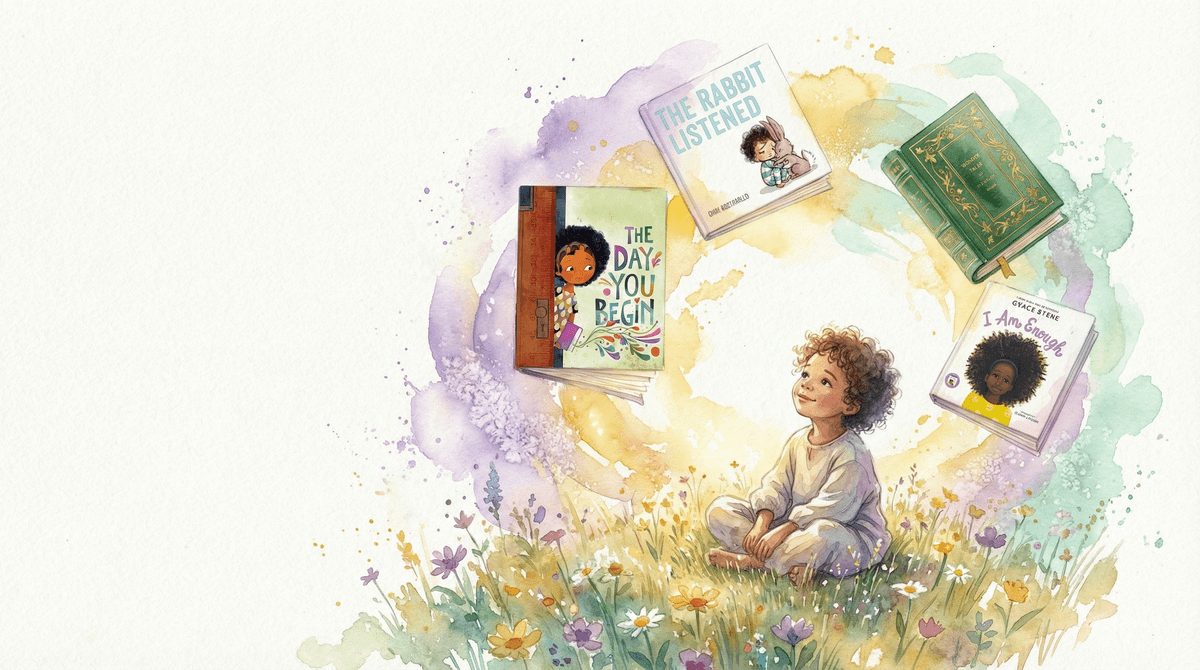
The Rabbit Listened by Cori Doerrfeld
This one's perfect for little kids learning that their feelings matter and sometimes you just need someone to listen. Simple, powerful, no toxic positivity.
I Am Enough by Grace Byers
Yes, it's a picture book that literally says "you are enough," but it works because the illustrations are gorgeous and the message is grounding rather than empty. Kids this age need that direct affirmation.
The Day You Begin by Jacqueline Woodson
About feeling different and finding the courage to share your story anyway. Beautiful for kids who feel like outsiders, which is basically every kid at some point.
Ages 8-12: Navigating Real Challenges
Wonder by R.J. Palacio
If your kid hasn't read this yet, now's the time. Auggie's journey with facial differences is about way more than appearance—it's about choosing kindness, finding real friends, and defining yourself on your own terms. This book has launched a thousand conversations about empathy and self-acceptance.
Fish in a Tree by Lynda Mullaly Hunt
For any kid who's ever felt "stupid" because they learn differently. Ally has dyslexia and thinks she's dumb until a teacher helps her see her actual brilliance. This one's huge for kids with learning differences or anyone who doesn't fit the traditional "good student" mold.
The Confidence Code for Girls by Katty Kay and Claire Shipman
Not a novel, but a genuinely useful book for girls (roughly ages 9-14) about building real confidence through action, not affirmation. It's research-based but totally readable, with quizzes and activities that actually work.
New Kid by Jerry Craft
A graphic novel about Jordan, one of the few kids of color at a fancy private school. It's funny and real about navigating different worlds, code-switching, and staying true to yourself. Perfect for any kid dealing with feeling like they don't quite fit.
Ages 13+: The Deep Work
The Perks of Being a Wallflower by Stephen Chbosky
Heavy topics (trauma, mental health, identity), but incredibly powerful for teens working through their own stuff. Charlie's journey toward self-acceptance and healing resonates deeply. Note: Read this yourself first if your kid is on the younger end of this range.
Speak by Laurie Halse Anderson
About finding your voice after trauma. It's tough but essential, especially for teens learning that their voice matters and silence isn't safety. This book has helped countless kids find the courage to speak up about their own experiences.
The Hate U Give by Angie Thomas
Starr finds her voice and her power after witnessing police brutality. It's about code-switching, activism, and learning that your voice matters even when (especially when) speaking up is scary.
Not every book will land. Your kid might bounce off a recommendation that's "supposed" to help. That's normal. Try another. Self-esteem building through reading isn't one-size-fits-all.
Representation matters intensely. Kids need to see themselves in books—their race, their family structure, their challenges, their interests. A book about a kid who looks like them, lives like them, or struggles like them will hit different than even the most beautifully written story about someone else.
Don't make it homework. If you hand your kid a book and say "this will help your confidence," they'll run screaming. Just leave it on their nightstand. Mention casually that you heard it's good. Let them discover it on their own terms.
Talk about the books (if they'll let you). "What did you think about how [character] handled that?" goes a lot further than "What did you learn?" Let the conversation be genuine, not a quiz.
Series can be powerful. Sometimes a kid needs to live with a character through multiple books to really internalize the lessons. Percy Jackson is huge for kids with ADHD and dyslexia. Diary of a Wimpy Kid (yes, really) helps kids laugh at social awkwardness instead of drowning in it.
Books won't magically fix low self-esteem, but they're one of the most powerful tools we have. They work slowly, building empathy and resilience page by page. They show kids they're not alone in their struggles. They model what courage and self-acceptance actually look like.
The goal isn't to turn your kid into a confident extrovert who never doubts themselves. It's to help them develop a solid internal foundation—a sense that they're fundamentally okay, capable of growth, and worthy of belonging, even when things are hard.
Start with one book. Don't overwhelm them with a whole stack. Pick one that matches where they are right now—their age, their interests, their current challenges.
Check out your library. Most of these books are available at your local library, and librarians are amazing at recommendations if you tell them what you're looking for.
Consider audiobooks. Some kids absorb stories better by listening, especially if reading feels like work. Audible and Libby both have huge kids' sections.
Make reading social. Book clubs, reading with siblings, or even just texting about a book with a friend can amplify the impact.
And if you want more personalized recommendations based on your specific kid's age, interests, and challenges, find more recommendations —it can dig deeper into exactly what might work for your family.