

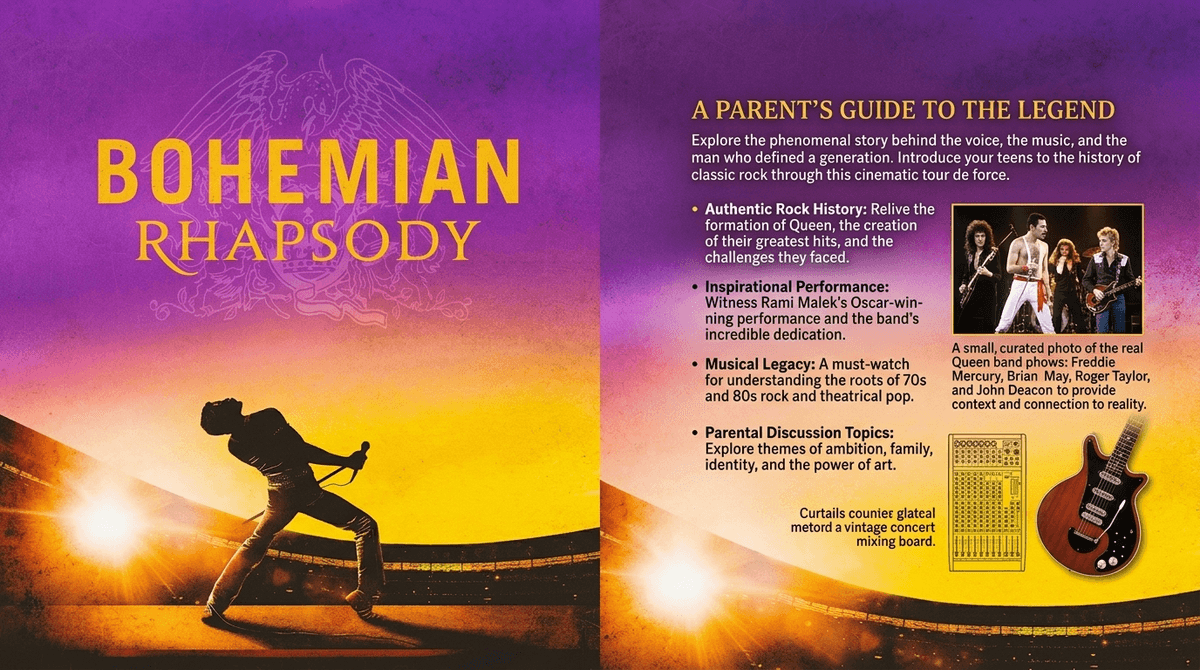
Bohemian Rhapsody is the ultimate "starter biopic" for kids—it’s flashy, the music is undeniable, and while it’s rated PG-13 for some "rockstar lifestyle" moments, it’s far more sanitized than the actual history of Queen, making it a relatively safe bet for the middle school crowd.
TL;DR: Bohemian Rhapsody is a high-energy, crowd-pleasing introduction to Freddie Mercury that is appropriate for most kids aged 12 and up. While it touches on drug use, sexuality, and the AIDS crisis, it stays firmly within PG-13 boundaries by focusing more on the music than the grit. If you’re looking for a deeper dive into music history without the R-rated intensity of Rocketman, this is your best pick.
If you haven't seen it yet, Bohemian Rhapsody is the 2018 film that follows the meteoric rise of the band Queen and their iconic lead singer, Freddie Mercury. It culminates in the 1985 Live Aid performance, which is widely considered one of the greatest live shows in rock history.
In 2026, we’re currently in the middle of a massive Queen revival because the song "Bohemian Rhapsody" just hit its 50th anniversary. Between the anniversary tours and the song’s permanent residence in TikTok trends, your kids are likely hearing this music everywhere. The movie is essentially a two-hour music video with some plot sprinkled in, which makes it very digestible for a generation raised on short-form content.
Kids are drawn to this movie for the same reason we were drawn to the music: it’s unapologetically loud, weird, and theatrical.
- The "Underdog" Energy: The movie frames Queen as a group of "misfits playing for the misfits," a theme that hits hard during the middle school years when everyone feels like they don't quite fit in.
- The Creative Process: Seeing how they recorded the opera section of the song—with the "Galileos" and the literal kitchen sink approach—is genuinely fun and might even inspire a kid to mess around with GarageBand.
- The Live Aid Finale: The last 20 minutes of the movie is a near-perfect recreation of the Live Aid set. It’s pure adrenaline, and even kids who "hate old music" usually find themselves tapping along.
As intentional parents, we need to look past the PG-13 label and see what’s actually on the screen. According to Screenwise’s analysis of community data, most parents feel comfortable showing this to 11- or 12-year-olds, but here is what you should be prepared for:
Substance Use
There is plenty of "rockstar behavior" here. You’ll see characters drinking heavily and smoking constantly (it was the 70s, after all). There are scenes depicting drug use—mostly cocaine—though it’s often implied or shown in the background of parties rather than being the central focus of a "don't do drugs" PSA. It’s presented as part of Freddie’s downward spiral into isolation, which provides a good opening for a conversation about how fame and pressure can lead to some pretty poor coping mechanisms.
Sexuality and Identity
The movie handles Freddie Mercury’s sexuality with a bit of a "soft touch." It shows his long-term relationship with Mary Austin and his later realization that he is gay. There are scenes of men flirting, some kissing, and Freddie’s eventual relationship with Jim Hutton. For most 2026 families, this is standard stuff, but it’s worth noting that the film has been criticized for being a bit "straight-washed" to keep that PG-13 rating.
Language
Expect a fair amount of profanity, including a few uses of the "F-word" and various other colorful British insults. It’s nothing worse than what they’re hearing on YouTube or in a typical Marvel movie, but it’s definitely not a Disney flick.
Let’s be real: as a piece of cinema, Bohemian Rhapsody is kind of a mess. It plays fast and loose with historical facts—like moving the date Freddie found out he had AIDS just to make the Live Aid scene more dramatic. If you're a hardcore Queen fan, the inaccuracies might drive you crazy.
However, for a 13-year-old who just discovered "Another One Bites the Dust" on Spotify, it’s a blast. Rami Malek’s performance is incredible, and the music is mixed so well that it demands a good soundbar. It’s "popcorn history"—not a documentary, but a great way to spend a Friday night.
Instead of worrying about whether the movie is "appropriate," use it as a bridge to talk about some real-world stuff:
- The Price of Fame: Talk about how Freddie’s "friends" in the movie treated him when he was at his most successful versus when he was at his lowest. How do we tell the difference between a real friend and someone who just wants to be around the "cool" kid?
- The AIDS Crisis: The movie ends before Freddie’s death, but it touches on his diagnosis. This is a natural entry point to talk about the history of the 1980s and how much medical science (and social stigma) has changed since then.
- Creative Perseverance: Queen was told "Bohemian Rhapsody" was too long and would never be a hit. Ask your kid: "Is there something you love doing that other people think is weird or 'too much'?"
If your kid finishes the movie and suddenly wants to be a rockstar, here are a few Screenwise-approved next steps:
- Watch the Real Live Aid: Go to YouTube and watch the actual 1985 Queen performance. It’s fascinating to see how closely the movie copied the real thing.
- Explore Other Biopics: If they liked the vibe but want something a bit more modern, Elvis is another flashy PG-13 option. If they are older (16+) and you’re okay with R-rated content, Rocketman is a much more creative and honest look at Elton John.
- Learn the Instruments: If the drumming caught their eye, maybe it’s time to look at Yousician or a local music school.

Q: Is Bohemian Rhapsody okay for a 10-year-old?
It depends on your kid’s maturity, but Screenwise generally recommends waiting until 12. While there’s no graphic violence or nudity, the themes of illness, drug use, and complex adult relationships might be a bit heavy or just plain boring for a younger child.
Q: How much of the movie is actually true?
About 60-70%. The filmmakers changed a lot of the timeline to make the story "flow" better. For example, the band didn't actually break up right before Live Aid, and Freddie wasn't the only one who did a solo album. It’s a "based on a true story" movie, not a textbook.
Q: What are the specific content warnings for Bohemian Rhapsody?
The main things to watch for are thematic elements involving the AIDS crisis, scenes of partying and drug use (cocaine/pills), and a moderate amount of profanity. There is also a scene where a character is physically ill, which might be upsetting for sensitive viewers.
Bohemian Rhapsody is a fantastic family movie night choice if you have middle or high schoolers. It’s a celebration of creativity and one of the most unique voices in music history. Just make sure you’re ready to hear the "Galileo" part of the song on repeat for the next three weeks.
Check out our guide on the best music documentaries for families