

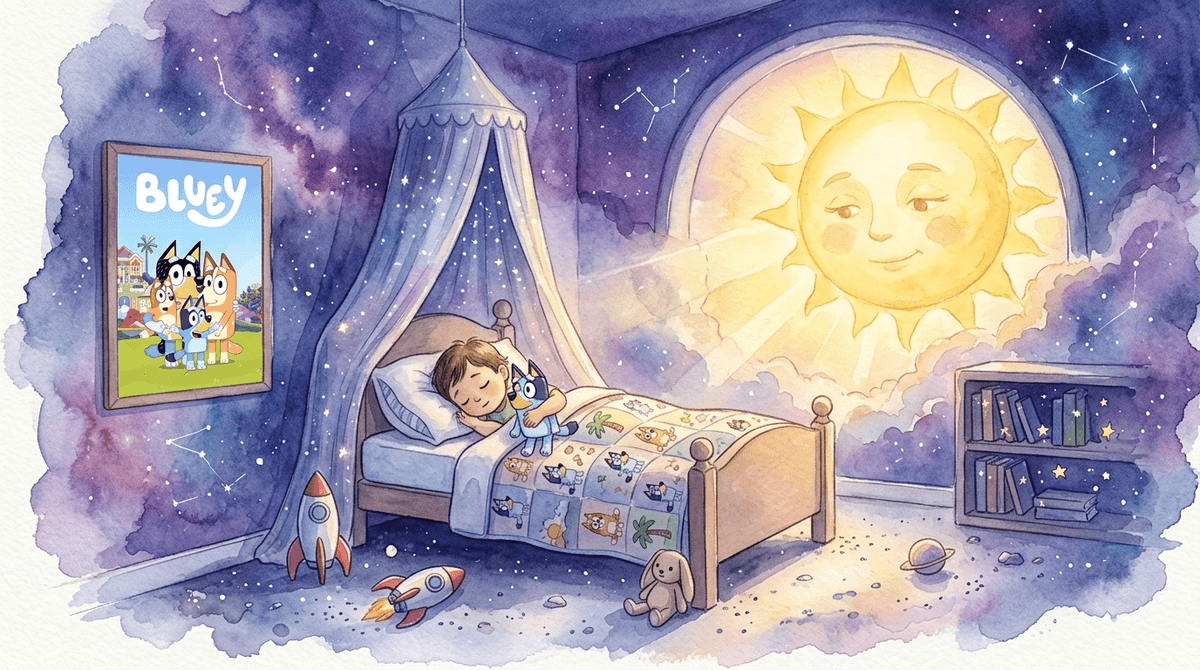
TL;DR: Bluey is already the gold standard for modern parenting media, but the episode "Sleepytime" is a seven-minute masterpiece that tackles the high-stakes emotional transition of a child sleeping in their own bed. It uses a galactic metaphor to turn a stressful developmental milestone into a beautiful, confidence-building journey. If you’re struggling with the "musical beds" routine at 2:00 AM, this episode is your new best friend.
Quick Links for Bedtime Success
- The Show: Bluey (available on Disney+)
- The Vibe: Puffin Rock (another low-stimulus "calm" show)
- The Tool: Moshi Stories (audio-only bedtime help)
- The Guide: How to handle bedtime anxiety
If you haven't seen it yet, "Sleepytime" (Season 2, Episode 26) is widely considered one of the best episodes of television ever made—and I’m not just talking about "kids' TV." It’s a largely wordless journey that follows Bingo as she dreams of traveling through the solar system.
While Bingo is navigating the cosmos with her stuffed bunny, Floppy, the "real world" shows the chaotic reality of a family of four trying to get through the night. There’s kicking, there’s snoring, there’s a dad (Bandit) being used as a human pillow, and there’s the relentless quest for a glass of water.
But the heart of the episode is Bingo’s transition from needing her mom’s bed to being a "big girl" and sleeping in her own. It’s set to a rearranged version of Gustav Holst’s "Jupiter" from The Planets, and honestly, if you don't have a lump in your throat by the end, you might be a robot.
We talk a lot about "brain rot" in the digital wellness world—those high-speed, neon-colored YouTube videos that leave kids overstimulated and cranky. Bluey is the literal opposite of that.
"Sleepytime" matters because it validates the emotional weight of nighttime for a child. To us, it’s just a bed. To a four-year-old, moving away from the "Sun" (Mom) to sleep on their own cold planet is a massive, slightly terrifying leap of faith.
The Metaphor of the Sun
In the dream, Chili (Mom) is the Sun. She is the source of all warmth and light. When Bingo is shivering on a cold planet in the dark, she looks toward the Sun. The episode ends with Chili telling Bingo, "Remember, I'll always be here, even if you can't see me, because I love you."
This isn't just "cute." This is attachment theory in action. It gives kids a mental image to hold onto when they wake up at 3:00 AM and feel alone. They aren't just "in a room"; they are in their own orbit, but still warmed by the love of their parents.
Check out our guide on how Bluey models gentle parenting
In a world of Skibidi Toilet and Roblox "obby" videos that move at 100 miles per hour, "Sleepytime" is a masterclass in pacing.
- Low Stimulus: The colors are deep purples and oranges; the music is orchestral and sweeping, not jarring.
- Emotional Intelligence: It teaches kids to name the "big feelings" of loneliness and independence.
- Co-Viewing Gold: This is one of those rare pieces of media where parents actually want to watch with their kids. It starts a conversation rather than just numbing the brain.
Learn more about the difference between high-stimulus and low-stimulus media
If your kid is currently in a "Sleepytime" phase and you want to build on that nighttime confidence without resorting to mindless scrolling, here are a few Screenwise-approved picks:
This is the ultimate "wind down" show. Narrated by Chris O'Dowd, it’s beautiful, slow, and educational. It’s perfect for the 20 minutes before the iPad goes away for the night.
If you want to move away from screens entirely (which we highly recommend for the hour before bed), Moshi is incredible. It’s an audio app designed specifically to help kids fall asleep using "sleepy" logic and melodic storytelling.
Like Bluey, this show is gentle and centers on the simple wonders of a child’s world. It doesn't rely on "bad guys" or loud noises to keep attention.
They have a whole section of "Sleep Stories" for kids, including some narrated by celebrities. It’s a great way to transition from "active" brain time to "rest" brain time.
- Ages 2-4: They will love the colors and the "bunny" (Floppy). This is the prime age for using the episode to talk about staying in their own bed.
- Ages 5-7: They’ll start to understand the metaphor. You can talk about the planets and the idea that Mom and Dad are "always there" even when the lights are out.
- Ages 8+: Honestly? Even older kids (and adults) find this episode moving. It’s a great entry point into classical music like The Planets by Holst.
Look, we’re Screenwise. We’re all about intentionality. Watching "Sleepytime" once isn't going to magically solve a three-year-old’s refusal to stay in bed. Parenting isn't a "one-and-done" movie plot.
However, media like this provides a shared language. When your kid comes into your room at midnight, you can say, "Are you feeling like a cold planet right now? Let's get you back to your orbit." It’s a lot more effective than "Go back to bed because I said so."
Safety & Screen Time Note
While Bluey is 10/10 content, watching it in bed can actually interfere with sleep because of the blue light emitted by tablets and TVs.
Pro-tip: Watch the episode during the day or as part of the "pre-bath" routine. By the time they are actually in the sheets, try to switch to audio-only options like the Bluey Album or a Yoto Player.
Get screen-free bedtime routines for toddlers
If you want to turn this episode into a "teachable moment" (without being that annoying parent who ruins the fun), try these questions:
- "Why do you think Bingo wanted to find the Sun in her dream?"
- "Floppy had to go stay with the other bunnies. Was that hard for Bingo? How did she stay brave?"
- "What does your 'planet' (your bed) feel like? How can we make it feel warm like the Sun?"
"Sleepytime" isn't just another episode of a cartoon; it’s a digital tool that helps bridge the gap between a child's need for security and their need for independence. It’s the kind of media we want more of—intentional, beautiful, and deeply human.
It’s okay to use technology to help your kids grow, as long as the technology is serving your family’s goals. In this case, Bluey is definitely doing the heavy lifting.
Next Steps:
- Watch "Sleepytime" with your child (and a box of tissues).
- Check out our guide to the best low-stimulus shows for toddlers.
- If bedtime is still a nightmare, Get a sleep-tech plan for a 4-year-old.