

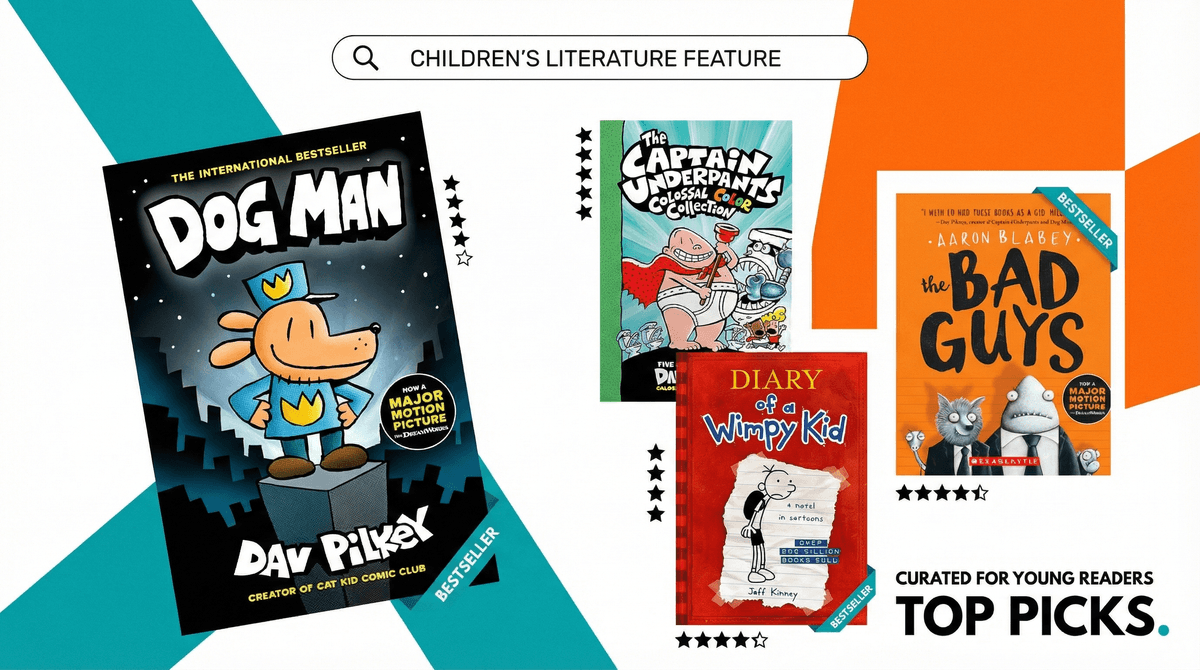
So you're scrolling Amazon looking for something to get your kid reading, and suddenly you're drowning in a sea of options. Some book called "Dog Man" is everywhere. There's apparently a whole series about a kid who's half-diary writer, half-something-else. And wait—is that... a YouTube star's book? With five million reviews?
Here's the thing about Amazon's bestselling kids books: they're not bestselling because they're the best books. They're bestselling because Amazon's algorithm is really, really good at showing you what other people are buying, which creates a feedback loop that has very little to do with literary merit and everything to do with marketing budgets, YouTube followings, and what went viral on BookTok last month.
That doesn't mean these books are bad! Some of them are genuinely great. But navigating this list requires understanding what you're actually looking at.
Amazon's kids book bestsellers fall into a few predictable categories:
The Graphic Novel Takeover: Dog Man, Captain Underpants, The Bad Guys, anything by Dav Pilkey or Raina Telgemeier. These dominate because they're genuinely engaging for reluctant readers, they're fast reads (kids can finish one in a sitting and feel accomplished), and they're funny. Parents buy them because their kids will actually read them. That's a win.
The YouTube-to-Book Pipeline: Books by MrBeast, Aphmau, the Dobre Brothers, and other content creators. These sell because kids already have a parasocial relationship with the author. The book quality is... variable. Very variable. But kids who won't touch a "regular" book will devour these because they feel like they're getting more content from their favorite creator.
The "It's For School" Staples: Wonder, The Outsiders, Percy Jackson. These are on the list because they're assigned reading that parents are bulk-buying every August. They're classics for a reason, but they're not trending because of some organic kid-driven discovery.
The Potty Humor Industrial Complex: Books about butts, farts, underpants, and other bodily functions. For ages 4-8, this is catnip. Are they sophisticated? No. Will your kid laugh hysterically and want to read them 47 times? Absolutely.
Let me be blunt: not everything on Amazon's bestseller list deserves your $12.99. Some of these books are cynical cash grabs with zero educational or entertainment value beyond "a famous person's name is on the cover."
But here's what's genuinely good from the usual suspects:
For Early Readers (Ages 5-8):
- Dog Man series by Dav Pilkey: Yes, it's silly. Yes, there are flip-o-rama pages. But it's also teaching kids about narrative structure, visual literacy, and how to stick with a series. The humor is actually clever if you're paying attention.
- Elephant & Piggie by Mo Willems: These are always on the list for a reason. Perfect for kids transitioning to independent reading.
For Middle Grade (Ages 8-12):
- Percy Jackson series: If your kid hasn't discovered these yet, start here. Rick Riordan basically created a formula for getting kids hooked on reading, and it works.
- Diary of a Wimpy Kid: The OG of the illustrated novel format. Some parents hate Greg Heffley (he's kind of a jerk), but kids see themselves in his social anxiety and middle school navigation.
- Anything by Raina Telgemeier (Smile, Guts, Sisters): Graphic novels that deal with real issues—anxiety, family dynamics, growing up—without being after-school special about it.
What to Skip:
- Most YouTuber books. I'm sorry. They're just not good. If your kid is obsessed with a particular creator, fine, get them one. But don't expect it to spark a love of reading.
- Anything that's clearly trying to capitalize on a trend (looking at you, Among Us chapter books that have nothing to do with the actual game).
- Books that are just printed versions of content available free online. You're basically paying $15 for something they can watch on YouTube.
Here's what bugs me about relying on Amazon's bestseller list: it's designed to show you what's popular, not what's good for your specific kid.
A book that's perfect for a reluctant 8-year-old boy who loves fart jokes is very different from what will engage a 10-year-old girl who's into fantasy. But Amazon's algorithm doesn't care about that nuance—it just wants to show you what's selling.
This is where actual human curation matters. Librarians, indie bookstore staff, and sites like Common Sense Media can help you find books that match your kid's actual interests and reading level, not just what's trending.
If you're going to use Amazon (and look, we all do), here's how to make it work better:
-
Start with what your kid already likes: If they loved Wings of Fire, search for "books like Wings of Fire" instead of just browsing bestsellers.
-
Check the "Customers who bought this also bought" section: This is actually more useful than the main bestseller list because it's based on similar reading patterns.
-
Read the 3-star reviews: The 5-star reviews are often from people who got free copies. The 1-star reviews are from people whose package arrived damaged. The 3-star reviews are from actual readers with nuanced opinions.
-
Use the "Look Inside" feature: You can usually read the first chapter. If your kid is with you, have them read a page. If they're engaged, it's worth trying.
-
Check your library first: I know this isn't Amazon-specific advice, but seriously—most of these books are available at your library, often with shorter wait times than you'd think. Try before you buy.
Amazon's bestselling kids books list is a starting point, not a reading curriculum. Some of what's on there is genuinely great. Some of it is fine. And some of it is straight-up garbage that's only selling because of name recognition and algorithmic momentum.
The books worth buying: Anything by Dav Pilkey, Raina Telgemeier, or Rick Riordan. Established series like Magic Tree House or Who Was? biographies. Books that have won actual awards (Newbery, Caldecott, Printz).
The books worth skipping: Most YouTuber cash grabs, anything that feels like it's just capitalizing on a trend, and books where the Amazon description uses the word "epic" more than three times.
And remember: any book your kid will actually read is better than the "perfect" book sitting unread on their shelf. If that means Dog Man #47 or a graphic novel about Minecraft, that's still reading. We're not trying to raise literary critics here—we're trying to raise kids who see reading as enjoyable, not a chore.
Want to find books that actually match your kid's interests and reading level? Check out our guide to finding age-appropriate books or explore alternatives to screen time that your kids might actually enjoy.
And if you're curious about whether those YouTube personalities your kids love are actually worth following, we can help with that too .
.