

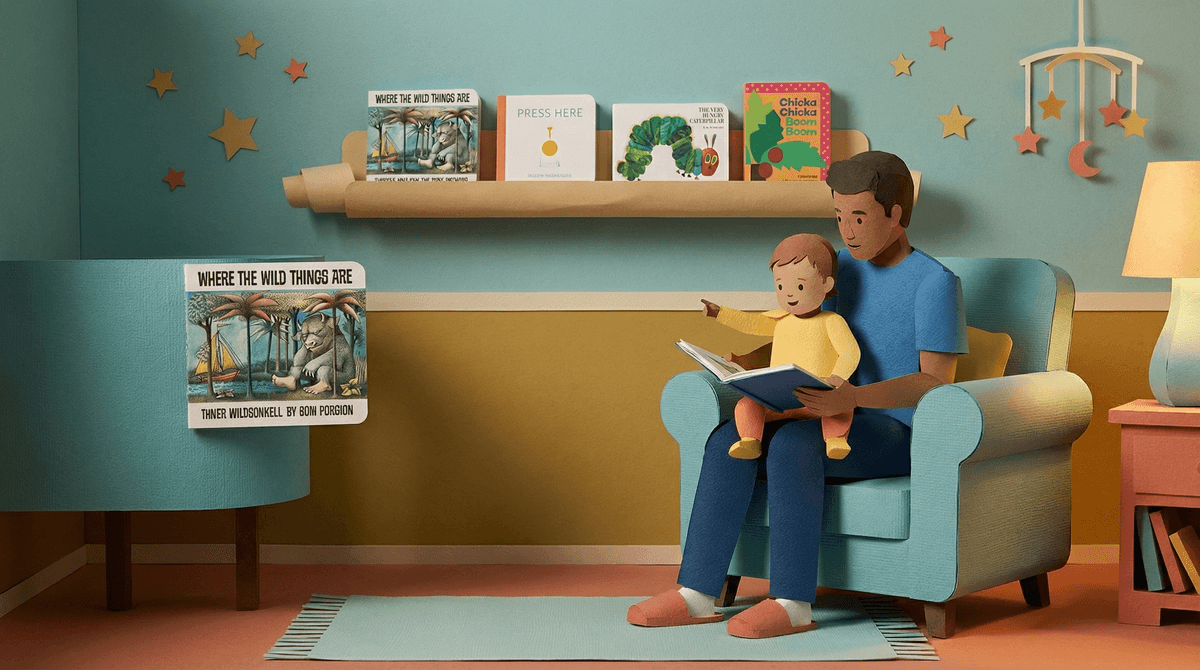
Look, I get it. You're drowning in board books with missing pages, and half of them feature that same aggressively cheerful illustration style that makes you want to scream. But here's the thing: reading aloud to toddlers is one of the most powerful things you can do for their development, and finding books that don't make you want to fake a sudden urgent phone call is actually possible.
The best read-aloud books for toddlers (roughly ages 1-3) have a few things in common: rhythm that makes them fun to read out loud, illustrations that hold attention, repetition that helps with language acquisition, and—crucially—they don't make adults want to "accidentally" leave them at the park.
Before we get to the list, let's talk about why this matters. Reading aloud to toddlers isn't just about teaching them to read eventually. It's about:
Language explosion: Toddlers who are read to regularly hear thousands more words than those who aren't. We're talking about vocabulary building that sets them up for kindergarten and beyond.
Bonding without screens: This is one of the few activities that's genuinely interactive, calm, and doesn't involve you pretending to be excited about their tower of blocks for the 47th time today.
Attention span training: In a world where Cocomelon exists and every app is designed to hijack attention, books teach kids to focus on something that doesn't flash or ding.
Emotional regulation: Good toddler books help kids name feelings, understand social situations, and process their very big emotions in their very small bodies.
And honestly? Twenty minutes of reading aloud does more for language development than two hours of educational TV. I know that's not what you want to hear when you're exhausted, but it's true.
The Very Hungry Caterpillar by Eric Carle
Still perfect. The holes, the counting, the transformation—it's got everything. Plus it's short enough that reading it five times in a row won't break you.
Goodnight Moon by Margaret Wise Brown
The bedtime book for a reason. The rhythm is hypnotic (for them AND you), and there's something genuinely soothing about saying goodnight to a bowl of mush.
Brown Bear, Brown Bear, What Do You See? by Bill Martin Jr. and Eric Carle
Repetitive in the best way. Toddlers will start "reading" it back to you, which is both adorable and evidence that they're actually learning pattern recognition.
Where the Wild Things Are by Maurice Sendak
Slightly longer, but the rhythm is incredible for reading aloud, and it handles the concept of anger and imagination in a way that resonates even with the youngest kids.
Don't Let the Pigeon Drive the Bus! by Mo Willems
Mo Willems is a god among toddler book authors. This one's interactive—your kid gets to yell "NO!" at the pigeon, which is basically toddler heaven. The whole Pigeon series is gold.
Press Here by Hervé Tullet
Technically a book, but it feels like magic. You press dots, shake the book, tilt it—and the illustrations "respond." It's interactive without being a screen, which is pretty much the dream.
The Pout-Pout Fish by Deborah Diesen
The rhythm and rhyme make this incredibly fun to read aloud, even if you'll have "I'm a pout-pout fish with a pout-pout face" stuck in your head for three weeks.
Llama Llama Red Pajama by Anna Dewdney
Bedtime anxiety in rhyme form. It's relatable for toddlers (and honestly, for adults), and the whole Llama Llama series is solid.
Chicka Chicka Boom Boom by Bill Martin Jr. and John Archambault
It's basically a alphabet song in book form. The rhythm is so catchy you'll be reciting it while doing dishes. Kids love it, and it sneaks in letter recognition.
Dear Zoo by Rod Campbell
A lift-the-flap book that's actually sturdy enough to survive toddler hands. The repetition ("So they sent me a...") is perfect for language learning.
Guess How Much I Love You by Sam McBratney
Sweet without being saccharine. Good for bedtime, and it gives you a script for talking about love in concrete terms toddlers can understand.
Dragons Love Tacos by Adam Rubin
Genuinely funny. The premise is absurd, the illustrations are detailed enough to keep kids looking, and you won't hate reading it 500 times.
The Day the Crayons Quit by Drew Daywalt
Technically for slightly older kids (3-5), but advanced toddlers will get it, and it's hilarious. Each crayon writes a letter complaining about how they're used. It's clever enough that you'll actually enjoy it.
Gruffalo by Julia Donaldson
British, rhyming, and surprisingly sophisticated. The story structure is more complex than typical toddler books, but the rhythm makes it accessible, and the mouse is genuinely clever.
Books with zero plot: Yes, toddlers like looking at pictures of trucks, but a book that's just "red truck, blue truck, big truck" for 20 pages will make you want to throw it out the window.
Books with terrible rhythm: If you stumble over the rhyme scheme, it's not you—it's the book. Bad rhythm makes read-alouds painful for everyone.
Character books from shows they watch: Listen, if they already watch Paw Patrol, you don't need to also read Paw Patrol books. Use book time to expand their world, not reinforce their screen content.
Books with "lessons" that are just lectures: Toddlers don't need a book that's basically "SHARE YOUR TOYS" in all caps for 15 pages. Good books teach through story, not through being a cardboard authority figure.
Let them choose (within reason): Give them 2-3 options so they feel ownership, but you're not reading the same book 47 times in a row unless you choose to.
Make it routine: Before nap, before bed, after lunch—whenever works. Consistency matters more than quantity.
Let them "read" to you: Even if they're just pointing at pictures and babbling, this is them practicing literacy. Play along.
Don't force it: If they're not into it right now, that's fine. Try again later. Reading shouldn't be a battle.
Use voices: You don't have to be a professional voice actor, but a little variation keeps it interesting for both of you.
The best toddler books to read aloud are ones that you can stand reading multiple times, that have rhythm or repetition that helps language development, and that hold your kid's attention for more than 30 seconds. The classics are classics for a reason, but there are plenty of modern books that are just as good—and sometimes better.
Reading aloud is one of those rare parenting activities that's genuinely high-impact and doesn't require you to pretend you're a dinosaur or clean up glitter. Twenty minutes a day of reading aloud will do more for your toddler's development than any educational app or show, and it's one of the few screen-free activities that both of you might actually enjoy.
Start with a few of these, see what sticks, and build from there. And when you find a book you both love? Buy a backup copy, because toddlers are agents of chaos and books have a way of disappearing.
Want more specific recommendations based on your toddler's interests? Find toddler books for your specific situation . And if you're trying to figure out how much screen time is actually okay for toddlers, we've got you covered there too.