

Best New Books for 8-9 Year Olds in 2026
TL;DR: The 8-9 age sweet spot is where kids either become lifelong readers or decide books are boring. These 2025 releases actually compete with screens—graphic novels that feel like scrolling TikTok, adventure series that hook harder than Roblox, and funny stories that make kids laugh out loud on the couch instead of watching YouTube.
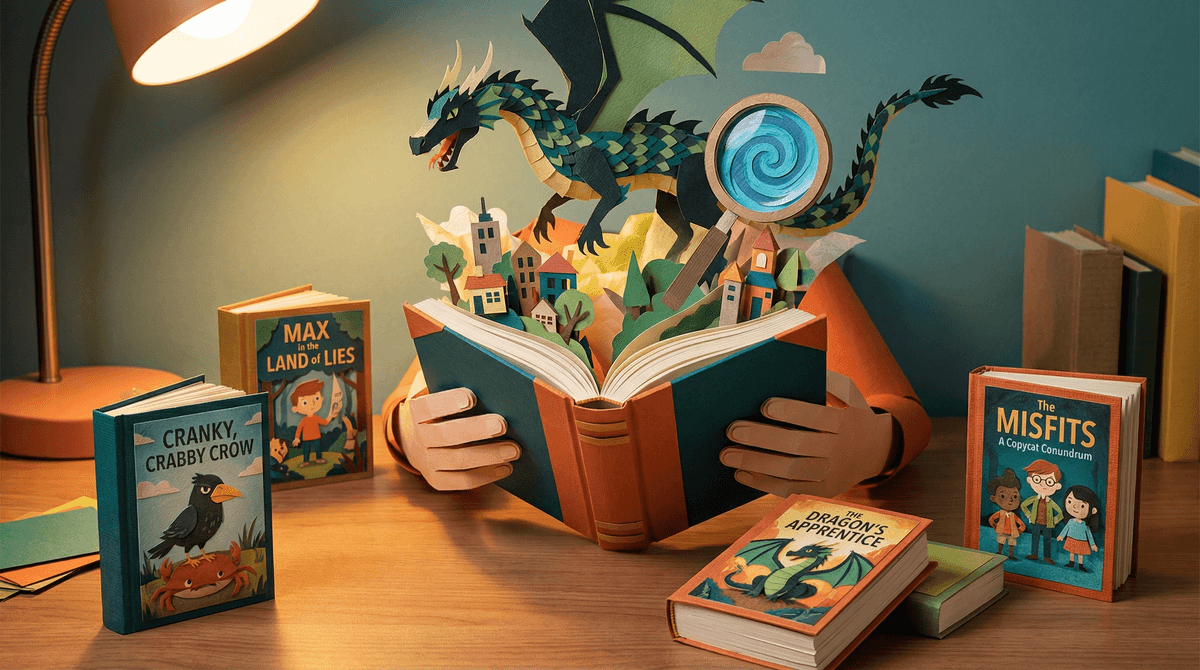
Top picks to start with:
- The Dragon's Apprentice - Fantasy adventure that feels like a video game quest
- Max in the Land of Lies - Perfect for kids who love plot twists
- A Copycat Conundrum (The Misfits) - Mystery series starter with actual humor
- Cranky, Crabby Crow (Saves the World) - For reluctant readers who need pictures
Here's what's different about books in 2026: publishers finally figured out they're competing with infinite scroll. The best new releases for 8-9 year olds aren't just "good books"—they're engineered to grab attention spans that have been trained by YouTube algorithms and Roblox dopamine hits.
This age is critical. Third and fourth graders are transitioning from learning to read to reading to learn. They're also developing their identity as "a reader" or "not a reader." Get them hooked now with the right books, and you're setting them up for academic success and, honestly, a much richer internal life than any screen can provide.
This 2025 release reads like a video game quest—which is exactly why it works. Short chapters, clear objectives, a protagonist who has to level up their skills. If your kid loves Minecraft or any RPG, this book speaks their language. The dragon mentor character is grumpy and sarcastic (think Grunkle Stan from Gravity Falls), which keeps it from feeling too earnest.
Ages: 8-10
Reading level: Solid middle grade, but accessible for strong 2nd grade readers
Why it works: Fast pacing, humor, and a magic system kids can actually understand
Environmental fantasy that doesn't feel preachy. A kid discovers a hidden world where plants have agency and personality. It's got the worldbuilding depth that makes kids want to draw maps and create their own versions (the same impulse that drives Roblox creation).
The protagonist is dealing with moving to a new place, which resonates hard for this age group navigating social dynamics and change. Plus, the illustrations are gorgeous—this is one where the physical book matters.
Ages: 8-11
Reading level: Middle grade
Why it works: Relatable emotions wrapped in fantasy adventure
If your kid already tore through the first Impossible Creatures book, this sequel delivers. Katherine Rundell knows how to write adventure that feels genuinely dangerous without being traumatizing. The creature designs alone will have kids sketching in the margins.
Fair warning: this is book 2, so start with the first one if you haven't. But the series is becoming the new Percy Jackson for this slightly younger set—mythology-inspired, fast-paced, and genuinely clever.
Ages: 8-12
Reading level: Upper middle grade
Why it works: High stakes, creative worldbuilding, characters who make real mistakes
Mystery series are the gateway drug for reluctant readers, and this new series nails the formula. A group of misfit kids (naturally) solving crimes in their neighborhood. The humor is actually funny—not "children's book trying to be funny" but legitimately witty dialogue.
The chapters are short enough that a kid can finish one before bed without it feeling like homework. The mystery is solvable if they're paying attention, which makes them feel smart. And there's already a book 2 coming, so if it hooks them, you've got momentum.
Ages: 7-10
Reading level: Accessible for developing readers
Why it works: Mystery structure keeps them turning pages, humor keeps them engaged
This one's weird in the best way. Max gets transported to a world where everyone lies all the time, and he has to figure out how to navigate it. It's like a philosophical thought experiment wrapped in an adventure story. Kids who love brain teasers and logic puzzles will eat this up.
Also quietly teaches critical thinking and media literacy—how do you know what's true when everyone's lying? Pretty relevant for the generation growing up with AI and deepfakes, honestly.
Ages: 8-11
Reading level: Middle grade
Why it works: Unique premise, puzzle-like plot, makes kids think while entertaining them
For the kid who insists they hate reading, start here. It's heavily illustrated, the protagonist is hilariously grumpy, and the whole thing is under 150 pages. Cranky Crow doesn't want to save the world, but gets dragged into it anyway—relatable energy for kids who are tired of being told what to do.
This is technically a picture book/early chapter book hybrid, but don't let that fool you. The humor works for older kids too, and it's a confidence builder for struggling readers. Once they finish this and feel successful, they're more likely to try something longer.
Ages: 6-9
Reading level: Early chapter book
Why it works: Funny, illustrated, short enough to finish in one sitting
This became a massive hit when it released, and the 2025 sequel is highly anticipated. Black girl magic—literally—with a protagonist who's smart, funny, and dealing with very real family issues alongside the fantasy adventure.
If your kid loved Nevermoor or is aging out of Wings of Fire, this is the next obsession. The worldbuilding is rich enough that kids are creating fan art and theories online (in a good way, not a concerning internet rabbit hole way).
Ages: 9-12
Reading level: Solid middle grade
Why it works: Compelling protagonist, original magic system, deals with real emotions
Part of the summer 2025 reading recommendations, this one subverts the typical "hero's journey" by making the adventure happen during the most boring time of year. The humor is self-aware—the protagonist knows they're in an adventure story and comments on the tropes. Meta in a way that's funny, not annoying.
Great for kids who've read enough fantasy to recognize the patterns. It's like The Princess Bride for this generation—adventure story that's also gently making fun of adventure stories.
Ages: 8-11
Reading level: Middle grade
Why it works: Subversive humor, fast pacing, relatable summer boredom premise
Absolutely charming illustrated book about a tiny bear who lives in a kid's pocket. Perfect for bedtime reading or for kids who need the visual support. The illustrations do heavy lifting for the story, making it accessible for readers who aren't quite ready for full chapter books.
The emotional core is surprisingly deep—it's about friendship, loneliness, and finding where you belong. But wrapped in enough cuteness that it never feels heavy.
Ages: 6-9
Reading level: Picture book/early reader
Why it works: Beautiful illustrations, sweet story, emotionally resonant without being sad
A picture book biography about the creator of Frog and Toad. If your kid loved those stories (or if you loved them as a kid and want to share that), this is a beautiful way to talk about creativity, storytelling, and how books get made.
Also quietly introduces the idea that the people who make the things we love are real humans with their own stories. Good foundation for media literacy and critical thinking.
Ages: 6-10
Reading level: Picture book
Why it works: Meta storytelling, gorgeous illustrations, introduces biography genre
The format matters. If your kid is resistant to reading, the physical book can make a difference. Graphic novels and heavily illustrated books aren't "lesser" reading—they're legitimate literature that builds visual literacy alongside reading comprehension. Don't let anyone shame you or your kid for choosing Dog Man over "real" chapter books.
Series are your friend. Once a kid finds a series they love, they'll read voraciously. The investment is in finding that first hook—after that, they're self-motivated. These 2025 releases are mostly series starters or part of ongoing series specifically because publishers know this.
Reading level vs. interest level. An 8-year-old might be reading at a 5th grade level but still want stories about 8-year-old problems. Or they might be reading at a 2nd grade level but want adventure stories, not "baby books." Match the content to their interests, then find the reading level that works. See how to match reading level with interest level if you need help finding that sweet spot.
Audiobooks count. If your kid absorbs stories better through listening, that's reading. Listening to audiobooks builds vocabulary, comprehension, and story structure understanding. Some kids need to see and hear simultaneously—that's fine too.
These books are all solidly appropriate for 8-9 year olds, but here's what to know:
The Dragon's Apprentice, The Green Kingdom, Max in the Land of Lies: Some mild peril, no violence beyond fantasy adventure. Characters make mistakes and face consequences. Good for kids ready for slightly higher stakes.
The Poisoned King: More intense than the others—there's real danger, characters die (not graphically, but it happens). If your kid handled Harry Potter book 4+, they're fine. If they're sensitive to character death, maybe wait.
Mystery series (A Copycat Conundrum): Very mild tension, no scary elements. Safe for sensitive readers.
Nic Blake: Deals with family separation and some heavier themes (parent in jail, foster care system) alongside the fantasy adventure. Handled well, but know it's there.
The goal isn't just to get them to read these books—it's to build the habit and identity of being a reader.
Create the conditions: No screens in bedrooms means books become the default entertainment. A reading light and a stack of books within reach beats a tablet every time.
Model it: Kids who see adults reading become readers. Doesn't matter if you're reading literary fiction or romance novels or books about game design—just read where they can see you doing it.
Don't force it: If a book isn't working after 30 pages, try something else. There are too many good books out there to waste time on ones that don't click. The goal is to find the books that make them want to keep reading, not to finish every book they start.
Connect to their interests: Kid obsessed with Pokémon? Find fantasy books with creature collection elements. Loves YouTube science videos? Try books that explain how things work. The bridge from screens to books is built on shared interests.
The best book for your 8-9 year old is the one they'll actually read. These 2025 releases are designed to compete with screens—fast-paced, funny, illustrated, adventurous, and genuinely engaging.
Start with whichever premise makes your kid say "that sounds cool." Get the physical book if possible (libraries are free!). Read the first chapter together if they need the momentum. Then let them discover that books can be just as immersive as any screen—with the bonus of building their brain instead of just entertaining it.
Next Steps:
- Check out more middle grade book recommendations
- Find read-aloud books for family reading time
- Explore graphic novels for reluctant readers
- Find books for your kid for personalized book recommendations based on your kid's specific interests