

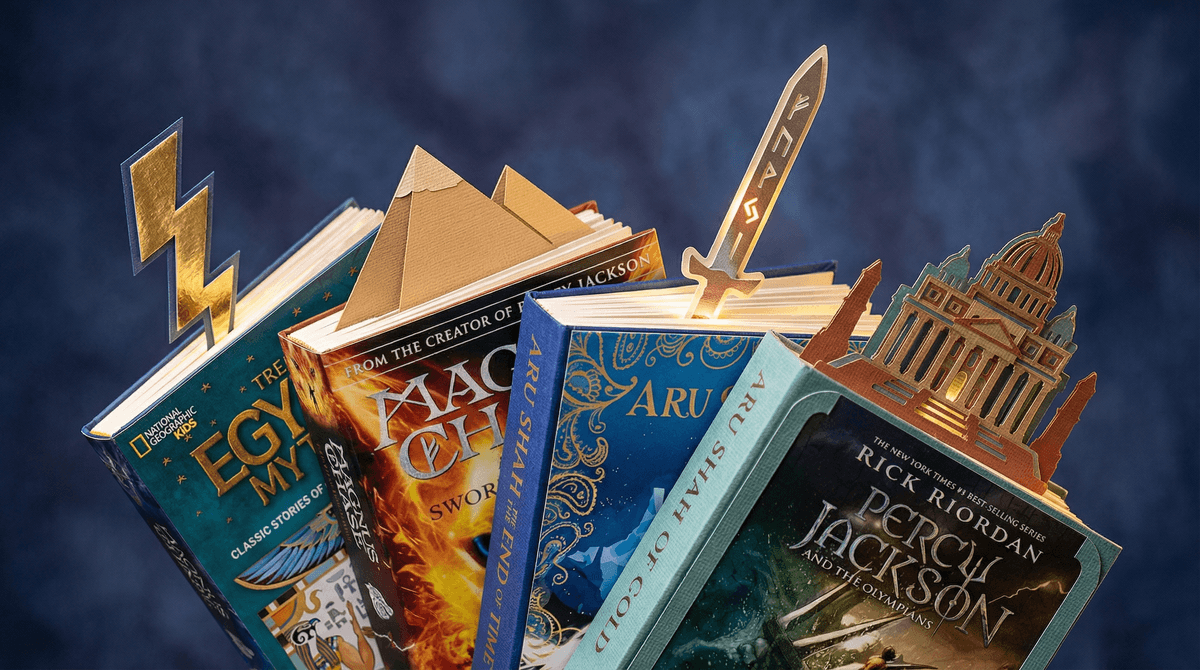
The Best Mythology Reading List for Kids: Ancient Stories for Modern Families
Look, I get it. You're trying to pull your kid away from their 47th hour of Roblox this week, and you're thinking "maybe if I hand them a book about gods throwing lightning bolts, that'll do the trick?"
Good instinct. Mythology is basically the original superhero universe, complete with drama, battles, transformation sequences, and enough family dysfunction to make any reality TV show look tame. Plus, these stories have survived thousands of years for a reason—they're genuinely compelling, and they sneak in some pretty solid life lessons about hubris, loyalty, and why you shouldn't turn people into spiders just because they're better at weaving than you.
Here's the thing about mythology that makes it such a win for families: it's culturally relevant in ways kids don't even realize. Half the books, movies, and games they're already into are just mythology remixes. Percy Jackson? Greek mythology. Marvel's Thor? Norse mythology. Even some of the lore in Minecraft and other games pulls from ancient stories.
But beyond the cultural literacy angle, mythology does something really cool—it introduces big, complex ideas (mortality, justice, power, consequences) through stories that are wild enough to keep kids engaged. A kid who won't sit still for a lecture about "actions have consequences" will absolutely listen to the story of King Midas turning his daughter into gold.
Ages 4-7: Gentle Introductions
D'Aulaires' Book of Greek Myths is the gold standard here. The illustrations are gorgeous, the stories are simplified without being dumbed down, and it skips over the really dark stuff (there's... a lot of dark stuff in Greek mythology). This book has been around since 1962 and it's still the one librarians recommend first.
Treasury of Egyptian Mythology by Donna Jo Napoli is another great starter. Egyptian mythology is slightly less well-known than Greek, which means kids feel like they're discovering something special. Plus, animal-headed gods? Kids eat that up.
Ages 8-11: Ready for More Complexity
This is the sweet spot age range for mythology. Kids are old enough to handle more nuanced stories but still young enough to fully commit to the magic.
Percy Jackson series by Rick Riordan—yes, obviously. If your kid hasn't read these yet, start here. Riordan takes Greek mythology and makes it accessible, funny, and relevant. The main character has ADHD and dyslexia, which Riordan reframes as demigod traits. It's genuinely clever, and it works. After Percy Jackson, Riordan has written similar series for Egyptian (The Kane Chronicles) and Norse mythology (Magnus Chase).
Heroes in Training series by Joan Holub and Suzanne Williams is perfect for kids who want Percy Jackson vibes but aren't quite ready for that reading level. These are chapter books that follow young Zeus, Poseidon, and Hades on adventures. They're fast-paced and genuinely funny.
The Trials of Apollo series (also Riordan) is great for kids who've finished Percy Jackson and want more. Fair warning: Apollo starts out as an extremely vain, self-centered god who gets turned into a mortal teenager as punishment. The character growth is actually really well done.
Ages 12+: Full Complexity, Original Sources
The Odyssey and The Iliad—but get a good translation. Emily Wilson's translation of The Odyssey is incredibly readable and doesn't have the stuffy Victorian language that makes kids want to throw the book across the room. Her Iliad translation is also excellent.
Mythos by Stephen Fry is phenomenal for teens (and honestly, adults). Fry retells Greek mythology with wit and irreverence while still respecting the source material. He has a whole series: Mythos, Heroes, and Troy. They're thick books, but they read fast.
Circe and The Song of Achilles by Madeline Miller are gorgeous literary retellings. These are for mature teens (there's some sexual content and violence), but they're beautifully written and offer perspectives usually left out of traditional mythology—Circe focuses on a female character typically portrayed as a villain, and Song of Achilles explores the relationship between Achilles and Patroclus.
Most mythology books for kids default to Greek and Roman, but there's a whole world of mythology out there, and honestly, kids benefit from seeing that every culture has its own epic stories.
Norse Mythology: Norse Mythology by Neil Gaiman is accessible for ages 10+ and incredibly entertaining. Gaiman's writing style is conversational and he captures the weird humor of Norse myths (these gods are much more chaotic than their Greek counterparts).
African Mythology: The Girl Who Married a Lion is a collection of African folktales that introduces kids to stories they probably haven't heard before. It's a bit harder to find comprehensive African mythology books for kids, which is frustrating, but this is a solid start.
Asian Mythology: Dragon Pearl by Yoon Ha Lee blends Korean mythology with space opera (yes, really, and it works). For something more traditional, Usborne Illustrated Stories from India covers Hindu mythology in an age-appropriate way.
Native American Mythology: Trickster: Native American Tales collected by various Native authors is important because it's actually written by Native people, not anthropologists interpreting their stories.
The violence thing: Ancient mythology is... violent. Like, really violent. Gods turning people into animals, heroes beheading monsters, wars that last decades. Most children's versions tone this down significantly, but as kids get older and read more original sources, they'll encounter this content. It's worth having conversations about historical context and why these stories were told this way.
The gender dynamics thing: Ancient mythology reflects ancient gender roles, which means a lot of passive princesses and aggressive male heroes. The good news is that there are also genuinely badass female characters (Athena, Artemis, Atalanta, Circe), and modern retellings often center these characters. Books like Circe and Aru Shah (Hindu mythology) do this really well.
The "but is it real?" question: Kids will ask if these stories are true. This is actually a great opportunity to talk about different types of truth—these stories weren't meant to be historical records, they were meant to explain natural phenomena, teach moral lessons, and preserve cultural identity. You can believe in science and still appreciate mythology as important cultural literature.
Mythology is one of those rare things that's educational, entertaining, and actually builds cultural literacy in a way that'll serve kids for years. Whether your kid is into the action-adventure angle, the fantasy elements, or just really likes the idea of gods who are as messy and flawed as humans, there's a mythology book that'll work for them.
Start with where their interests already are. Kid loves Percy Jackson? Great, that's your gateway. Kid into Marvel movies? Try Norse mythology. Kid obsessed with ancient Egypt? Start there.
And honestly? Read these books yourself. They're genuinely good stories, and having shared knowledge of mythology makes for surprisingly great family conversations. Plus, you'll finally understand what all those references in Hades mean.
Not sure where to start? Find mythology books matching your kid's interests . Or check out our full guide to getting kids excited about reading if mythology ends up being the hook that finally works.