

Best Movies About New Sibling Babies for 3-4 Year Olds
TL;DR: When a new baby is on the way, the right movie can help your toddler process big feelings about becoming a big sibling. The best picks: Boss Baby for humor about sibling rivalry, Bluey: "Baby Race" for realistic family dynamics, and Daniel Tiger's "A New Baby" for gentle emotional preparation.
Your 3 or 4-year-old is about to have their entire world rocked. They've been the center of attention, the only kid, the whole show. And now? A screaming, pooping interloper is about to take over their house, their parents, and their spot on the couch.
This is genuinely hard for toddlers. They don't have the language yet to say "I'm feeling displaced and worried you won't love me as much," so instead they act out, regress, or cling harder. And while books about new siblings are great, movies offer something special: they show sibling dynamics in motion, with facial expressions, tone of voice, and emotional arcs that toddlers can actually see play out.
But here's the thing about screen time for this age group: according to Screenwise data, families average about 4.2 hours of daily screen time, with 92% using TV in some capacity. The question isn't whether to use screens—it's how to use them intentionally. When you're preparing a toddler for a massive life transition, a well-chosen 30-minute show or hour-long movie isn't "brain rot"—it's a conversation starter.
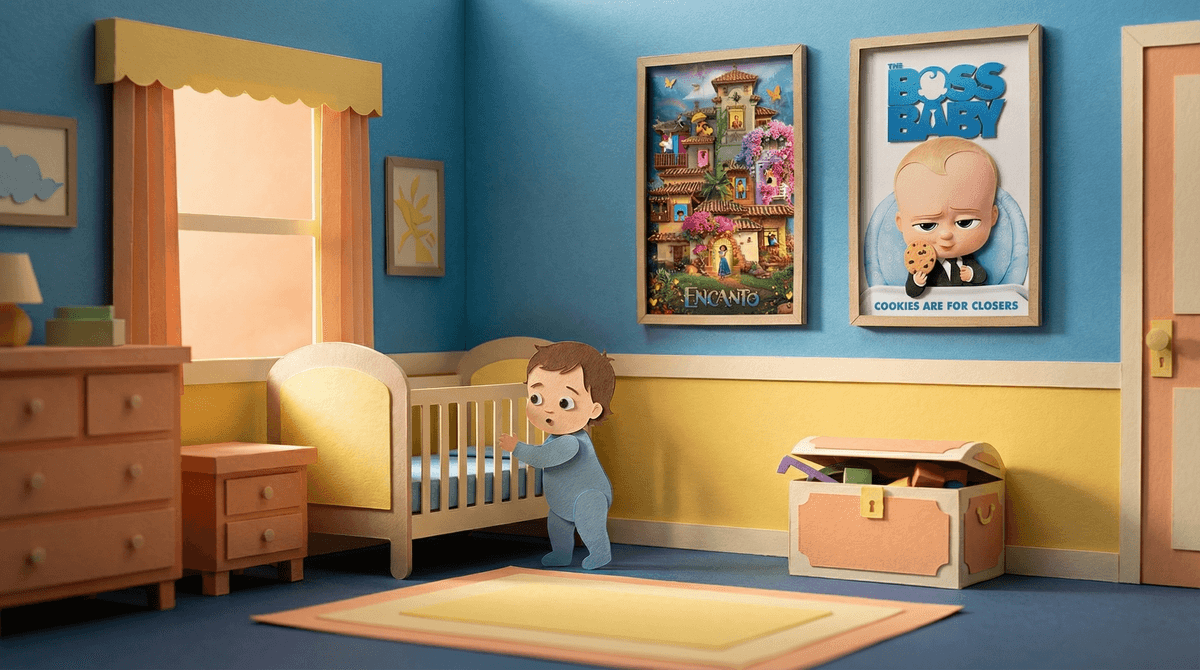
Boss Baby (Ages 3+)
Runtime: 97 minutes
Where to watch: Available on Netflix and other streaming platforms
This one's polarizing among parents—some find it genuinely clever, others think it's chaotic nonsense. But for 3-4 year olds? It absolutely works.
Why it helps: Boss Baby takes the most primal toddler fear—"this baby is going to steal my parents' love"—and makes it literal. Tim, the older brother, genuinely believes his baby brother is an evil corporate spy sent to destroy his life. Which, let's be honest, is exactly how many firstborns feel.
The movie doesn't sugarcoat sibling rivalry. Tim and Boss Baby fight, scheme against each other, and have to learn to work together. By the end, Tim realizes there's enough love for both of them, but the movie earns that conclusion through actual conflict, not just "babies are nice!"
Parent note: The humor skews older (there are jokes about corporate culture that will fly over your toddler's head), and some kids find the "babies as businesspeople" concept confusing rather than funny. Preview it first if your kid is literal-minded or easily confused by fantasy elements.
Conversation starters after watching:
- "Tim was worried his parents wouldn't love him anymore. Do you ever worry about that?"
- "What was your favorite part about how Tim and Boss Baby became friends?"
Bluey: "Baby Race" and "Sleepytime" (Ages 2+)
Runtime: 7 minutes per episode
Where to watch: Disney+ (available to 50% of Screenwise families who watch together, and 30% whose kids watch independently)
If you're not already watching Bluey, start now. It's the gold standard for toddler content that doesn't make parents want to claw their eyes out.
"Baby Race" is specifically about Chilli (the mom) comparing baby Bluey's development to other babies and feeling inadequate when Bluey is slower to walk. It's technically about parenting anxiety, but it shows Bluey as a baby in a way that helps older siblings understand what babies are actually like—they can't do much, they need lots of help, and that's okay.
"Sleepytime" shows Bingo (the younger sister) having a dream about growing up and leaving home, while Bluey (older sister) appears as a comforting presence. It's beautiful and emotional and shows sibling bonds as protective and loving.
Why it works: Bluey never talks down to kids. The episodes are short enough for toddler attention spans but emotionally sophisticated enough to spark real conversations. Plus, watching Bluey and Bingo's relationship gives your kid a model for what sibling love can look like—they fight, sure, but they also play together, comfort each other, and genuinely enjoy each other's company.
Daniel Tiger's Neighborhood: "A New Baby" (Ages 2-4)
Runtime: Two 11-minute segments
Where to watch: PBS Kids (free), Amazon Prime
Daniel Tiger is the Mr. Rogers successor we needed. It's gentle, repetitive, and explicitly designed to teach emotional regulation to toddlers.
Why it helps: The "New Baby" episodes follow Daniel as his mom has a baby. The show walks through everything: mom going to the hospital, Daniel staying with Grandpere, meeting the new baby, feeling jealous when mom is nursing, learning he can be a "big brother helper."
The songs are genuinely useful:
- "A new baby changes things, and that can be hard. But I'm still special to my mom and dad."
- "When a baby makes things different, find a way to help."
Yes, the songs are repetitive. Yes, you'll have them stuck in your head for weeks. But your 3-year-old will actually sing them to themselves when they're feeling big feelings about the baby, and that's the point.
Parent note: Daniel Tiger is slower-paced than most modern kids' content. If your kid is used to the rapid cuts of YouTube or high-energy shows, they might find it boring at first. Give it a few episodes—the calm pace is actually part of what makes it effective for emotional learning.
Encanto (Ages 4+)
Runtime: 102 minutes
Where to watch: Disney+
This one's technically about a big extended family rather than a new baby, but hear me out.
Why it works for sibling prep: Encanto is fundamentally about feeling like you don't measure up to your siblings. Mirabel doesn't have a magical gift like everyone else in her family, and she spends the whole movie trying to prove she's valuable anyway.
For a 4-year-old about to become a big sibling, this hits: they're about to watch everyone fawn over the baby, and they might feel like they're not special anymore. Mirabel's journey to understanding that she's important just for being herself—not for what she can do or achieve—is a powerful message.
Fair warning: The emotional beats are sophisticated. Some kids won't track the family dynamics or understand why Mirabel is sad. But the songs are catchy, the animation is gorgeous, and "We Don't Talk About Bruno" will be stuck in your head until approximately 2027.
Best for: Kids who are ready for a longer movie and can handle some emotional complexity. Skip it if your kid gets scared easily (there are some intense magical moments) or struggles with movies longer than an hour.
Peppa Pig: "Baby Alexander" (Ages 2-4)
Runtime: 5 minutes
Where to watch: Various streaming platforms
Look, Peppa Pig is annoying. Peppa is kind of a brat. The episodes are repetitive. But for 2-3 year olds, it's catnip, and the "Baby Alexander" episode is actually useful.
Why it works: Peppa's cousin has a new baby, and Peppa is fascinated. The episode shows the baby crying, needing diaper changes, and not being able to play—which sets realistic expectations. It's simple, short, and directly addresses what babies are like.
Best for: Younger toddlers (2-3) who need something short and straightforward. If your kid loves Peppa, lean into it. If they've never seen it, you might want to start with something else on this list.
The Incredibles 2: Features a baby with superpowers (Jack-Jack), which is hilarious but might set unrealistic expectations. Your new baby will not shoot lasers from their eyes. Probably.
Dumbo (any version): The mom gets locked away, and the baby is separated from her. This is not the vibe you want when preparing a kid for a new sibling.
Any movie where the older sibling is mean to the baby and doesn't learn better: There are a surprising number of movies where sibling rivalry is played for laughs without resolution. Skip those.
For 2-3 year olds: Stick with shorter content (under 30 minutes). Daniel Tiger, Bluey, and Peppa Pig are your best bets. At this age, kids need concrete, simple messages: "Babies cry," "You're still special," "You can help."
For 3-4 year olds: You can try longer movies like Boss Baby or Encanto, but be prepared to pause frequently, answer questions, and maybe split viewing over two sessions. Watch together and narrate what's happening emotionally: "Oh, Tim looks sad. Why do you think he's sad?"
Before the baby arrives:
- Watch together and pause to talk about what's happening
- Ask "How do you think [character] is feeling?"
- Relate it to your family: "When our baby comes, you might feel like Tim feels"
- Keep it light—don't turn movie time into a lecture
After the baby arrives:
- Revisit favorites when your older kid is having a hard day
- Let them request "sibling movies" when they need reassurance
- Use the songs and phrases from the shows in real life ("A new baby changes things, but you're still special!")
Pro tip: About 40% of Screenwise families let kids watch Netflix independently, while 40% watch together as a family. For this specific purpose—preparing for a sibling—watch together. The movie is the starting point, not the solution. The conversation afterward is what actually helps.
Screen time guilt is real, but context matters. If you're at 35 weeks pregnant, exhausted, and your toddler wants to watch Boss Baby for the third time this week while you rest on the couch—that's fine. You're not ruining them. You're surviving.
Movies won't eliminate sibling rivalry. Your kid will still have big feelings when the baby arrives. These movies help them understand those feelings are normal and give them language to express what's happening, but they won't prevent jealousy or regression.
Some kids won't connect the dots. You might watch all these movies and your 3-year-old still seems shocked when the actual baby shows up and cries a lot. That's normal. Toddlers are concrete thinkers. The movies plant seeds; real life is where the learning happens.
The best movie about new siblings is the one your kid will actually watch and talk about with you. Boss Baby works for kids who like humor and action. Daniel Tiger works for kids who need gentle, explicit emotional guidance. Bluey works for everyone because Bluey is perfect.
Start watching a few weeks before the baby arrives. Revisit favorites after the baby comes. And remember: the movie is just the conversation starter. The real work happens when you pause and ask, "How do you think you'll feel when our baby gets here?" and then actually listen to the answer.
Want more help navigating this transition? Check out books about becoming a big sibling or how to prepare your toddler for a new baby .
.