

Memoirs are true stories written by real people about their own lives—and when they're written for kids and teens, they're some of the most powerful books you can put in your child's hands. Unlike fiction, these are actual experiences: growing up during war, navigating identity, overcoming illness, or just figuring out how to be yourself when the world has other ideas.
The best memoirs for young readers don't talk down to kids. They treat tough topics with honesty while still being age-appropriate. They show resilience without sugarcoating struggle. And honestly? In an era where kids are consuming endless streams of curated, filtered content online, reading about someone's messy, authentic, real life can be incredibly grounding.
Here's the thing: kids today are growing up in algorithmic bubbles. Their TikTok feeds show them content that reinforces what they already think. Their friend groups often look like them, think like them, live like them. Memoirs are one of the most effective tools we have to break through that.
When a kid reads about someone's actual lived experience—whether it's fleeing a war zone, dealing with racism, navigating disability, or just being different in a small town—it builds genuine empathy in a way that even the best fiction can't quite match. There's something about knowing "this really happened to a real person" that hits differently.
Plus, memoirs model something crucial: the power of owning your own story. In a digital world where kids are constantly performing for an audience, seeing authors share vulnerable, honest, unfiltered truths about their lives? That's radical.
Ages 8-10: Gentle Introductions to Real Stories
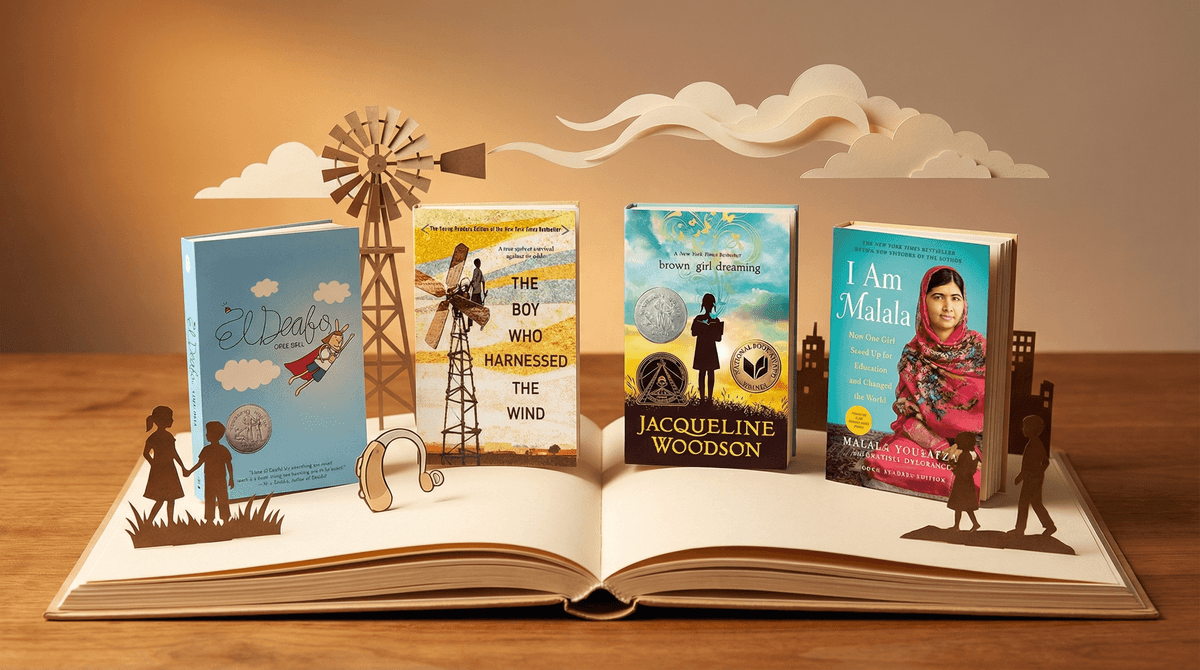
I Am Malala (Young Readers Edition) - Malala Yousafzai's story of fighting for girls' education in Pakistan is adapted beautifully for this age group. It's inspiring without being overwhelming.
Who Was Anne Frank? - Part of the "Who Was?" series, this is often a child's first introduction to the Holocaust through Anne's story. Age-appropriate but doesn't shy away from the truth.
Brown Girl Dreaming by Jacqueline Woodson - Written in verse, this memoir about growing up Black in the 1960s and 70s is lyrical and accessible. Kids who think they don't like reading often devour this one.
El Deafo by Cece Bell - A graphic memoir about growing up deaf. The comic format makes it super approachable, and kids love the humor and honesty about feeling different.
Ages 11-13: More Complex Narratives
The Diary of a Young Girl by Anne Frank - The full version (or age-appropriate adaptation) hits harder at this age. Many schools assign it, but it's worth reading together and discussing.
March trilogy by John Lewis - This graphic memoir about the Civil Rights Movement is absolutely essential reading. It's gripping, honest about violence without being gratuitous, and shows kids what real courage looks like.
Hey Kiddo by Jarrett J. Krosoczka - A graphic memoir about growing up with a mother struggling with addiction. It's heartbreaking and hopeful, and tackles a topic many kids are dealing with in their own families.
The Boy Who Harnessed the Wind by William Kamkwamba - A kid in Malawi builds a windmill from scraps to save his village. This one is pure inspiration and shows innovation born from necessity.
Ugly by Robert Hoge - Born with facial differences, Hoge writes about his childhood with humor and unflinching honesty. Great for any kid who's ever felt like they don't fit in (so, all of them).
Ages 14+: No Holding Back
The Glass Castle by Jeannette Walls - This memoir about growing up with brilliant but deeply dysfunctional parents is a modern classic. It's tough but beautifully written.
Born a Crime by Trevor Noah - Apartheid South Africa through the eyes of a kid whose very existence was illegal. It's funny, devastating, and teens absolutely love it.
Educated by Tara Westover - A woman grows up in a survivalist family with no formal education and eventually earns a PhD from Cambridge. This one sparks incredible conversations about family, education, and breaking cycles.
All Boys Aren't Blue by George M. Johnson - A memoir about growing up Black and queer. Yes, it's been challenged in schools. Yes, it's important. It's honest about sex and identity in ways that older teens need.
Night by Elie Wiesel - The Holocaust memoir that changed how we talk about survival and humanity. Heavy, essential, best read with support and discussion.
These aren't always easy reads. That's kind of the point. Real life includes trauma, injustice, loss, and struggle. The best memoirs don't wallow in pain, but they don't pretend it doesn't exist either.
Age ranges are guidelines, not rules. You know your kid. Some 10-year-olds can handle The Diary of a Young Girl, others need to wait until 13. Some mature 14-year-olds are ready for Educated, others should wait a year or two.
Read them yourself first if you're concerned. Or better yet, read them together and discuss . The conversations these books spark are often more valuable than the books themselves.
Graphic memoirs are legitimate literature. If your kid gravitates toward March or Hey Kiddo because they have pictures, that's great. Comics are a valid and powerful storytelling format, full stop.
Banned books lists are often reading lists. If a memoir has been challenged or banned, there's usually a good reason to read it—it's making people uncomfortable by telling an important truth.
The beauty of memoirs is they naturally invite conversation. Some questions that work across ages:
- "What surprised you about this person's life?"
- "How is their experience different from yours? How is it similar?"
- "What would you do in that situation?"
- "Why do you think they decided to share this story?"
For older kids dealing with heavy topics: "How are you feeling about what you're reading? Want to talk about it?" And then actually listen. Don't rush to fix or explain away the hard parts.
Memoirs are antidotes to the curated, filtered, algorithm-driven content kids consume daily. They're messy and real and show that other people's lives are complicated in ways we can't always see from the outside.
In a world where kids are constantly crafting their own digital personas, reading about someone brave enough to share their whole truth—the ugly parts, the scared parts, the parts that don't fit the narrative—is powerful medicine.
Start with one that matches your kid's interests or experiences. Read it together if they're open to it. And then just... talk. These books do the heavy lifting. Your job is just to be there for the conversation that follows.
Not sure where to start? Get memoir recommendations for your child and we can help you find the perfect fit.
Want to balance memoir reading with other media? Check out our guides on building a well-rounded media diet for kids.
Dealing with a reluctant reader? Try starting with graphic memoirs like El Deafo or Hey Kiddo—the visual format often hooks kids who bounce off traditional books.