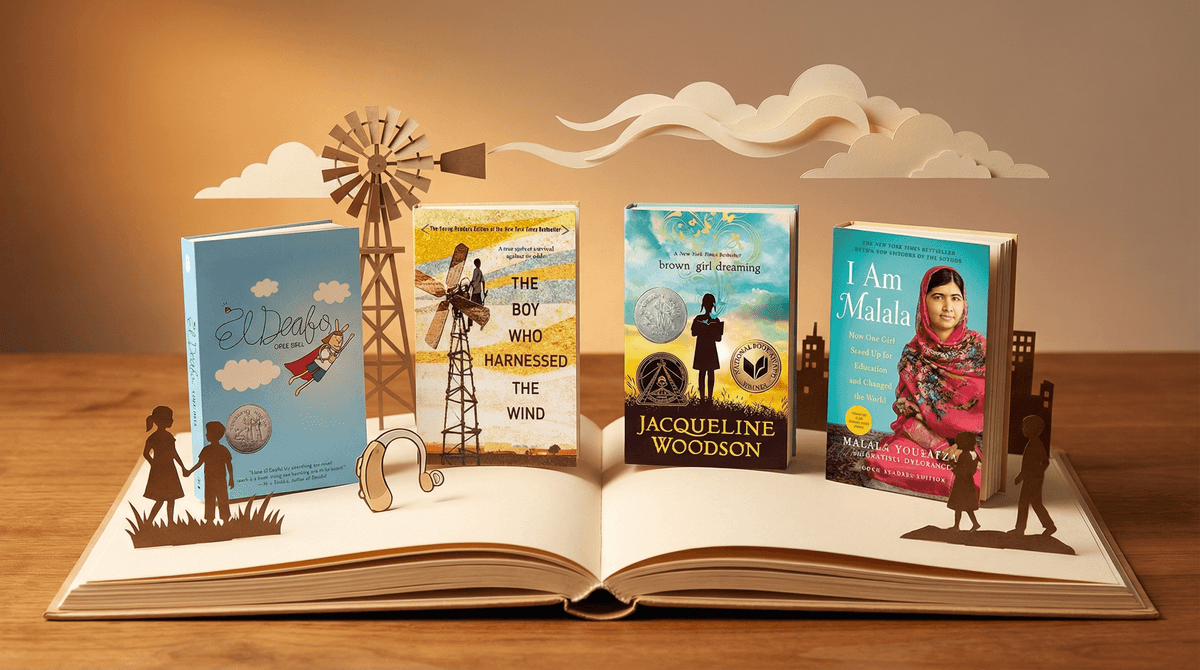
Our reviews and ratings are 100% unbiased. Screenwise is a Bookshop.org affiliate and an Amazon Associate, so if you buy a book through one of our links, we may earn a commission. Bookshop.org purchases also support independent bookstores.
Screenwise Verdict
This is the kind of book that makes kids want to build things, question systems, and believe they can make a difference. William Kamkwamba's story is legitimately inspiring without being saccharine—he's not a superhero, just a curious, determined teenager who refused to accept his family's fate.
The Young Reader's Edition (2016) is perfectly calibrated: it doesn't dumb down the science or the stakes, but it's accessible and engaging. The famine sequences are the only real emotional hurdle, and they're handled with dignity. This isn't trauma porn; it's a story about hope and ingenuity winning against brutal odds.
If you've got a kid who loves tinkering, science, or underdog stories, this is a no-brainer. Even reluctant readers often get pulled in because it's a true story and the stakes are so real. Plus, the Netflix adaptation (directed by Chiwetel Ejiofor) gives families a great media pairing option.
Age Fit
Best for ages 9-14, though confident readers as young as 8 could handle it with some context. The famine and poverty themes are honest but not gratuitous. Teens will appreciate it, but it's really aimed at the upper elementary/middle school crowd who are ready for real-world problem-solving stories.
WISE Breakdown
Wholesome
88
A true story of family resilience, determination, and community survival during extreme hardship. Models perseverance, resourcefulness, and hope without sugar-coating poverty or famine. The book deals with serious themes (starvation, drought, desperation) but handles them with dignity and age-appropriate honesty. William's father remains supportive despite crushing circumstances, and the family bonds stay strong.
Imaginative
92
This is a masterclass in creative problem-solving and resourcefulness. William literally builds a working windmill from scrap metal and bicycle parts after teaching himself from library books. It's the kind of story that makes kids want to tinker, build, and believe they can engineer solutions to real problems. The 'science books in a village library' angle is pure imagination fuel.
Safe
75
Books are generally safe, and this one has no graphic violence, sexual content, or inappropriate language. However, it does depict a family experiencing genuine starvation during a famine—people are hungry, desperate, and the stakes are life-or-death. Common Sense Media confirms it's an 'inspiring true story' but younger or sensitive kids might find the famine sequences emotionally heavy. No shock content, but real hardship.
Enriching
95
Off-the-charts enriching. Kids learn about renewable energy, self-education, innovation, African culture, climate challenges, and what true resourcefulness looks like. It's a biography that shows how STEM knowledge can literally save lives. The epilogue updates readers on William's continued journey, making it clear that education and persistence create lasting change. Perfect role model material without being preachy.
Parent Info
✓
Why It Might Be Great
True story that proves one kid with library books and determination can literally change everything
STEM education that feels like an adventure, not a textbook—windmills, electricity, irrigation, all self-taught
Window into life in rural Malawi that's respectful, vivid, and eye-opening without being exploitative
Shows real problem-solving under pressure: no adults swooping in, just a teenager figuring it out
The young reader's edition is perfectly paced with photos and illustrations that bring the story to life
⚠
What to Watch For
The famine sequences are real—William's family is genuinely starving, and it's not glossed over. Sensitive kids might need context.
This isn't a 'poor people are happy anyway' story—the book shows poverty as the grinding, unfair challenge it is
Some kids might need a map and context about Malawi, droughts, and why a windmill matters for irrigation
Conversation Starters
"What would you build if you had to solve a big problem with only stuff from around the house or garage?"
"William taught himself from library books—what's something you've learned on your own that surprised people?"
"Why do you think some countries have electricity everywhere and others don't? Is that fair?"
"If you were William's friend and everyone said his windmill idea was crazy, would you have helped him or doubted him?"
Deep Dive
The teen-sized edition:The Boy Who Harnessed the Wind (Young Readers Edition) is the official young readers adaptation of this book (ages 9–99) — same core ideas, shorter and gentler in the telling. The right handoff for a curious kid who isn't ready for the original.