

Look, we've all been there. You want to put on a movie that won't make you want to claw your eyes out, that might actually teach your kids something about empathy and nature, and that won't require you to explain why the bunny's mom had to die in the first five minutes (looking at you, Bambi).
Animal movies have this unique power to help kids connect with the natural world and develop empathy for living creatures—but not all animal films are created equal. Some are genuinely beautiful explorations of nature and our relationship with animals. Others are... well, let's just say some talking animal movies are basically just fart jokes in fur coats.
The good news? There are actually some incredible animal films out there that spark real conversations about conservation, responsibility, and how we treat the creatures we share this planet with. And yes, some of them even manage to be entertaining for adults too.
Before we dive into the list, here's why this genre is worth paying attention to: research shows that exposure to nature content—including wildlife films—can increase pro-environmental attitudes and empathy in children. Kids who watch quality animal documentaries and films tend to develop stronger connections to the natural world.
Plus, in an age where many kids spend more time with screens than outdoors, these films can serve as a gateway to caring about conservation and animal welfare. They're not a replacement for actual nature time (obviously), but they can complement it.
Documentaries That Don't Talk Down
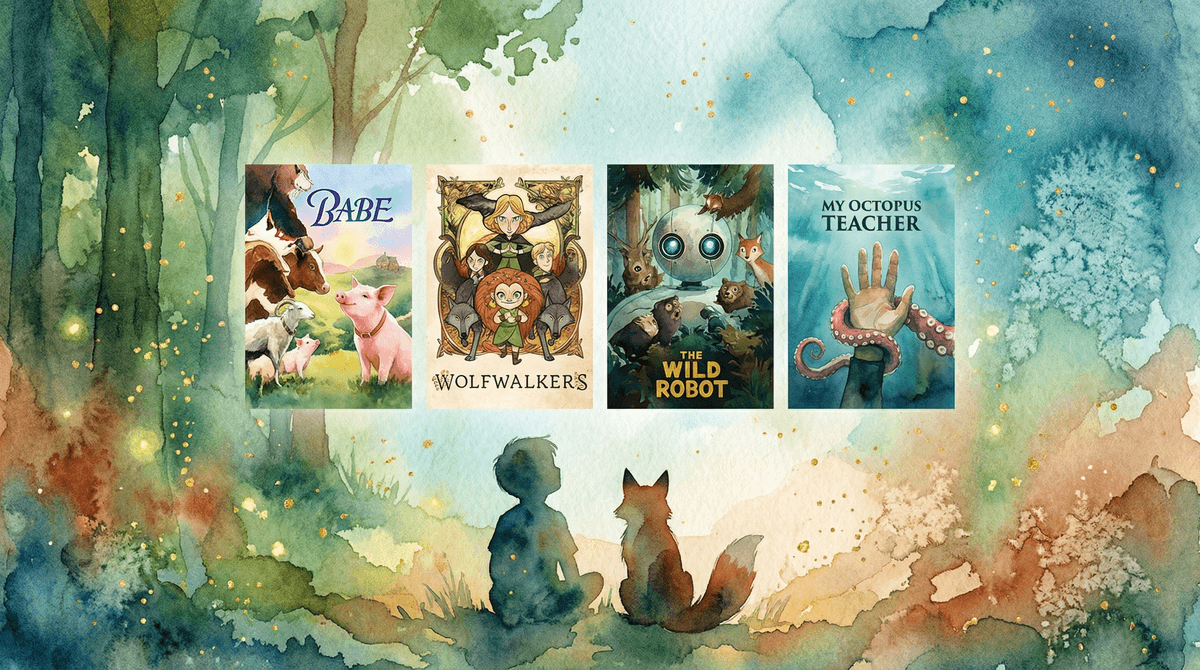
My Octopus Teacher (Ages 8+) - This Netflix documentary is absolutely stunning. A filmmaker develops a relationship with an octopus in a South African kelp forest, and it's genuinely moving. Fair warning: there are some intense predator-prey moments, and yes, the octopus does eventually die (it's nature), but it's handled beautifully. This one sparks amazing conversations about intelligence in animals and our impact on ocean ecosystems.
March of the Penguins (Ages 6+) - Morgan Freeman narrating penguin life in Antarctica. It's as good as it sounds. There are some tough moments (chicks don't all make it), but it's an honest look at survival and parenting in extreme conditions. Kids come away understanding that nature is both beautiful and brutal.
Disneynature Series (Ages 5+) - Films like Penguins, Monkey Kingdom, and African Cats hit a sweet spot: gorgeous cinematography, light narration that doesn't anthropomorphize too heavily, and real nature moments. They're Disney, so they're a bit sanitized, but they're still showing actual animal behavior and ecosystems.
Narrative Films That Get It Right
Wolfwalkers (Ages 8+) - This Irish animated film is absolutely gorgeous and tells a story about a girl who befriends a "wolfwalker" (someone who transforms into a wolf). It's really about colonialism, environmentalism, and learning to see predators as something other than monsters. The animation alone is worth it, but the themes are surprisingly sophisticated.
The Wild Robot (Ages 7+) - Based on the beloved book, this one explores what happens when a robot learns to survive in the wild and raises a gosling. It's about found family, adaptation, and our relationship with both nature and technology. Surprisingly deep for a kids' movie.
Paddington and Paddington 2 (Ages 5+) - Okay, hear me out. Yes, it's a talking bear in a coat, but these films are genuinely about kindness, immigration, and treating others (including animals) with dignity. Plus they're just... really good movies? Even for adults?
The Classics That Hold Up
Babe (Ages 5+) - A pig who wants to be a sheepdog. This movie does something remarkable: it makes you think about farm animals as individuals with personalities and desires. More than one kid has gone vegetarian after watching this, so just be prepared for that conversation.
The Black Stallion (Ages 7+) - A boy and a horse survive a shipwreck together. It's slow by modern standards, but that's actually its strength—long stretches with minimal dialogue that focus on the relationship between boy and animal. It's almost meditative.
Free Willy (Ages 7+) - Yes, it's cheesy. Yes, the orca effects are dated. But this movie sparked a genuine conversation about keeping whales in captivity that continues today. It holds up as a story about doing the right thing even when it's hard.
Finding Dory is fun but actually has some problematic messages about keeping wild animals in captivity—the aquarium is portrayed as basically a good thing. If you watch it, be ready to talk about why real aquariums are more complicated.
Most talking animal movies from the 2000s - I'm talking about stuff like Dr. Dolittle sequels or Beverly Hills Chihuahua. They're not teaching anything about actual animals or nature—they're just using animals as props for jokes.
Alpha and Omega and similar direct-to-video animal movies - Look, I'm not going to tell you these will harm your kids, but they're not going to spark any meaningful conversations about nature either. They're basically just... noise.
Ages 4-6: Stick with lighter fare like the Disneynature films or Puffin Rock (okay, it's a show, but it's great). At this age, kids are still developing their understanding of death and predator-prey relationships, so you want to be careful about intense nature moments.
Ages 7-10: This is the sweet spot for most of these films. Kids are old enough to understand that nature involves both beauty and harsh realities, but they're still open to having their minds changed about animals and conservation.
Ages 11+: They can handle pretty much anything on this list, plus more intense documentaries like Planet Earth or Our Planet. This is also a good age to watch and discuss films that deal with human impact on animals more directly.
Don't just press play and walk away. The real value comes from the conversations afterward:
- Ask open-ended questions: "What do you think that animal was feeling?" "Why do you think they showed us that part?"
- Connect to real life: "Have you ever seen a bird do something like that?" "What animals live near us?"
- Talk about conservation: "What do you think happens to animals when their habitat gets smaller?"
- Address the tough stuff: If an animal dies on screen, don't shy away from it. Talk about why that happened and what it means in nature.
You can also explore age-appropriate nature documentaries that complement these narrative films.
The best animal films for kids aren't the ones where animals act exactly like humans in fur suits. They're the ones that help kids see animals as they actually are—complex, intelligent, worthy of respect and protection.
Whether you're watching a documentary about an octopus or a narrative film about a robot raising a goose, the goal is the same: helping kids develop empathy for the non-human creatures we share this planet with.
And if that movie happens to also be genuinely entertaining and not make you want to fake a work emergency to escape the room? That's just a bonus.
Want to go deeper? Check out our guide to the best nature documentaries for kids or explore educational shows that don't feel like homework.
And if your kid becomes obsessed with a particular animal after watching one of these films, lean into it. That's exactly the kind of deep interest that leads to real learning and genuine care for the natural world.