

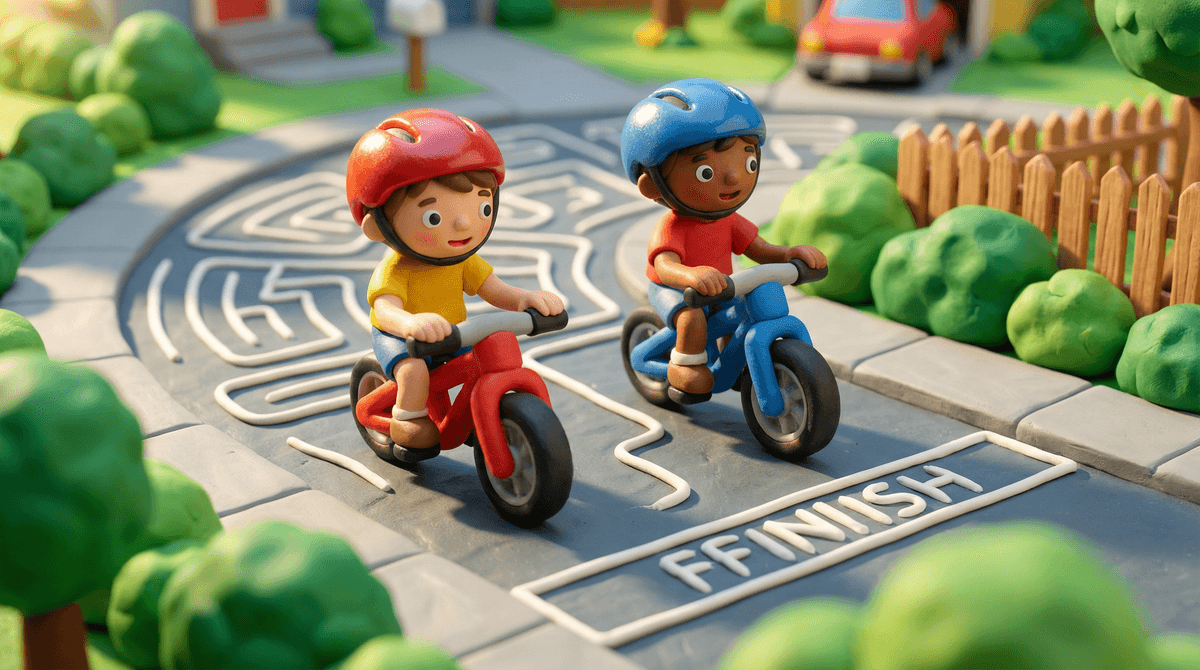
We're talking about actual outdoor games here—not screen time, not apps, not virtual bike simulators. Just good old-fashioned games that get kids on their bikes, building real skills while having actual fun. Think of these as the bicycle equivalent of pickup basketball or neighborhood tag, but with helmets (please, always helmets).
These games range from classic playground activities adapted for bikes to creative challenges that help kids master balance, coordination, and bike handling without feeling like they're in some kind of junior cycling boot camp. The best part? Most require zero equipment beyond the bikes themselves, maybe some chalk, and a safe space to ride.
Here's the thing: kids are spending less time on bikes than ever before. The data shows that only about 25% of kids ages 6-12 ride bikes regularly, down from nearly 70% in the 1990s. And while I'm not here to shame anyone about screen time (that's literally not what Screenwise is about), there's something uniquely valuable about bike skills that translates to confidence, independence, and yes—the ability to eventually get themselves places without you driving them.
Beyond the practical stuff, cycling games teach:
- Spatial awareness - Understanding where your body is in space while moving
- Risk assessment - Learning to gauge speed, distance, and their own capabilities
- Gross motor skills - The kind that actually help with everything from sports to just not being clumsy
- Social play - Negotiating rules, taking turns, and playing together IRL
Plus, tired kids are easier kids at bedtime. Just saying.
For Beginners (Ages 4-6 or New Riders)
Red Light, Green Light The classic game, now on wheels. One person is the "stoplight" and calls out colors while facing away. Green means pedal, yellow means slow, red means stop (feet down). Kids who move during red light go back to start. This game is sneaky brilliant for teaching brake control and balance while stationary.
Follow the Leader Simple but effective. Leader rides a course (around trees, in circles, figure-eights) and everyone follows. Swap leaders frequently. This builds confidence because kids aren't worried about doing it "right"—they're just copying. Start with wide, slow turns and gradually add complexity.
Slow Race Exactly what it sounds like: last one to cross the finish line wins. The catch? You can't put your feet down. This is the game for building balance and bike control. Kids learn that going slower actually requires more skill, which is a useful life lesson in general.
For Intermediate Riders (Ages 6-10)
Bike Limbo Use a pool noodle, rope, or even a broom handle held between two people. Kids ride under without touching it. Lower it each round. This teaches body positioning and bike handling while being objectively hilarious to watch.
Obstacle Course Use chalk to draw a winding path, create "stops" where they have to put one foot down, add circles to ride around. Get creative with what you have—cones, boxes, hula hoops laid flat. Time them or just let them practice. Kids love designing their own courses too.
Sharks and Minnows One rider is the "shark" in the middle of a designated area. Other riders (minnows) try to cross from one side to the other without getting tagged. If tagged, you become a shark too. This game is chaos in the best way and teaches quick maneuvering and awareness of other riders.
Bike Tag Regular tag, but on bikes. Set clear boundaries and maybe a "no tag backs" rule. This naturally teaches kids to look around, change direction quickly, and control their speed. Fair warning: this gets loud and competitive fast.
For Advanced Riders (Ages 8+)
Snail Race with Challenges Like the slow race, but add challenges: ride with one hand, stand up while pedaling, weave through cones. Most creative riding wins. This is where kids start to really own their bike handling skills.
Bike Polo (simplified version) Use a soft ball and pool noodles as mallets. Set up goals with cones. Keep teams small (2v2 or 3v3) and rules simple. This is legitimately difficult and builds serious coordination. Definitely for confident riders in a safe, contained space.
Timed Trials Set up a course and time each rider. Let them try to beat their own time. This isn't about competition with others—it's about improvement and control. Kids who are motivated by personal bests will love this.
Let's be clear about a few things:
Helmets are mandatory. Not optional, not "just this once," not "we're just in the driveway." Every single time. If your kid fights you on this, the bike doesn't come out. End of discussion.
Choose appropriate spaces. Driveways work for beginners. Quiet cul-de-sacs or empty parking lots are great for intermediate games. Parks with paved paths are ideal. Busy streets are never appropriate for games—save those for actual transportation once they're ready.
Start slow. A kid who can barely ride in a straight line isn't ready for bike tag. Match the game to their actual skill level, not their age or your ambitions for them.
Watch for the "showing off" phase. Around ages 8-10, kids start taking risks to impress friends. This is normal but needs boundaries. Set clear rules about what's allowed and what isn't.
The gear doesn't have to be fancy. Any working bike that fits properly is fine. In fact, hand-me-down bikes with a few scratches might be better—kids are less precious about them and more willing to actually play.
Proper fit matters more than you think. Kids should be able to touch the ground with their toes while seated. Handlebars should be at or below seat height for beginners. A bike that's too big "to grow into" is actually dangerous and discouraging.
These games work for mixed ages. Older kids can be leaders or timers. Younger kids can play modified versions. This is actually ideal because older kids model good skills and younger kids get challenged to improve.
You don't need to organize everything. Once kids know a few games, they'll adapt and create their own versions. That's the goal—giving them the tools to create their own active play.
It's okay if they're not interested. Some kids just don't love biking, and that's fine. There are lots of ways to build coordination and get outside. Don't force it to the point where they hate it.
Pick one game that matches your kid's current skill level. Set up a time (weekends work great, or after school before dinner). Invite a couple of neighbor kids if possible—games are always better with friends.
Keep sessions short at first—20-30 minutes is plenty. End while they're still having fun, not when someone's melting down because they're tired or frustrated.
For kids who are still building confidence, play alongside them. Yes, you on a bike too. It's less intimidating and honestly? You probably need the practice too.
Cycling games are one of those rare things that feel like pure fun to kids while building genuinely useful skills. They're free, they get kids outside and moving, and they create the kind of neighborhood play that's increasingly rare.
You don't need to be a cycling expert or have fancy equipment. You just need some space, a few basic games, and the willingness to let kids be loud, competitive, and occasionally ridiculous on their bikes.
Start with one game this weekend. See what happens. Worst case? Your kid gets some exercise and fresh air. Best case? You start a neighborhood tradition and your kid actually wants to be outside instead of asking for more screen time.
And if you're looking for other ways to balance outdoor play with digital life, chat with Screenwise about strategies that actually work for your family's situation.