

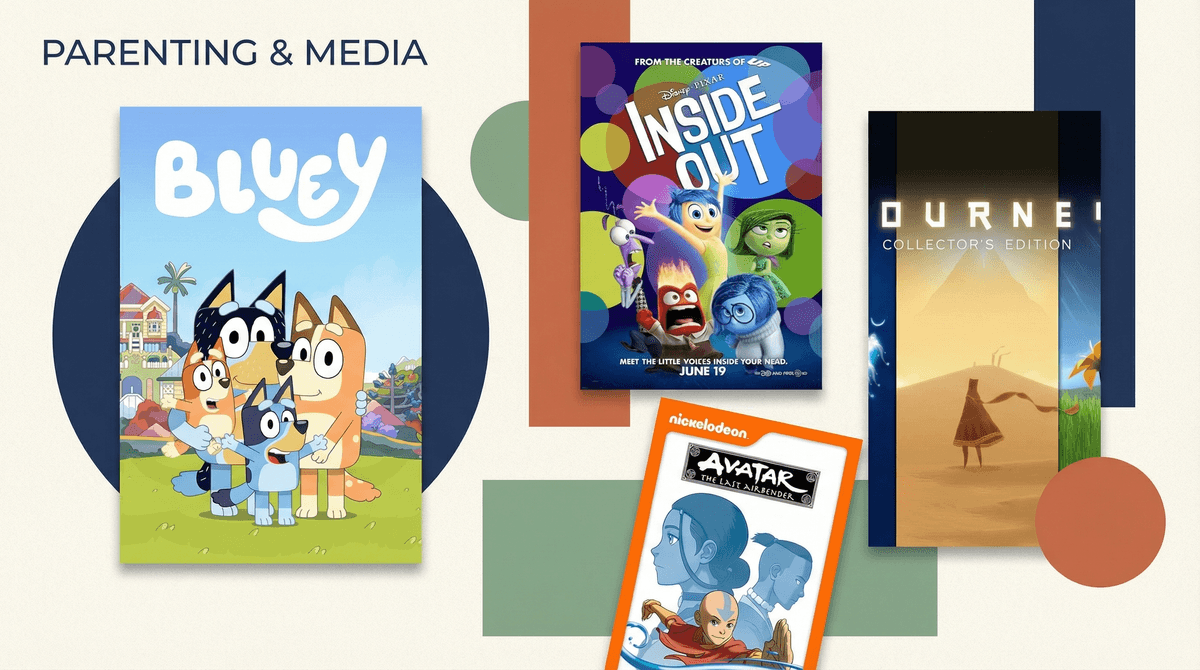
Look, we all know the difference between a show that leaves your kid quietly contemplating kindness versus one that just leaves them screaming "SKIBIDI" at their sibling. Character-building media is entertainment that actually gives kids something to think about beyond the plot—stories that model empathy, resilience, courage, integrity, and other values you're hoping will stick.
The good news? There's genuinely great stuff out there that kids will actually watch (and even love). The challenge is finding it in an ocean of content where algorithms prioritize engagement over everything else.
This isn't about turning screen time into a morality lesson. It's about being intentional when you can—choosing shows, movies, and games that spark real conversations and model the kinds of humans you're hoping to raise.
Here's the thing: kids are going to consume media. The average 8-12 year old is getting 4-6 hours of screen time daily, and teens are clocking even more. That's a LOT of storytelling shaping how they see the world, relationships, conflict resolution, and themselves.
Character-building media doesn't replace parenting (obviously), but it can be a surprisingly effective co-pilot. A well-crafted story can introduce concepts you haven't figured out how to explain yet, or give you a shared reference point for tough conversations. "Remember when Aang had to choose between his values and what everyone expected?" hits different than "let me lecture you about integrity."
Plus, let's be honest—some of us learned our earliest lessons about friendship from Sesame Street and fairness from Mister Rogers. Good media has always been part of how kids figure out how to be people.
Ages 3-7
Bluey is genuinely the gold standard right now. It's about an Australian Blue Heeler family, and somehow manages to teach emotional regulation, creative play, sibling dynamics, and parenting philosophy without ever feeling preachy. Parents actually want to watch this one. If your kid isn't into Bluey yet, start there.
Daniel Tiger's Neighborhood is the spiritual successor to Mister Rogers, and it's surprisingly effective at teaching emotional literacy. The songs are annoyingly catchy, but they work—your kid will actually sing "when you feel so mad that you want to roar, take a deep breath and count to four" back at you.
Sesame Street is still doing the work after 50+ years. Inclusion, kindness, problem-solving, and basic human decency, all wrapped up with Muppets. Can't go wrong.
Ages 7-12
Avatar: The Last Airbender is the show everyone recommends for a reason. It tackles war, genocide, redemption, chosen family, and moral complexity in ways that work for kids AND adults. Aang's journey is fundamentally about choosing compassion over violence, and Zuko's redemption arc is one of the best character studies in any medium.
Hilda on Netflix is a gem about a fearless blue-haired girl navigating a world of magical creatures. It's all about curiosity, empathy for the "other," and creative problem-solving. Beautifully animated, genuinely funny, and sneakily thoughtful.
The Dragon Prince (from the Avatar creators) explores cycles of violence, prejudice, and what it takes to break them. It's fantasy adventure with real moral stakes and characters who make mistakes and grow from them.
Ages 12+
The Owl House is about an outsider finding her people, with themes of identity, found family, and standing up to authoritarianism. It's got great LGBTQ+ representation that feels natural, not tokenized.
She-Ra and the Princesses of Power is a reboot that's shockingly good at exploring toxic relationships, trauma, redemption, and what healthy friendship actually looks like. The finale is about choosing love over power, and it earns it.
Inside Out (and Inside Out 2) are basically emotional intelligence bootcamp. They make abstract feelings concrete and give kids (and parents) language for what's happening in their heads.
Coco is about family, memory, following your passion, and making amends. It handles death and legacy in ways that feel honest and beautiful. Bring tissues.
Encanto tackles generational trauma, family expectations, and self-worth outside of achievement. "What else can I do?" is the song every burnt-out gifted kid needs to hear.
The Iron Giant is about choosing who you want to be. "You are who you choose to be" is one of the most powerful messages in kids' media, period.
Spider-Man: Into the Spider-Verse is about stepping up when you don't feel ready, mentorship, and the "anyone can wear the mask" ethos that's genuinely empowering.
Yes, games can build character too—especially ones that reward creativity, problem-solving, and cooperation over violence and competition.
Stardew Valley is about building a life, not just winning. It teaches patience, planning, community building, and the satisfaction of slow, meaningful progress. It's cozy capitalism at its finest.
Spiritfarer is about helping spirits pass on peacefully. It's a game about death, grief, and saying goodbye that's somehow comforting rather than depressing. Ages 10+, and genuinely beautiful.
Kind Words is a game where you write and receive anonymous encouraging letters. That's it. It's simple, wholesome, and a nice reminder that the internet can be kind.
Journey is a wordless game about... well, a journey. You occasionally encounter other players, and the only interaction is cooperation. It's meditative, gorgeous, and surprisingly emotional.
Minecraft in creative or peaceful mode can absolutely be character-building—it rewards persistence, creativity, and problem-solving. Just maybe skip the PvP servers for now.
Here's the thing: just watching/playing isn't enough. The character-building happens in the conversation afterward (or during, if your kid is a talker).
Try:
- "What would you have done?" after a character makes a tough choice
- "Why do you think they did that?" to build empathy and perspective-taking
- "Have you ever felt like that?" to connect fiction to their real experiences
- Pausing at key moments to process together (yes, even if they groan)
You don't need to turn everything into a teaching moment, but a few thoughtful questions here and there can help kids actually metabolize what they're seeing instead of just consuming it.
Character-building media exists, it's actually good, and your kids might even enjoy it. The key is being intentional about at least some of what they're consuming—not every screen minute needs to be educational, but having a foundation of stories that model good values gives you something to build on.
Start with one show or movie from this list that matches your kid's age and interests. Watch it together if you can. Ask a couple questions. See what sticks.
And remember: you're not trying to raise perfect humans. You're trying to raise humans who can think about what kind of humans they want to be. Good stories help with that.
Want more specific recommendations for your family? Take the Screenwise survey to get personalized guides based on your kids' ages, interests, and your family's values.
Curious about alternatives to YouTube that won't rot their brains? Or wondering how to actually talk to kids about screen time without it turning into a battle? We've got you.