

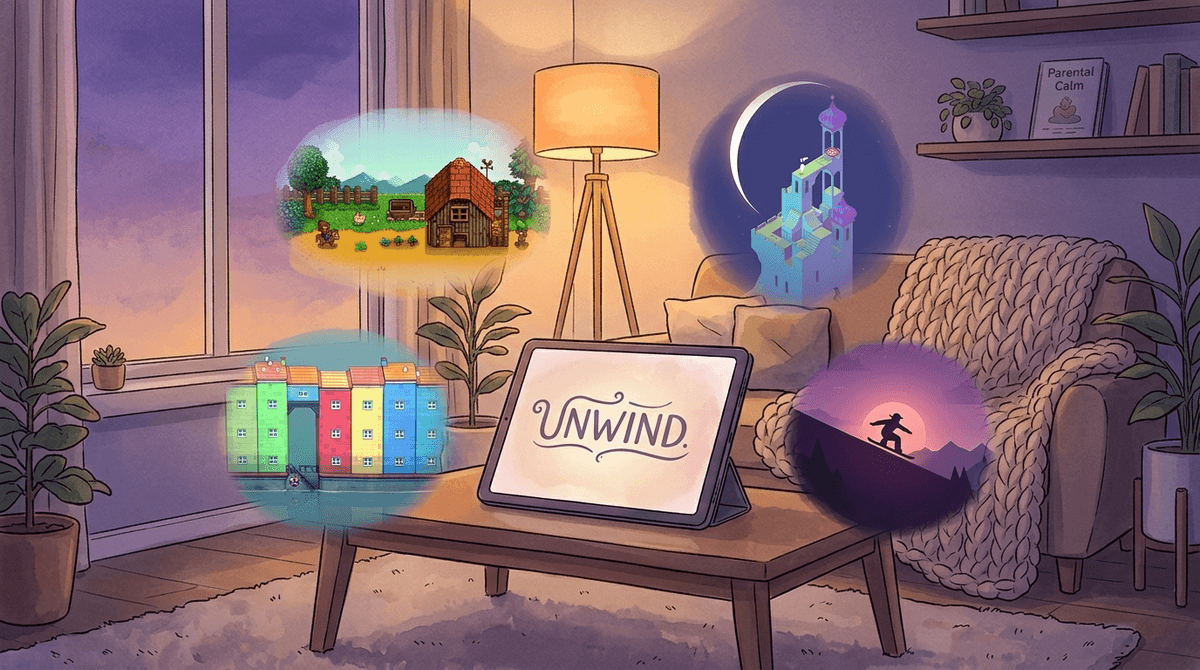
If you’re looking to swap the high-octane chaos of Fortnite for something that won’t result in a pre-bedtime meltdown, here are my top picks for calming "cozy" games:
- Best for Creativity: Townscaper
- Best for Nature Lovers: Toca Nature
- Best for Visual Zen: Monument Valley
- Best for Long-Term Chill: Stardew Valley
- Best for "Flow State": Alto’s Adventure
We’ve all been there. It’s 7:00 PM. You’re trying to wind things down, but your kid is mid-match in [Brawl Stars](https://screenwiseapp.com/media/brawl-stars-app, screaming about someone being "mid" or calling a play "Ohio" (which, for the uninitiated, basically means "weird" or "cringe" these days). Their pupils are dilated, their thumbs are moving at Mach 1, and the thought of them transitioning to a peaceful slumber in thirty minutes feels like a literal impossibility.
The problem isn't just "screens." The problem is the type of stimulation. Most popular games are designed to be "sweaty"—a term kids use for games that require intense effort and high stress. They trigger dopamine spikes and cortisol.
But there’s a whole genre of "cozy gaming" that does the opposite. These are games with no "game over" screens, no ticking clocks, and soundtracks that sound like a spa day. If we’re going to allow a little bit of digital time before the pajamas go on, these are the apps that actually help lower the heart rate.
It’s easy to think kids only want the loud, bright, "brain rot" stuff, but the rise of the "cozy" genre proves otherwise. Kids deal with a lot of performance pressure at school and in competitive sports. A game where you can’t "lose" provides a sense of agency and control without the fear of failure.
In these worlds, they aren't being chased by a Skibidi Toilet; they’re just planting digital parsnips or building a colorful town on the ocean. It’s a digital fidget spinner for the brain.
Ages 4+ This is less of a "game" and more of a toy. There are no goals and no timers. You just tap the screen to plop down colorful little houses in the middle of the ocean. The game automatically turns them into little stilt-houses, balconies, or towers. The sound design is incredibly satisfying—a gentle plink-plonk as blocks appear. It’s the ultimate "wind down" app because there is zero way to fail.
Ages 7+ If you haven't seen this one, it’s basically a playable M.C. Escher painting. Your child guides a silent princess through impossible architecture. It’s a puzzle game, but it’s not frustrating. The music is ethereal and the art is stunning. It encourages slow, deliberate thinking rather than twitchy reflexes.
Ages 10+ This is the gold standard of cozy gaming. Your kid inherits their grandfather’s old farm and... that’s it. They can farm, fish, or just talk to the townspeople. While Roblox often feels like a frantic race to spend Robux, Stardew Valley teaches the slow reward of hard work and patience. Note: This one can be addictive because it’s so deep, so you’ll still want to set a "sleep timer" on the device.
Ages 4-8 From the creators of Toca Life World, this is a much quieter experience. Kids "plant" forests, create mountains, and then watch animals move in. They can feed the bears berries or watch the woodpeckers. It’s incredibly grounding and a great alternative to more overstimulating PBS Kids games that might have too much dialogue and noise.
Ages 7+ This is an "endless runner" (think Subway Surfers), but instead of neon colors and police chases, you’re snowboarding down a mountain at sunset. The physics are smooth, the background changes from day to night, and the music is a soothing piano score. It puts the brain into a "flow state" which is great for transitioning away from a high-stress day.
Even in the calmest games, there are two things parents need to watch out for:
- The "One More Turn" Trap: Games like Stardew Valley operate on a "day" cycle. Kids will often beg to "just finish the day" so their progress saves. This can lead to a 20-minute delay in bedtime if you aren't careful.
- Blue Light: Even the most relaxing game is still a light source hitting their retinas. If you’re using these for wind-down time, make sure "Night Shift" (on iOS) or "Blue Light Filter" (on Android) is turned on to shift the screen to warmer tones.
- In-App Purchases: While most of the games listed above are "premium" (you pay $2-$5 once and own them), some "free" calming games are riddled with ads. Avoid the free ones. Nothing ruins a zen moment like a loud, 30-second ad for a casino app.
Check out our guide on setting up "Night Shift" for better sleep
If your kid is used to the high-intensity world of Minecraft (specifically "Survival Mode") or Among Us, they might initially find these games "boring."
This is a great moment for a "digital wellness" chat. You can explain it like food: Fortnite is like a double espresso or a giant bag of Sour Patch Kids—fun, but it gets your heart racing. Townscaper is like a cup of herbal tea.
Try saying this: "I noticed that after you play Roblox, you seem really amped up and it’s hard for you to fall asleep. Let’s try 15 minutes of a 'cozy game' tonight to help your brain shift into sleep mode."
I get asked a lot if games like Roblox are teaching kids about business. The short answer? Rarely. Most of them are just teaching kids how to be consumers.
However, games like Stardew Valley actually do teach basic resource management. You have a limited amount of energy and money each day. Do you buy seeds or upgrade your watering can? That’s a real-world trade-off. It’s a much healthier way to learn about "the grind" than clicking a button to buy more "gems."
Screens aren't going anywhere, and for many kids, they are the primary way they decompress after a long day. Instead of fighting the device entirely, we can curate the experience.
By steering them toward "cozy" titles like Monument Valley or Alto’s Adventure, you’re helping them learn a vital life skill: how to use technology to regulate their emotions rather than just escape them.
- Audit the Tablet: Delete those "free" games that are just ad-delivery systems. They are the opposite of calming.
- Try a "Cozy Swap": For one week, try a rule where the last 20 minutes of screen time must be a "Level 1" intensity game.
- Play Together: Sit with them while they play Townscaper. It’s surprisingly relaxing for parents, too. (Seriously, it’s better than scrolling TikTok).
Take the Screenwise Survey to see how your family's gaming habits compare to your community