

Third grade is when reading shifts from "learning to read" to "reading to learn" — and honestly, it's when things can either click beautifully or start feeling like a chore. Kids this age (typically 8-9 years old) are transitioning from picture books to chapter books, developing their own tastes, and starting to read independently for longer stretches.
A good 3rd grade reading list isn't about pushing classics that adults think kids should read. It's about finding books that hook them — stories that make them want to keep turning pages instead of asking "can I have screen time now?"
The goal here is building reading stamina and genuine enthusiasm, not checking boxes on some curriculum guide.
Third grade reading is a pivotal moment. Kids who become confident readers now tend to stay readers. Kids who start associating reading with struggle or boredom? They're the ones who'll tell you in middle school that they "just don't like reading."
Here's what's happening developmentally:
- Reading comprehension is deepening — they're starting to understand plot, character motivation, and humor beyond the literal
- Attention spans are growing — they can handle longer books with more complex storylines
- Identity is forming — they're developing strong preferences (fantasy vs. realistic fiction, funny vs. serious, graphic novels vs. traditional chapter books)
- Social awareness is expanding — they're ready for stories about friendship, fairness, and feelings
The best books for this age meet them where they are while gently stretching their abilities.
For Reluctant Readers (Make It Easy, Make It Fun)
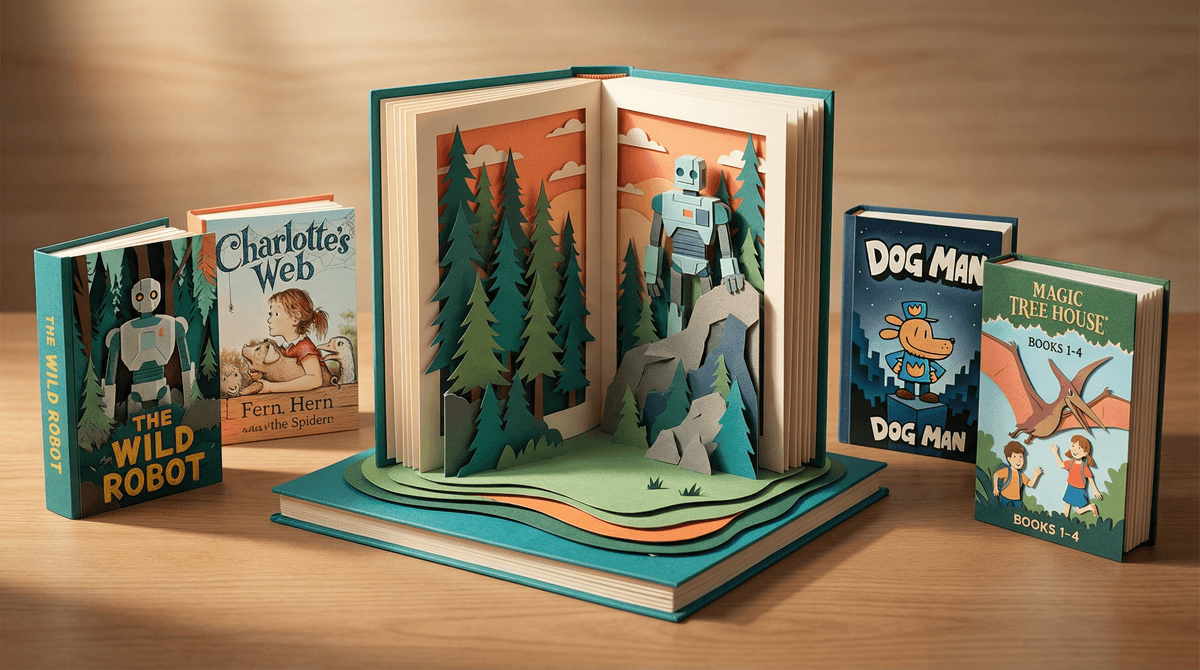
Dog Man series by Dav Pilkey — Yes, it's part comic book. Yes, there are potty jokes. Yes, it counts as reading. These books have gotten more kids excited about reading than most "quality literature" combined. The humor is silly, the action is fast, and the page count feels manageable.
Diary of a Wimpy Kid by Jeff Kinney — The format (part text, part cartoon) makes it feel less intimidating than a full chapter book. Greg Heffley is relatable in his mediocrity, and the humor lands perfectly with this age group.
The Bad Guys series by Aaron Blabey — Short chapters, tons of illustrations, and a genuinely funny premise about villains trying to be heroes. Kids blow through these fast, which builds confidence.
Hilo series by Judd Winick — Full-color graphic novels about a robot boy from another dimension. High action, genuine heart, and zero reading fatigue.
For Developing Readers (Building Stamina)
Magic Tree House series by Mary Pope Osborne — There are literally dozens of these, which means once a kid gets hooked, you've got months of reading material. Each book is a time-travel adventure that sneaks in history and science. Perfect for kids who need that "just one more chapter" momentum.
Ivy + Bean series by Annie Barrows — Friendship, mischief, and realistic kid problems. Great for readers who want "real life" stories but still need that chapter-book training-wheels feeling.
The Wild Robot by Peter Brown — A robot stranded on an island learns to survive and connect with animals. Beautiful writing, manageable length, and a story that sticks with kids long after they finish.
Wayside School series by Louis Sachar — Weird, funny, and structured as short chapters that can each stand alone. Perfect for kids who aren't ready to commit to long, complex plots.
For Strong Readers (Let Them Soar)
Percy Jackson series by Rick Riordan — Greek mythology meets modern adventure. Fast-paced, funny, and meaty enough to challenge strong readers without overwhelming them. Bonus: There are multiple series in this universe, so if they love it, you're set for years.
The One and Only Ivan by Katherine Applegate — Told from the perspective of a gorilla living in a shopping mall. Emotionally rich, beautifully written, and tackles big themes (captivity, friendship, hope) without being heavy-handed.
Wonder by R.J. Palacio — About a boy with facial differences starting school. This book sparks real conversations about kindness, empathy, and what it means to be different. Some kids find it emotionally intense, so know your kid.
Matilda by Roald Dahl — A brilliant girl with terrible parents discovers she has telekinetic powers. Dahl's humor is dark and delicious, and Matilda is the ultimate underdog hero.
Charlotte's Web by E.B. White — Yes, it's a classic. But it's a classic because it's genuinely beautiful and emotionally powerful. A spider saves a pig through the power of words. If your kid is ready for something with more emotional weight, this is it.
For Kids Who Love Graphic Novels (Yes, These Count)
Amulet series by Kazu Kibuishi — Stunning artwork, complex world-building, and a genuinely gripping fantasy adventure. This is the series that proves graphic novels can be just as sophisticated as traditional chapter books.
Smile by Raina Telgemeier — A memoir about middle school, braces, and friendship drama. Relatable and real, especially for kids navigating social dynamics.
The Last Kids on Earth series by Max Brallier — Post-apocalyptic adventure with zombies and monsters. Part graphic novel, part chapter book. High energy and tons of fun.
Reading levels are just guidelines, not prison sentences. If your 3rd grader wants to read a 5th grade book, let them. If they want to reread a 1st grade favorite, that's fine too. The goal is to keep them reading, not to police their choices.
Series books are your friend. Once a kid finds a series they love, they'll keep reading. Don't worry that it's "all they read" — building that reading habit matters more than variety right now.
Graphic novels are real reading. The combination of text and images actually requires sophisticated comprehension skills. Kids who love graphic novels are readers, full stop.
Audiobooks count too. If your kid follows along with the text while listening, that's reading. If they just listen while playing Minecraft? That's still building literacy skills and story comprehension. Don't gatekeep.
Let them quit books. Not every book is going to land. Teaching kids it's okay to abandon a book that's not working is a valuable lesson. Forcing them to finish creates reading resentment.
This isn't a "read all of these" checklist. It's a menu. Here's how to actually use it:
-
Start with their interests. Does your kid love animals? Try The Wild Robot or Charlotte's Web. Obsessed with Greek mythology thanks to Percy Jackson (the show)? Hand them the books.
-
Match the format to their reading stamina. Struggling readers need quick wins — shorter books, more illustrations, faster plots. Strong readers can handle longer, more complex stories.
-
Visit the library. Let them browse. Let them pick based on covers. Let them check out ten books and only read two. Libraries are free, and exploration is how they find their favorites.
-
Read together, even at this age. Reading aloud to your 3rd grader isn't babying them — it lets them experience more complex stories than they can tackle independently, and it's quality time that doesn't involve a screen.
-
Don't make reading compete with screens. Instead of "read instead of playing Roblox," try "reading time is at 7pm, screen time is at 7:30." Make reading its own thing, not the punishment for wanting screen time.
The best 3rd grade reading list is the one your kid actually reads. Whether that's Dog Man, Percy Jackson, or a stack of graphic novels, what matters is that they're building the habit and the love of reading.
Third grade is when lifelong readers are made — not through force or shame, but through finding the right books at the right time. Start with this list, follow your kid's interests, and trust that reading begets more reading.
And if they want to tell you about every single plot point of Magic Tree House #47 while you're trying to make dinner? That's the sound of a reader being born. Annoying, yes. But also: success.