

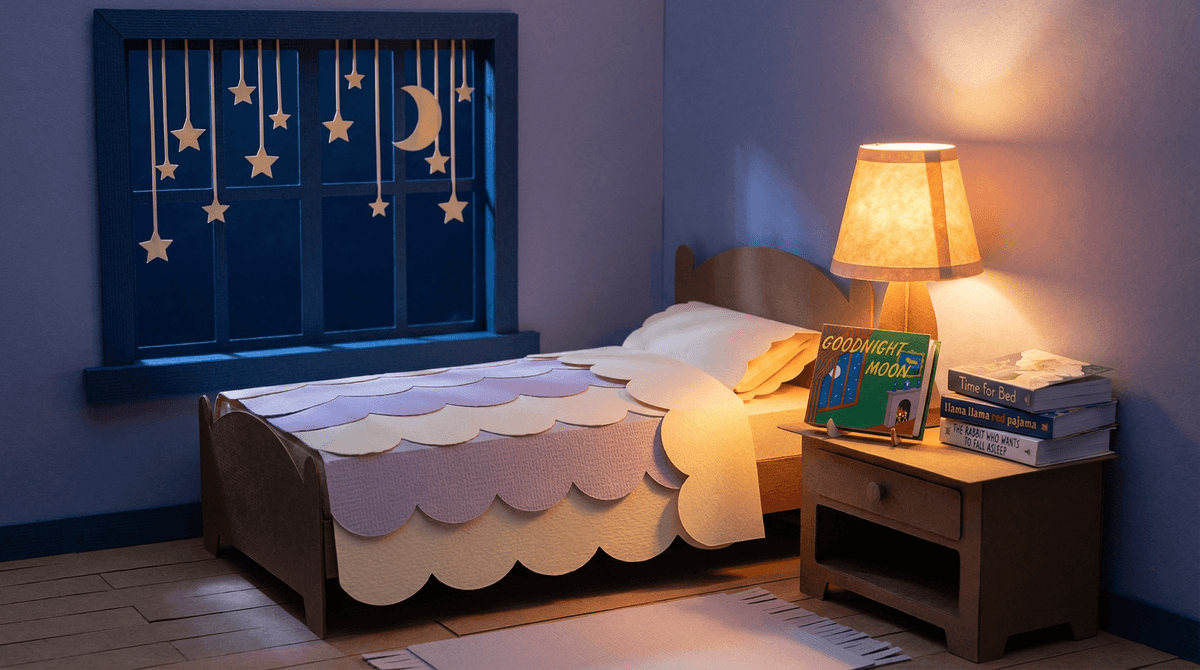
Look, we all know the classic advice: read to your kids before bed. But here's what's different now—we're not just competing with the usual "I'm not tired!" protests. We're up against devices that are literally engineered to keep brains alert, algorithms designed to serve up "just one more" video, and screens that emit blue light specifically calibrated to tell our kids' brains it's noon, not bedtime.
A bedtime book routine isn't just about literacy or bonding anymore (though those are great). It's become one of the most effective tools for physically transitioning a child's brain from screen mode to sleep mode. The right books, read at the right time, can actually help undo some of the neurological activation that screens create.
And honestly? It works. Not like magic—this isn't going to fix a kid who's been on Fortnite until 9pm—but as part of a real wind-down routine, books are genuinely powerful.
You've probably heard about blue light, but it's more than that. Screens activate the brain in multiple ways:
- Visual stimulation: Fast cuts, bright colors, movement—all designed to hold attention
- Dopamine hits: Likes, wins, next episodes, new videos—constant micro-rewards
- Interactive engagement: Games and social media require active decision-making, which keeps the prefrontal cortex fired up
Books do the opposite. They're:
- Visually calm: Static images (or no images), consistent lighting
- Narratively predictable: Especially good bedtime books have soothing rhythms and expected endings
- Passive consumption: The brain can relax into the story without needing to respond or react
This isn't anti-screen propaganda—it's just biology. Learn more about how screen time affects sleep .
.
Not all books are created equal for bedtime. Here's what actually works:
For younger kids (ages 3-7):
- Predictable, repetitive language: Think Goodnight Moon or The Rabbit Who Wants to Fall Asleep
- Calm illustrations: Soft colors, minimal action
- Gentle themes: Nature, nighttime, comfort, safety
- Short enough to finish: 5-10 minutes max
Books to avoid: Anything with high drama, scary elements, or that gets them asking a million questions. The Day the Crayons Quit is hilarious but maybe not at 8pm when you need them asleep by 8:30.
For older kids (ages 8-12):
- Chapter books you read together: Percy Jackson, Harry Potter, Wonder
- Cozy, low-stakes stories: Not every chapter needs a cliffhanger
- Poetry collections: Seriously underrated for this age
- Graphic novels: If they're calm in tone (Hilda, Phoebe and Her Unicorn)
The goal isn't to bore them—it's to engage their imagination in a way that feels cozy rather than activating.
Here's the thing: the book itself is only part of it. The routine around the book is what makes it work.
The 30-minute wind-down:
- Screens off (yeah, I know—but this is non-negotiable if you want this to work)
- Pajamas, teeth, etc. (the boring stuff)
- Dim the lights (seriously, bright overhead lights are working against you)
- Read together (15-20 minutes)
- Lights out, maybe some quiet music or white noise
What if they're "too old" to be read to?
They're not. I promise. Even middle schoolers often love being read to—they just won't admit it in front of their friends. Frame it as "our thing" or let them read to you sometimes. Or do audiobooks together while they draw or do a puzzle. The point is the calm, predictable transition.
What if they want to read on a device?
E-readers with e-ink screens (Kindle Paperwhite, Kobo) are genuinely fine—they don't have the same blue light issues as tablets. But iPads with the Kindle app? That's still a screen that can easily become "just one quick check of Discord."
Ages 3-5:
- Goodnight Moon (the classic for a reason)
- Time for Bed by Mem Fox
- Llama Llama Red Pajama
Ages 6-8:
- Charlotte's Web (chapter by chapter)
- Winnie-the-Pooh (the original, not the Disney version)
- The Wild Robot (gentle sci-fi)
Ages 9-12:
Poetry that works:
- Where the Sidewalk Ends by Shel Silverstein
- Anything by Mary Oliver (yes, really—kids love her nature poems)
Yeah, they might. Especially if you're introducing this after years of a different routine (or no routine). Here's what helps:
Let them have some control: They pick the book (within reason). They decide if lights stay on for five more minutes of independent reading.
Start earlier than you think: If bedtime is 8:30, start wind-down at 7:45. Rushing through this defeats the purpose.
Be consistent: This isn't a sometimes thing. It's an every night thing. Even on weekends.
Acknowledge it's hard: "I know you want to keep playing Roblox, and I get that this feels boring. But this is how we help our brains get ready for sleep."
Bedtime books aren't just a nice idea—they're a practical tool for countering the sleep-disrupting effects of screens. But they only work if you actually do them, consistently, as part of a real wind-down routine.
The good news? Most kids genuinely love this once it becomes the norm. Even the ones who fight it at first. There's something deeply comforting about the predictability, the closeness, the calm.
And honestly, you might find you need it as much as they do.
- Tonight: Pick one book and read it together, screens off 30 minutes before bed
- This week: Make it consistent—same time, same routine, every night
- This month: Notice what's working and what's not, adjust accordingly
Explore more calming activities for kids or read about creating a screen-free bedroom.