

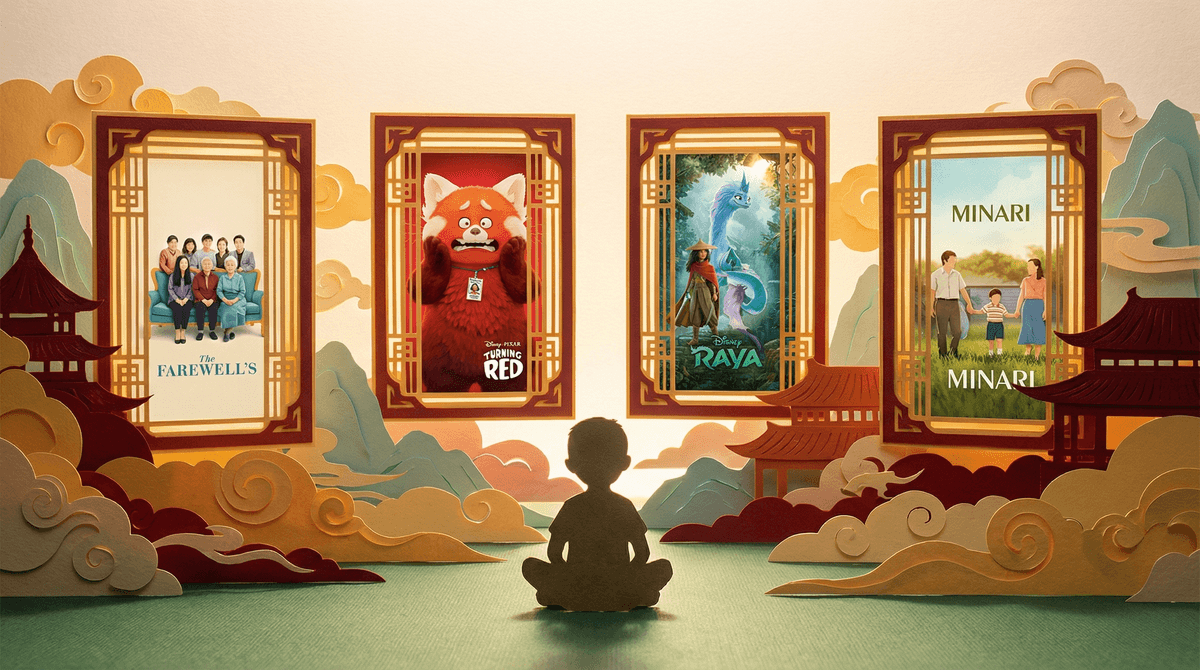
Asian American Heritage movies are films that center Asian American experiences, identities, and stories—whether they're comedies about family dynamics, coming-of-age tales about belonging, or adventures that happen to feature Asian American protagonists living their lives. These aren't just "cultural education" films (though some are!). They're stories where Asian American kids get to see themselves as the heroes, the funny sidekicks, the romantic leads, and everything in between.
And here's the thing: representation matters for all kids. For Asian American children, seeing families that look like theirs—with grandparents who speak another language, parents navigating two cultures, or siblings dealing with the specific pressures of high expectations—can be deeply affirming. For kids from other backgrounds, these films offer windows into experiences different from their own, building empathy and understanding in ways that feel natural and engaging.
The landscape has genuinely improved. We've moved beyond the era where Asian characters were limited to martial arts masters or tech geniuses. Now we have everything from Pixar's Turning Red exploring a Chinese Canadian girl's relationship with her overbearing mom, to Everything Everywhere All at Once (for older teens) showcasing a chaotic multiverse adventure centered on an immigrant family running a laundromat.
Identity formation is huge during childhood and adolescence. Kids are constantly asking themselves: Who am I? Where do I fit? What does my culture mean to me? For Asian American kids, these questions can feel particularly complex when they're navigating between home culture and mainstream American culture.
Movies provide a low-stakes way to explore these questions. They show that you can be fully American AND deeply connected to your heritage. That speaking another language at home is normal. That having immigrant parents with different expectations isn't something to hide. That your cultural traditions—whether it's Lunar New Year celebrations, specific foods, or family structures—are worth celebrating, not explaining away.
For non-Asian American kids, these films are equally valuable. They normalize diversity in ways that feel organic rather than preachy. When a kid watches Raya and the Last Dragon and just enjoys a great adventure story that happens to be inspired by Southeast Asian cultures, they're absorbing the message that heroes come in all forms.
Ages 4-7:
- Raya and the Last Dragon - Southeast Asian-inspired fantasy adventure about trust and unity
- Abominable - A Chinese American girl helps a yeti get home to Mount Everest
- Moana - While Polynesian rather than Asian American, it's a powerful story about cultural identity and navigation
Ages 8-12:
- Turning Red - A Chinese Canadian girl turns into a giant red panda when she gets emotional. It's about puberty, family expectations, and finding your own path. Some parents worry it's too mature for younger kids in this range, but most 10+ year olds will relate hard.
- Shang-Chi and the Legend of the Ten Rings - Marvel superhero film with Chinese American lead. Some violence (it's Marvel), but ages 10+ typically handle it fine.
- The Tiger's Apprentice - A Chinese American boy discovers his heritage includes magical guardians
- Crazy Rich Asians - Best for ages 12+ (some mature themes), but a rom-com that explores Asian American identity, class, and family expectations
Ages 13+:
- Everything Everywhere All at Once - Ages 15+ due to some violence and mature themes, but an incredible exploration of immigrant parent-child relationships and generational trauma
- The Farewell - A Chinese American woman grapples with her family's decision to hide a terminal diagnosis from her grandmother. Ages 13+ can handle the emotional complexity.
- Minari - A Korean American family starts a farm in 1980s Arkansas. Ages 12+ for emotional maturity.
These aren't all the same story. Asian American is not a monolith. Chinese American experiences differ from Korean American, Vietnamese American, Filipino American, Indian American, and dozens of other distinct cultures and immigration stories. Look for variety in the films you choose.
Some films are "about" being Asian American, others just feature Asian American characters. Both matter. Turning Red explicitly explores Chinese Canadian identity. Raya and the Last Dragon is a fantasy adventure that happens to be inspired by Southeast Asian cultures. Kids need both kinds of representation.
Watch for the "model minority" trap. Some films, while well-intentioned, can reinforce stereotypes about Asian Americans being universally high-achieving, math-focused, or conflict-averse. The best films show Asian American characters as fully dimensional people with varied personalities, strengths, and flaws.
Language matters. Some of these films include significant dialogue in languages other than English (with subtitles). This can be a barrier for younger kids still learning to read, but it's also authentic to many Asian American experiences of growing up in multilingual households. Decide what works for your family.
Immigration stories can be heavy. Films like Minari and The Farewell deal with real challenges: economic struggle, cultural displacement, family separation, and generational differences. These are important stories, but they can bring up big feelings. Be ready to talk through them.
For Asian American families: Ask your kids how the film relates to their own experiences. What felt familiar? What felt different? Did anything surprise them? These films can be springboards for sharing your own family's immigration story, cultural traditions, or experiences navigating between cultures.
For non-Asian American families: Focus on the universal themes—family, belonging, identity—while acknowledging the specific cultural context. Avoid the "we're all the same" trap that erases difference. Instead, try: "This family's traditions are different from ours, and that's what makes their story interesting."
For all families: Use these films to talk about stereotypes and representation. Why does it matter that Shang-Chi is a Marvel superhero? What does it mean when kids only see people who look like them in certain types of roles?
Asian American Heritage movies aren't just for Asian American families or for heritage months. They're part of building a media diet that reflects the actual diversity of American life. The goal isn't to check a box or meet a quota—it's to give all kids access to great stories that expand their understanding of what's possible and who gets to be the hero.
Start with what appeals to your kid's interests. Love fantasy? Try Raya and the Last Dragon. Into superheroes? Shang-Chi. Family comedies? Turning Red. The representation will follow naturally.
And remember: one film doesn't need to represent all Asian American experiences. That's why variety matters. Keep watching, keep talking, and keep expanding the stories your family encounters.