

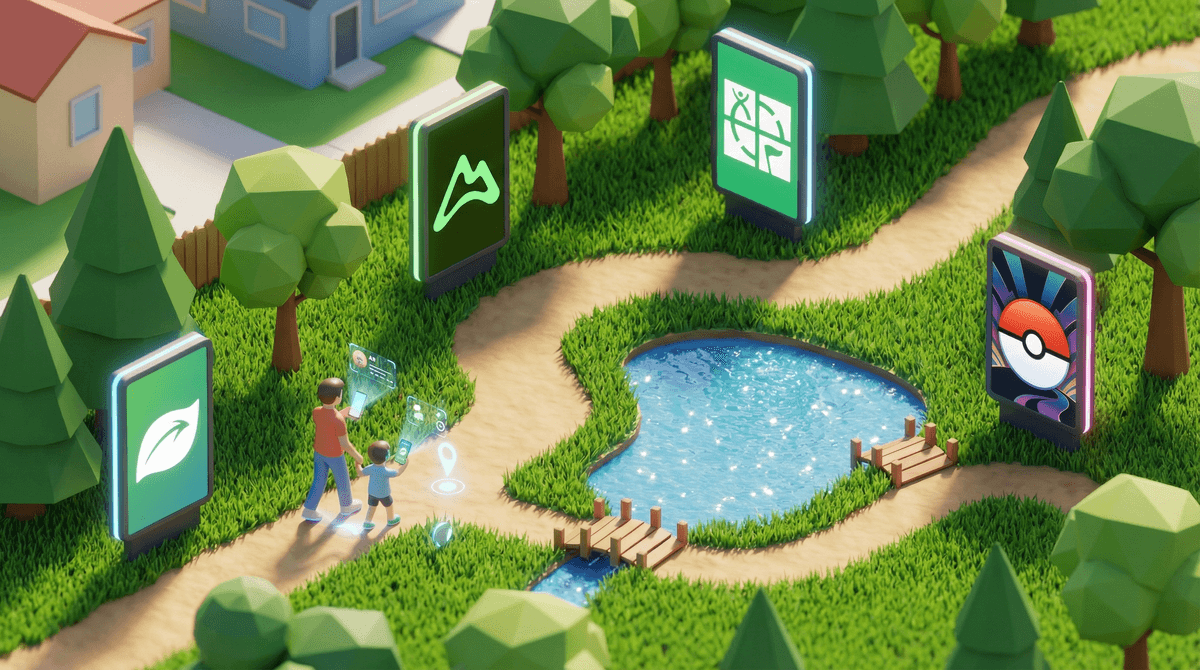
Look, the irony isn't lost on anyone. We're using screens to get kids off screens. But here's the thing: it actually works.
Apps like [Pokémon GO](https://screenwiseapp.com/media/pokemon-go-game, geocaching platforms, nature scavenger hunt apps, and augmented reality exploration tools have figured out something brilliant—they've gamified the outdoors in a way that genuinely motivates kids to move. We're not talking about strapping an iPad to a tree and calling it nature time. These apps use location tracking, AR technology, and reward systems to make the physical world the actual playing field.
The best outdoor apps turn your neighborhood into a treasure map, transform a boring walk into a quest, and make that family hike something your kid actually asks to do. Wild, right?
Let's be real: telling your kid "go play outside" hits different than it did in 1995. The unstructured neighborhood roaming many of us grew up with just isn't the reality for most families anymore. Kids need a reason to go outside that feels as compelling as what's happening on their screens inside.
These apps work because they tap into the same reward loops that make Roblox and Fortnite so sticky—collecting, leveling up, completing challenges, competing with friends. Except instead of sitting on the couch, they're walking three miles without realizing it.
Pokémon GO is the obvious heavyweight here. Since 2016, it's gotten millions of kids (and adults, let's be honest) walking around their neighborhoods catching virtual creatures. The game literally won't work unless you're moving. Community Day events turn local parks into social hubs. Raids get families coordinating meetups. It's genuinely impressive.
Then there's geocaching—basically a worldwide treasure hunt using GPS. The official Geocaching app has millions of hidden containers stashed everywhere from your local park to the top of mountains. Kids love the treasure hunt aspect, and it turns any outing into an adventure.
Seek by iNaturalist is the nature nerd's dream. Point your camera at a plant, bug, or bird, and it identifies it using AI. It's like Pokémon GO but for actual wildlife, and it's shockingly educational without feeling like homework.
Ages 5-8:
- Seek by iNaturalist is perfect for this age—no social features, just pure exploration and identification
- Nature scavenger hunt apps like Scavify or GooseChase (when set up by parents) work great for this age
- Pokémon GO can work with parent supervision and a parent's account, but the reading level is better for 8+
Ages 9-12:
- Pokémon GO is ideal here—most kids this age can navigate it independently
- Geocaching hits perfectly for this age group's sense of adventure
- Zombies, Run! (ages 10+) turns running/walking into a zombie apocalypse story—weirdly motivating
- Randonautica for the slightly spooky, adventurous types (though heads up, it's gotten some mixed press for leading people to weird locations)
Ages 13+:
- Everything above, plus they might actually enjoy AllTrails for hiking
- Strava if they're into running or biking (though be aware of the social/comparison aspects)
- Ingress (Pokémon GO's sci-fi predecessor) for the more strategic kids
Location tracking is the big one. These apps need to know where your kid is to work. That's the whole point. But it also means:
- Check privacy settings carefully
- Understand what data is being collected and shared
- For younger kids, consider using your phone/account rather than giving them their own
- Disable social features if your kid doesn't need to connect with strangers
The "going to weird places" issue: Geocaches and Pokémon GO raids can lead kids to locations that might not be safe or appropriate. Have conversations about:
- Never going onto private property
- Staying in familiar, public areas
- Not going anywhere alone that they wouldn't go without the app
- Trusting their gut if a location feels sketchy
Screen time paradox: Yes, they're outside, but they're also staring at a screen the whole time. The compromise many families land on: the app is the reason to go out, but set boundaries around how much of the outing is phone-focused. "We're using Pokémon GO to walk to the park, but once we're there, phone goes away for 20 minutes of actual play."
The apps are great, but they won't magically transform your kid into a nature enthusiast without some structure:
Start with low stakes: Don't announce "We're doing Pokémon GO as a family every Saturday now!" Just casually suggest it once and see if it hooks them.
Make it social: These apps work 10x better when friends are involved. Coordinate with other families for geocaching adventures or Pokémon Community Days.
Set hybrid expectations: "We're going on a hike, AND we can use Seek to identify plants along the way" works better than making the app the only point.
Celebrate the wins: When your kid walks 5 miles catching Pokémon without complaining once, acknowledge that. When they get excited about finding a geocache, lean into it.
Don't force it: If your kid tries Pokémon GO and hates it, that's fine. Try geocaching. If they hate that too, maybe they're just not into gamified outdoor experiences, and that's okay too.
Are these apps a perfect solution to getting kids outside? No. Will your kid suddenly become John Muir because they downloaded Seek? Also no.
But here's what they can do: provide a bridge between the digital world your kid is naturally drawn to and the physical world you want them to experience. They make "going outside" feel less like a parental mandate and more like an actual activity worth doing.
The best outdoor app is whatever gets your specific kid actually moving. For some kids, that's catching virtual monsters. For others, it's finding hidden treasure containers. For some, it's identifying every bird in the neighborhood.
The irony of using screens to reduce screen time is real, but if the end result is your kid walking three miles, breathing fresh air, and maybe—just maybe—noticing the actual world around them? That's a win.
- Check out Pokémon GO parental controls if you're starting there
- Learn about location tracking in kids' apps
 to understand privacy implications
 - Try one app this week—just one—and see what happens. No pressure, no commitment, just experiment.
And if your kid ends up walking around the neighborhood staring at their phone catching Pokémon? Yeah, they're still staring at their phone. But they're also outside, moving, and maybe that's good enough for today.