

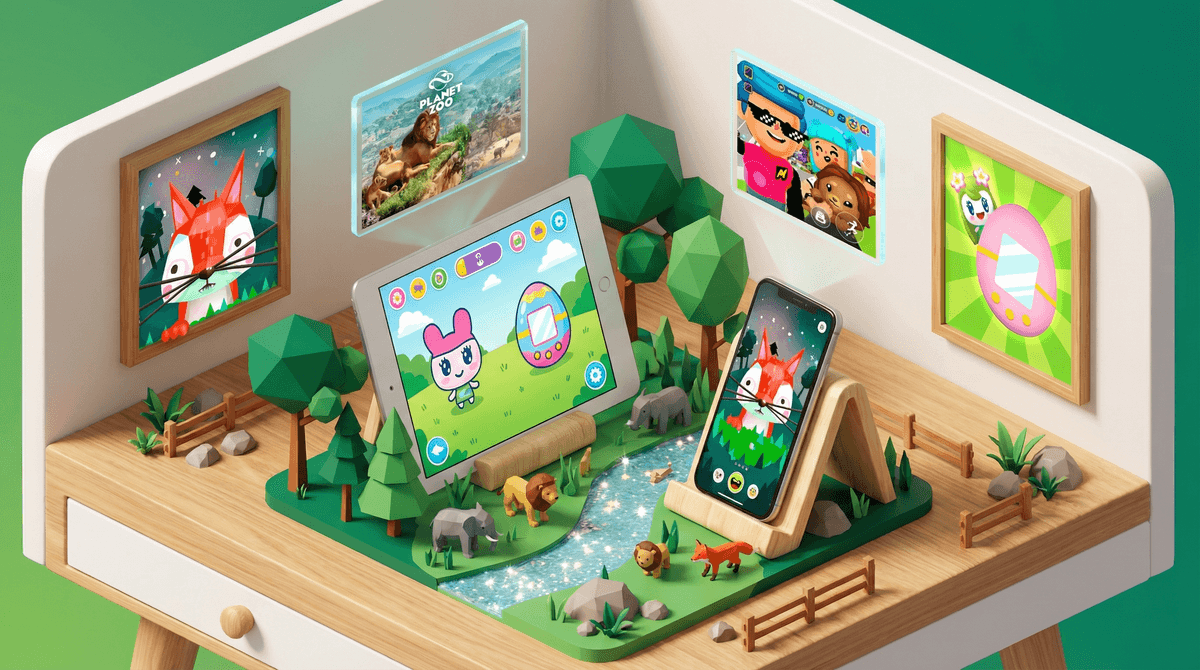
Remember Tamagotchis? Those little keychain pets that would literally die if you forgot to feed them during math class? Well, they've evolved into a massive category of apps and games where kids can adopt, care for, and interact with virtual animals. We're talking everything from realistic pet simulators like [My Tamagotchi Forever](https://screenwiseapp.com/media/my-tamagotchi-forever-game to sprawling games like Animal Jam where kids explore virtual worlds as their chosen creature.
The landscape is huge: there's Adopt Me! on Roblox (which has been played billions of times), standalone apps like [My Talking Tom](https://screenwiseapp.com/media/my-talking-tom-game, educational options like Toca Nature, and even full simulation games like Planet Zoo for older kids. Some are genuinely educational. Some are digital slot machines wrapped in cute animal graphics. Most fall somewhere in between.
The appeal is pretty straightforward: kids get the emotional satisfaction of caring for something without the actual responsibility of cleaning up dog poop at 6 AM. Virtual pets respond to their actions immediately—feed them, they're happy; play with them, they do cute things. It's a dopamine loop that actually mirrors real pet ownership, just without the vet bills.
There's also the collection aspect. Many of these games let kids accumulate dozens or hundreds of different pets, each with unique looks or abilities. It scratches the same itch as collecting Pokémon cards or Squishmallows, but it's infinitely scalable because, you know, digital storage is basically free.
And honestly? For kids who desperately want a real pet but can't have one (allergies, apartment rules, parents who know themselves well enough to say no), these apps provide a genuine outlet for that nurturing instinct.
Some of these apps actually teach responsibility. Games that require regular check-ins to feed, clean, or play with pets can help younger kids (ages 5-8) understand cause and effect. Your pet gets sad if you ignore it. That's a real lesson, even if the pet is made of pixels.
Educational content exists. Apps like Wildcraft teach kids about animal behavior and ecosystems. Creatures of Sonaria on Roblox actually has surprisingly detailed creature biology. Some kids genuinely learn about animal care, habitats, and conservation through these games.
Creative expression. Many pet games let kids design their own spaces, customize their pets, and create elaborate worlds. This isn't just mindless tapping—there's real creativity happening.
Here's where we need to talk about the elephant in the room—or rather, the $50 virtual elephant your kid just bought with your credit card.
In-app purchases are aggressive. Most "free" pet games make their money by selling virtual currency, premium pets, special items, and cosmetics. And they're designed by people who understand child psychology really, really well. Limited-time offers! Exclusive pets! Your friends all have this rare dragon!
Looking at our community data, about 55% of kids are gaming regularly, and a significant chunk of that time is spent in these pet collection games. The average screen time is running about 4.2 hours daily. When a game is designed to get kids to check in multiple times per day, that adds up fast.
The social pressure is real. In multiplayer games like Adopt Me!, kids can see what pets their friends have. There's trading, showing off, and inevitably, kids feeling like they need the rarest pets to fit in. This dynamic mirrors what happens in Roblox more broadly, where virtual status symbols matter to kids.
"Educational" is often a stretch. Just because there's an animal in it doesn't mean your kid is learning anything useful. Tapping a virtual dog 47 times to earn coins isn't teaching pet care—it's teaching them to tap screens for rewards.
Ages 4-7: Stick with simple, truly ad-free apps like Toca Pet Doctor or [Sago Mini Pet Cafe](https://screenwiseapp.com/media/sago-mini-pet-cafe-game. These are designed for little kids, have no in-app purchases, and focus on imaginative play rather than collection mechanics. At this age, about 50% of kids have unsupervised tablet access according to our data, so choosing genuinely kid-safe apps matters.
Ages 8-11: This is peak virtual pet age. Games like Webkinz (yes, it still exists!) or Animal Restaurant can work if you set up parental controls and have clear conversations about spending. Consider apps that require a one-time purchase rather than ongoing microtransactions.
Ages 12+: Older kids can handle more complex games like Planet Zoo or even Stardew Valley (which includes farm animals and has zero predatory monetization). At this point, it's less about the game and more about helping them recognize manipulative design patterns.
Set up purchase controls immediately. Not "I should do that." Do it right now. Every platform—iOS, Android, gaming consoles—has ways to require password approval for purchases. Here's how to lock down in-app purchases across devices .
.
Talk about the business model. Kids old enough to play these games are old enough to understand that "free" games make money somehow. Explain that these companies design their games to make you want to spend money. It's not evil, but it's also not neutral.
Use it as a real pet trial run. If your kid wants a real pet, make a deal: they have to take care of their virtual pet consistently for three months. Set up check-ins where they show you their pet's status. If they can't remember to feed a digital cat, they're not ready for a real one.
Watch for the time suck. These games are designed for frequent, short sessions throughout the day. That's actually worse for focus and attention than one longer gaming session. If your kid is checking their virtual pet between homework problems, that's a problem.
Consider paid alternatives. A $5 app with no in-app purchases is almost always better than a "free" game. You're paying to avoid the psychological manipulation. That's a good trade.
Virtual pet games aren't inherently good or bad—they're tools that can teach responsibility and creativity, or they can be glorified slot machines that drain your bank account and your kid's attention span. Usually they're a bit of both.
The question isn't "should my kid play these?" It's "which ones, with what guardrails, and for how long?" A well-chosen pet care app with clear boundaries can be genuinely enriching. An unchecked Adopt Me! addiction where your kid is begging for Robux every weekend is not.
With only 22% of kids in our community having smartphones and 68% having no phone at all, you still have time to set good patterns before these apps become portable and always-accessible. Use that time wisely.
- Audit what's already installed. Open up your kid's tablet or phone and see what pet games are there. Google each one with "in-app purchases" or "parent review" and see what you find.
- Set spending limits. Most platforms let you set monthly spending caps. Use them.
- Try one together. Download a pet game and play it with your kid for a week. You'll quickly see what's actually happening in there.
- Have the conversation. Ask your kid what they like about these games. Listen. Then share your concerns about time and money. Make a plan together.
Want to understand how these games compare to other screen time options? Or curious about whether a real pet might actually be the better move? Screenwise can help you think through your specific situation.