

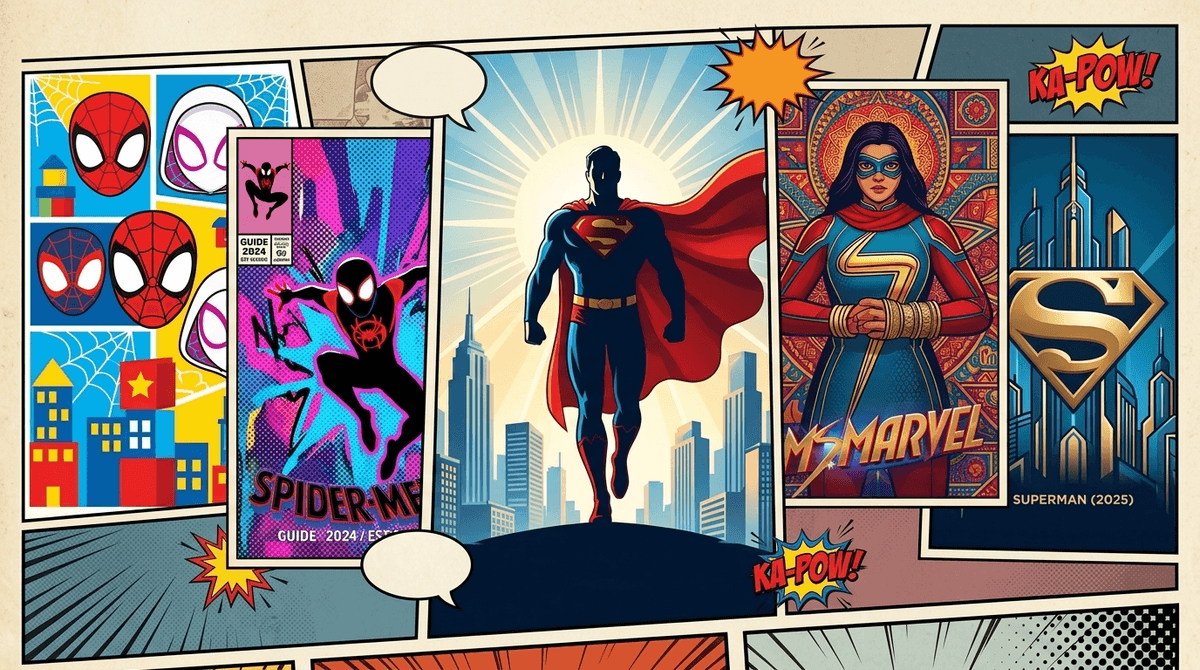
TL;DR: The Hero’s Cheat Sheet
- Ages 3-6: Stick to Spidey and His Amazing Friends and Batwheels. Low stakes, zero trauma.
- Ages 7-10: Teen Titans Go! for laughs, Ms. Marvel for relatable vibes, and Spider-Man: Into the Spider-Verse for the gold standard.
- Ages 11-13: The MCU sweet spot. Avengers: Endgame and Superman (2025).
- Ages 14+: X-Men '97 and The Batman.
- The "Hard No" Zone: The Boys and Invincible are strictly for adults. Don't let the "cartoon" look of Invincible fool you—it’s a gore-fest.
Check out our guide on the best superhero movies for family night
We’ve all been there: you’re scrolling through Disney+ or Max, and your kid sees a cape and a mask and starts begging to watch it. You remember loving superheroes as a kid, but then you realize that modern superhero media ranges from "toddler-friendly color explosion" to "existential crisis with a side of graphic dismemberment."
Navigating the leap from Spidey and His Amazing Friends to the PG-13 blockbusters of 2025 is a rite of passage for modern parents. Superheroes are the mythology of our time, but between the multiverses, the "dark and gritty" reboots, and the sheer volume of content, it’s easy to accidentally expose a seven-year-old to something that’ll keep them up until 2:00 AM asking about the inevitability of death.
Superheroes aren't just about the punch-ups. For kids, these characters represent agency. In a world where they are told when to eat, sleep, and do their homework, seeing a kid like Miles Morales or Kamala Khan save the world is incredibly empowering.
It’s also where they learn about moral nuance. The best superhero stories in 2026 aren't just "good guy vs. bad guy." They’re about responsibility, the cost of secrets, and what it means to be a "hero" when things get messy.
2025 is a massive year for the "Big Two" (Marvel and DC). We’re seeing a shift away from the "homework" era of the MCU (where you had to watch six shows to understand one movie) and a total reboot of the DC Universe.
James Gunn is taking the reigns here, and the word on the street is that this is a return to a more hopeful, optimistic Man of Steel. After years of "Sad Superman" snapping necks, this looks like it might actually be a movie you can take a 9-year-old to without needing a therapy session afterward. It's aiming for that classic PG-13 "all-ages" sweet spot.
This one is leaning more into the "political thriller" vibe of The Winter Soldier. Expect more grounded action and less "magic space rocks." It’s likely fine for the 11+ crowd, but younger kids might find the plot about international diplomacy and government conspiracies a bit "mid," as they say.

Preschool & Kindergarten (Ages 3-6)
At this age, it’s all about bright colors, clear morals, and low stakes. You want "problem-solving" heroes, not "avenging" heroes.
- Spidey and His Amazing Friends: This is the gold standard. It’s basically Paw Patrol with web-shooters. It teaches teamwork and doesn't feature anyone actually getting hurt.
- Batwheels: If your kid likes Cars and Batman, this is the one. It focuses on the vehicles, making the Batman world accessible without the "dark knight" trauma.
- [Super Kitties](https://screenwiseapp.com/media/super-kitties-youtube: Technically superheroes, definitely for the younger set. It’s high-energy and very sweet.
Early Elementary (Ages 7-10)
This is the "bridge" phase. They want more action, but they aren't quite ready for the heavy-hitting emotional stakes of the big movies.
- Teen Titans Go!: Look, some parents hate this show because it’s loud and obnoxious. But kids love it. It’s pure slapstick and meta-humor. It’s the "Ohio" of superhero shows—weird, chaotic, and somehow everywhere.
- Moon Girl and Devil Dinosaur: This show is a vibe. It’s visually stunning, has an incredible soundtrack, and features a super-genius black girl as the lead. It’s smart, funny, and age-appropriate.
- Spider-Man: Into the Spider-Verse: This is arguably the best superhero movie ever made. It’s PG, but it does have some "scary" moments (the Prowler’s theme music is nightmare fuel for some 6-year-olds).
Tweens & Middle School (Ages 11-13)
This is the MCU's target demographic. They can handle the "snap," the character deaths, and the romantic subplots.
- Ms. Marvel: Perfect for this age group. It deals with high school, family heritage, and fan culture. It feels very "real world" despite the superpowers.
- The Flash (TV Series): While the later seasons get a bit "cringe" and repetitive, the early seasons are great for tweens who want a serialized story with plenty of heart.
- Blue Beetle: A great family-centric superhero movie that feels fresh and fun without being overly dark.
Teens (Ages 14+)
Now you’re getting into the stuff that explores the "cost" of being a hero.
- X-Men '97: This is a revival of the 90s cartoon, but it’s grown up. It deals with prejudice, loss, and complex politics. It’s fantastic, but it’s definitely "TV-14" for a reason.
- The Batman: This is a detective noir film. It’s very long, very dark, and very moody. It’s great for teens who want something "serious," but it’s probably too slow and grim for younger kids.
Read our guide on the differences between Marvel and DC for parents
Here is the "No-BS" part: Not everything with a cape is for kids. We are living in the era of the "deconstructionist" superhero story.
The "Adults Only" Zone
Shows like The Boys and Invincible (both on Amazon) are incredibly popular right now. They are also violently inappropriate for children. The Boys features extreme sexual content and gore. Invincible looks like a Saturday morning cartoon but features scenes of characters being literally crushed to death. Do not let the "animated" tag trick you.
The "Brain Rot" Factor
On YouTube, you’ll find a lot of "superhero" content that is essentially AI-generated or low-effort "brain rot." These are those weird videos where Spider-Man and Elsa are doing strange things in a backyard. It’s mindless, often weirdly suggestive, and adds zero value.
When your kid moves from Spidey to the MCU, it’s a great time to start talking about media literacy.
- The "Why" of the Villain: Ask your kid, "Why do you think the villain is doing this?" In movies like Black Panther, the villain actually has a point, even if their methods are wrong. That’s a great dinner table conversation.
- Real-Life Heroes: Superheroes are great, but use them as a springboard to talk about real-life people who help others—doctors, firefighters, or even just the kid who stands up to a bully.
- The Violence Check-In: If a movie feels a bit too intense, ask: "How did that fight make you feel?" If they’re unfazed by someone getting vaporized, it might be time to take a break and watch something a bit more grounded.
Superheroes are a blast, and in 2026, we have more high-quality options than ever. But the "all-ages" label is a thing of the past. A "PG-13" rating in 2026 is a lot "edgier" than a "PG-13" rating was in 1995.
If you’re unsure, watch the first 15 minutes of a movie or show alone first. If there’s a scene of a city being leveled or characters using language you don’t want repeated at Thanksgiving, you’ll know.
Superheroes should be about inspiration, not just explosions. Keep it fun, keep it age-appropriate, and maybe skip Madame Web—honestly, that one is just bad for everyone, regardless of age.
- Audit their watchlist: Check if they’ve stumbled onto Deadpool & Wolverine (which is a hard R).
- Plan a family night: Start with Spider-Man: Into the Spider-Verse if you haven't seen it.
- Get the data: Use Screenwise to see what other parents in your school district are letting their 4th graders watch.