

TL;DR: The Manga Cheat Sheet
If you’re standing in the bookstore aisle right now and your kid is begging for "the one with the sword," here are the safest, high-quality bets:
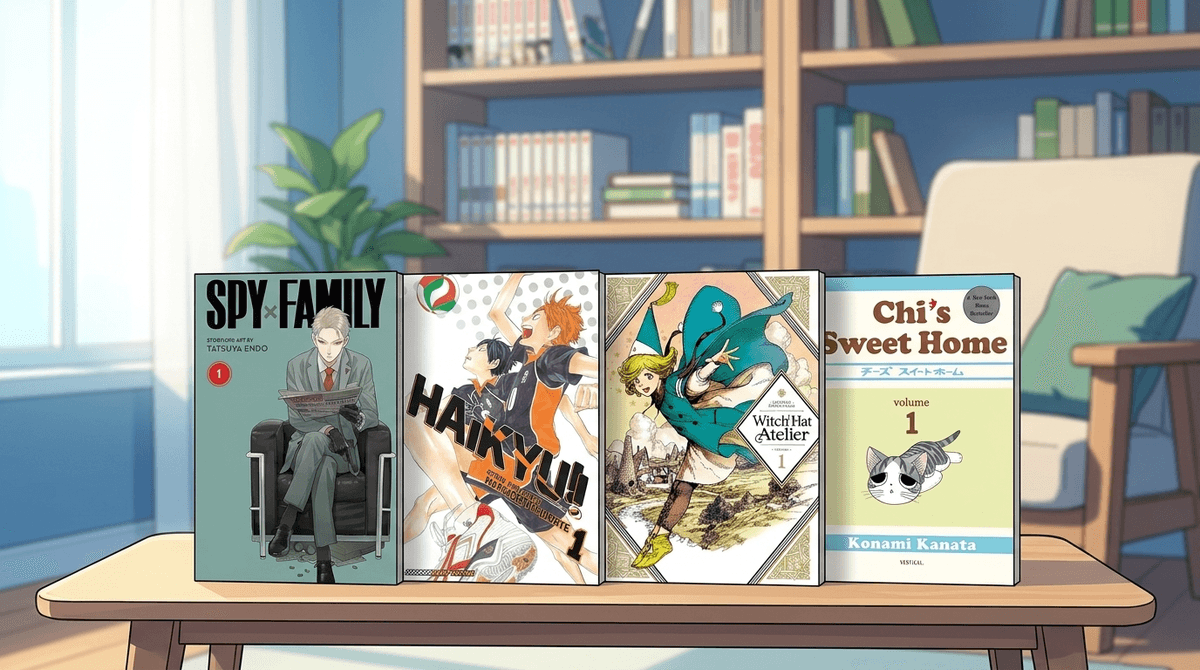
- Best for Elementary (Ages 7-10): Chi's Sweet Home (wholesome cat vibes) or Pokémon Adventures (way better than the show).
- Best for Middle School (Ages 11-14): Spy x Family (action-comedy) or Haikyu!! (the gold standard for sportsmanship).
- The "Is it safe?" Check: How to read manga ratings.
If your kid has graduated from Dog Man and The Bad Guys, they’ve likely landed in the manga section. It’s an explosion of black-and-white art, right-to-left reading, and stories that range from "adorable kitten adventures" to "existential dread with giant robots."
Manga is currently the fastest-growing category in US publishing, and for good reason. It’s visually engaging, incredibly diverse, and—honestly—some of the best storytelling happening right now. But as a parent, the manga section can feel like a minefield. You see a cover that looks like a cute cartoon, only to flip it over and see a "Teen Plus" rating and a warning about "graphic violence."
The goal here isn't to gatekeep. It’s to help you find the series that match your family's maturity level while still letting your kid be the "cool" one who knows what a "Shonen" is.
Manga is simply the Japanese word for comics. The biggest hurdle for us parents is usually the format. Because Japanese is written right-to-left, the books are printed that way too. You start at what we would consider the "back" of the book and read the panels from right to left.
Kids usually pick this up in about five minutes. We, the parents, usually take five days and a mild headache to adjust.
At this age, we’re looking for "Kodomomuke" (manga specifically for children). These series usually have simple themes, clear art, and "furigana"—small phonetic characters next to the complex kanji that help Japanese kids (and English learners) read.
This is the ultimate "gateway drug" for young readers. It’s about a kitten who gets separated from her mother and taken in by a family. It’s full-color (rare for manga), incredibly sweet, and has zero "red flag" content. If your kid likes Bluey, they will love Chi.
Don't dismiss this just because you're tired of hearing about Pikachu. The Adventures manga is actually a much more coherent and exciting story than the Pokémon TV show. It follows the plot of the Pokémon games more closely and features actual character growth. It’s perfect for the 8-year-old who wants "action" without the gore.
If your kid is obsessed with the Splatoon 3 game, this is a no-brainer. It’s silly, high-energy, and focuses on the "Inklings" competing in Turf Wars. It captures the frantic energy of the game without any of the online lobby toxicity.
This is where things get interesting. Most middle schoolers want to read "Shonen" (targeted at boys) or "Shojo" (targeted at girls), but these categories are pretty fluid now. These stories often focus on friendship, hard work, and "The Power of Youth."
This is arguably the most popular "safe" manga for middle schoolers right now. The premise: A spy has to "build a family" to execute a mission. He doesn't realize his fake wife is an assassin and his fake daughter is a telepath. It’s hilarious, action-packed, and surprisingly wholesome. There’s some cartoonish violence, but it’s mostly about a weird family trying to be a real one.
If I could put one manga in every middle school library, it’s this one. It’s a volleyball manga. That sounds boring, but it’s actually a masterclass in sportsmanship, dealing with failure, and teamwork. There is zero "fanservice" (no over-sexualized characters), and the stakes feel incredibly high despite being "just a game."
The art in this series is breathtaking—think classic European illustration meets Japanese precision. It’s a story about a girl who wants to be a witch in a world where magic is a closely guarded secret. It deals with themes of "natural talent" vs. "hard work" in a way that resonates deeply with middle schoolers feeling the pressure of grades and extracurriculars.
Check out our full review of Witch Hat Atelier for parents
This is the "big one." In a world where everyone has superpowers ("Quirks"), a boy born without them is given a chance to become the greatest hero. The Screenwise Take: It starts out very age-appropriate for 10+, but as the series progresses (around volume 20+), the themes get significantly darker and the violence gets more "real." It’s a great series to read with your kid so you can discuss the shifting tone.
Japanese culture has different boundaries than US culture when it comes to "fanservice"—the practice of drawing characters in suggestive poses or revealing clothing, often for no plot reason.
- The "Pervy" Trope: Many classic Shonen series (like Naruto or Dragon Ball) have an older male character who is "comically" obsessed with women. It’s a tired trope, but one you might want to talk about with your kid.
- The Rating Jump: A series might start "Rated T for Teen" but move into "Mature" territory later on. Unlike Western comics, manga is often one long continuous story by a single author, and their interests (and the audience) can age up over time.
- Digital Apps: If your kid is reading on the Shonen Jump app, they have access to a massive library for $2.99/month. It’s a great deal, but it also means they can easily click from One Piece (mostly fine) to Chainsaw Man (very bloody, very mature).
Parents often worry that graphic novels or manga are "cheating" at reading. Research actually suggests the opposite. Manga requires "multimodal literacy"—the ability to process text and visual cues simultaneously. For kids with ADHD or dyslexia, the visual structure of manga can actually be a bridge to more complex narrative structures that they might find overwhelming in a dense novel.
Plus, manga often tackles complex philosophy. Fullmetal Alchemist (best for ages 12+) deals with the law of equivalent exchange, the ethics of war, and what it means to have a soul. That’s a far cry from "brain rot."
If your kid is deep into a series, don't just ask "What's happening?" Ask these:
- "What’s the power system in this world?" (Manga fans love explaining how the magic/powers work).
- "Who is your favorite side character?" (Manga is famous for having better side characters than main protagonists).
- "What’s the 'redemption arc'?" (Manga is obsessed with villains becoming heroes).
Manga isn't a monolith. You can’t say "manga is fine for kids" any more than you can say "movies are fine for kids." But if you steer them toward series like Haikyu!! or Spy x Family, you’re giving them stories that celebrate persistence, empathy, and the idea that being "different" is actually a superpower.
Next Steps:
- Check your local library’s "YA Manga" vs "Junior Manga" sections.
- Download the Libby app to see if you can borrow digital volumes for free.
- Find manga recommendations based on your kid's favorite Netflix show
