

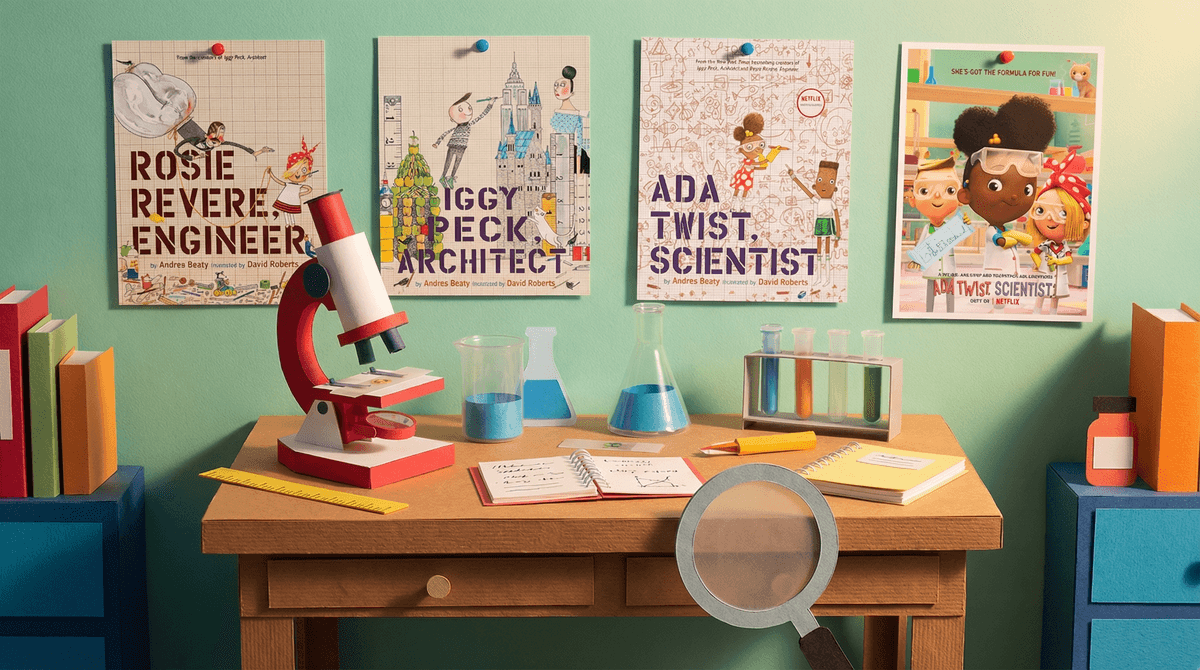
Ada Twist, Scientist is a Netflix animated series based on the bestselling picture book series by Andrea Beaty and David Roberts. The show follows Ada, a curious second-grader with an insatiable appetite for asking "why?" about everything around her. Alongside her best friends Rosie Revere (an inventor) and Iggy Peck (an architect), Ada uses the scientific method to investigate everyday mysteries—from why her dog won't stop scratching to what makes things stink.
Each 24-minute episode typically tackles two mini-mysteries, complete with hypothesis formation, experimentation, observation, and conclusion. Think of it as Bill Nye the Science Guy meets Daniel Tiger's Neighborhood—it's got the STEM education punch but wrapped in socio-emotional learning about persistence, collaboration, and embracing failure.
The show premiered in 2021 and has released multiple seasons. It's currently streaming on Netflix, where about 40% of families in our community use the platform regularly, and another 40% have kids' profiles set up.
Here's the thing about Ada Twist: it doesn't talk down to kids. The show respects that children are naturally curious and capable of understanding complex concepts when presented engagingly. The mysteries are genuinely interesting (not contrived "kid problems"), and the solutions involve real science—not magic or hand-waving.
The animation style is vibrant and energetic, with a stop-motion aesthetic that feels tactile and playful. The characters break into catchy songs that actually serve a purpose—they help explain concepts or work through the scientific process. And unlike some educational shows that feel like vegetables disguised as dessert, this one is legitimately entertaining.
Kids also connect with Ada's persistence. She doesn't get things right the first time. She makes mistakes, her experiments fail, and she has to try again. For young viewers who might feel frustrated when things don't work immediately, seeing Ada embrace the iterative process is genuinely valuable.
Ages 4-8: The Sweet Spot
This is really the target demographic. The vocabulary is accessible but not dumbed down (kids will hear words like "hypothesis" and "observation" used correctly and repeatedly). The pacing is energetic without being frantic, and the episodes are structured in a way that young kids can follow the logic.
Ages 2-3: Probably Too Advanced
The narrative structure and problem-solving focus require more sustained attention than most toddlers have. They might enjoy the colors and songs, but they'll miss the actual educational content.
Ages 9+: Likely Too Young
Most third and fourth graders will find this skews younger than their interests, though science-obsessed kids might still enjoy it. If you've got an older elementary kid who loves science, you're probably better off with shows like The Magic School Bus Rides Again or even moving into documentaries like Our Planet.
The STEM Learning Is Real
This isn't just slapping the word "science" on a show and calling it educational. Ada Twist actually teaches the scientific method in a way that kids can internalize and apply. Your child might start asking to "form a hypothesis" about why the milk spilled or want to "conduct an experiment" about which snack tastes better. This is annoying but also kind of amazing.
Diverse Representation Done Right
Ada is a Black girl with natural hair who's the unquestioned leader and smartest person in the room. Rosie is Latina. The show includes characters with different family structures, abilities, and backgrounds without making it A Very Special Episode about diversity. It's just... normal life. Refreshing.
The Screen Time Trade-Off
With average screen time in our community sitting at about 4.2 hours daily (4 hours on weekdays, 5 on weekends), the question isn't really "should my kid watch TV?" but "what should they watch when they do?" Ada Twist is legitimately one of the better options in the preschool/early elementary space. It's the kind of show where if your kid is going to watch something anyway, you can feel good about this choice.
It Might Make Your Kid More Annoying (In a Good Way)
Fair warning: Ada asks approximately 847 questions per episode, and your child will absorb this behavior. Get ready for "But WHY?" to become an even more frequent refrain in your household. The upside? That curiosity is exactly what you want to encourage. The downside? It's 7am and you haven't had coffee yet and you're being interrogated about cloud formation.
Ada Twist, Scientist is one of those rare kids' shows that actually delivers on its educational promise without sacrificing entertainment value. It teaches critical thinking, normalizes failure as part of learning, and shows kids—especially girls and kids of color—that they belong in STEM fields.
Is it perfect? No. Some episodes are stronger than others, and the songs can get stuck in your head in ways that border on psychological warfare. But in the landscape of children's programming, this is solidly in the "yes, this is fine" category—and honestly, closer to the "this is actually good" end of the spectrum.
If you've got a 4-7 year old who's curious about how things work, or if you're looking to encourage scientific thinking in your early elementary kid, Ada Twist is worth adding to the rotation. And if your kid gets inspired to start "experimenting" by mixing all the bathroom products together, well... that's what the scientific method is all about. (Just maybe supervise that part.)
- Set it up: Create a kids' profile on Netflix
 if you haven't already to keep recommendations age-appropriate
 - Watch together: The first few episodes are great co-viewing opportunities to model how to think through problems scientifically
- Extend the learning: If your kid gets into it, the original picture books are excellent and make great bedtime reading
- Explore similar content: Check out other quality STEM shows like Elinor Wonders Why or Bluey (which sneaks in problem-solving skills alongside emotional intelligence)
Want to understand how your family's Netflix usage compares to others in your community? Take the Screenwise survey to get personalized insights and recommendations.