

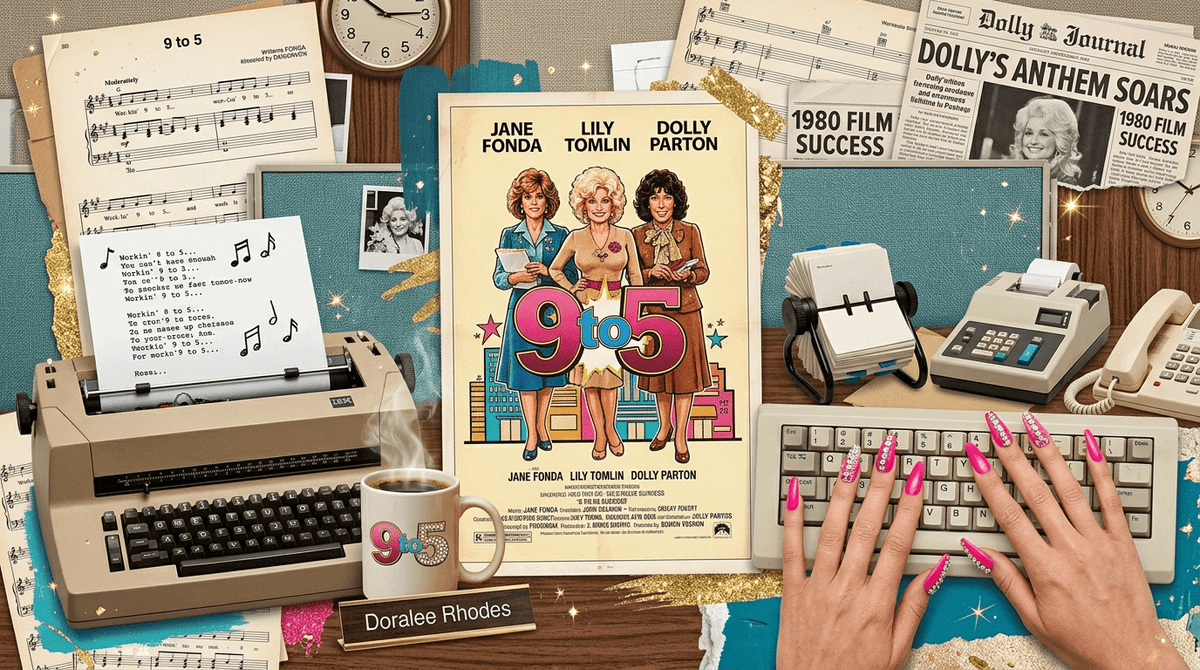
"9 to 5" is the rare 1980s artifact that hasn't aged a day because the feeling of being "all taking and no giving" is universal, and Dolly Parton's delivery makes a protest anthem sound like a party. It’s a foundational piece of pop culture that’s perfect for introducing kids to the concepts of fairness, work ethic, and standing up for yourself without it feeling like a lecture.
TL;DR: The "9 to 5" song is a high-energy anthem about corporate exploitation that remains incredibly catchy for kids of all ages. While the 9 to 5 movie is a classic workplace comedy best suited for kids 10 and up due to its 1980s-era PG edge, the song itself is a universal banger. It’s a great gateway to talking about Dolly Parton’s massive literacy legacy and how to spot when a system isn't treating people right. For more family-friendly classics, check out our best movies for kids list.
Most kids know the song before they ever see the movie, usually via a TikTok trend or a karaoke night. It starts with that iconic typewriter rhythm—which, fun fact to tell your kids, Dolly actually played using her acrylic fingernails. That detail alone usually wins over a kid who thinks "old music" is boring.
Lyrically, the song is sharper than people remember. It isn't just about waking up and drinking coffee; it’s about the frustration of the "rich man's game." It’s rare to find a song that kids will happily dance to while simultaneously absorbing a critique of systemic inequality. It manages to be upbeat and defiant at the same time, which is the sweet spot for a kid starting to notice that the world isn't always fair.
If the song hooks them, they’ll eventually want to see the movie. 9 to 5 stars Dolly Parton, Jane Fonda, and Lily Tomlin as three office workers who decide they’ve had enough of their "sexist, egotistical, lying, hypocritical bigot" of a boss.
Here is the thing about 1980s PG: it’s roughly equivalent to a modern PG-13. There’s some light swearing, some period-typical (read: gross) sexual harassment from the villainous boss that serves as the plot's catalyst, and a sequence where the trio accidentally thinks they’ve poisoned him. It’s a dark comedy, and it’s hilarious, but it’s best for the 10+ crowd who can handle the "kidnapping the boss" plotline as the farce it is.
If you watch it with them, it’s a perfect time-capsule conversation. You can talk about how much has changed in offices since 1980 (the smoking! the massive computers!) and, more importantly, what hasn't changed regarding how people in power sometimes treat those under them.
You can't talk about this song without talking about Dolly herself. For intentional parents, Dolly Parton is a bit of a unicorn. She’s a business mogul who owns her masters, a songwriter with thousands of credits, and, most importantly for Screenwise families, a massive champion of literacy.
Her Imagination Library has gifted over 200 million books to children worldwide. At Screenwise, we talk a lot about how literacy is multi-stranded—listening to stories and music builds the language comprehension that makes kids strong readers later. Dolly’s whole brand is built on the idea that every kid deserves access to stories. If your kid is into the song, pointing them toward her work as a philanthropist is a great way to show that being a "star" can be about more than just being famous.
The song provides a surprisingly easy "in" for some pretty heavy topics. You don't have to make it a social studies unit; just wait for the "rich man's game" line and ask a question.
- On Fairness: The song mentions "wanting to move ahead" but the "boss won't seem to let you." Ask your kid: "What do you do if you're working hard but the person in charge isn't noticing or is being unfair?"
- On Teamwork: In the movie, the three women only succeed because they stick together. It’s a great example of collective action. "Why do you think they couldn't change things on their own?"
- On Ambition: Dolly sings about having "dreams and plans." It’s a good moment to talk about what they want to do one day and how they’d want to be treated when they get there.
The biggest friction point isn't the song; it's the movie's portrayal of the boss. He is genuinely loathsome, which is the point, but some of his comments toward Dolly’s character are uncomfortable. Use that discomfort. It’s a clear, "villainous" example of how not to treat people, which makes it very easy for a kid to identify why the protagonists are driven to such extremes.
Q: Is the 9 to 5 song appropriate for toddlers?
The song is perfectly fine for toddlers. It’s catchy, upbeat, and great for kitchen dance parties. They won't catch the "class warfare" subtext, but they’ll love the typewriter sounds.
Q: What is the age rating for the 9 to 5 movie?
The movie is rated PG, but keep in mind it was released in 1980. It contains some mild profanity, references to marijuana use (in a comedic context), and themes of sexual harassment in the workplace. It’s generally best for ages 10 and up.
Q: Why is the 9 to 5 song so famous?
It’s a mix of Dolly Parton’s charisma, the relatable "working for the man" theme, and the clever production (like the typewriter rhythm). It became an anthem for the women’s movement in the workplace and has remained a cultural touchstone ever since.
"9 to 5" is a rare triple threat: it’s a great song, it’s attached to a genuinely funny movie, and it carries a message of empowerment that actually matters. Whether you're just playing the track in the car or sitting down for a family movie night with your middle schooler, it’s a win for intentional parents who want their kids to appreciate a classic with a backbone.
- Explore more "gateway" classics in our best movies for kids list.
- If your kid loves the storytelling in country music, check out our best podcasts for kids list for more narrative-driven audio.
- Get more music recommendations for your family
