

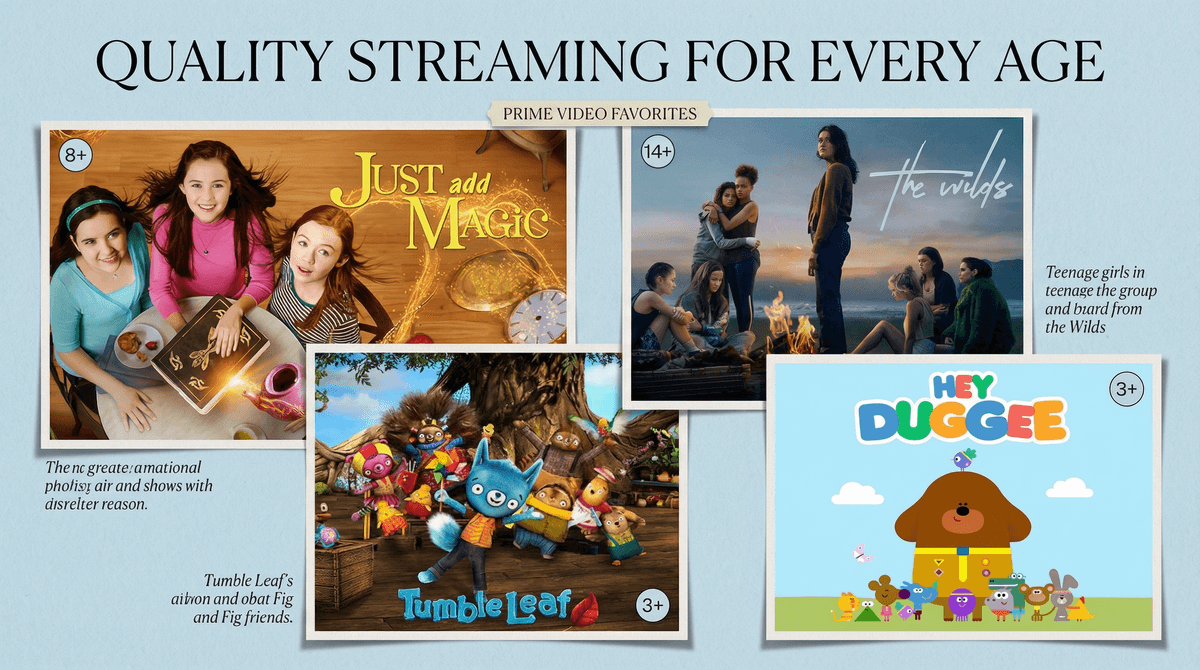
TL;DR: The Best Kids' Shows on Prime Video Right Now
Prime Video has some legitimately great shows for kids that don't make you want to claw your eyes out. Here are the standout picks:
Preschool (Ages 3-6): Hey Duggee, Tumble Leaf, Creative Galaxy
Elementary (Ages 6-10): Just Add Magic, Gortimer Gibbon's Life on Normal Street, The Dangerous Book for Boys
Tweens & Teens (Ages 10+): The Wilds, Panic, Fairfax
Prime Video isn't the first streaming service parents think of for kids' content—that's usually Disney+ or Netflix. But if you've already got Prime for the free shipping, you're sitting on some genuinely excellent shows that deserve more attention.
The thing about Prime's kids' lineup is that it's weirdly curated. There's no massive library of forgettable filler content. Instead, you get a smaller collection that includes some absolute gems—shows that actually respect kids' intelligence and don't rely on constant noise and flashing colors to hold attention.
This British import is basically perfect. Duggee is a big dog who runs an after-school club where a group of adorable animal kids earn badges by learning new skills. Each 7-minute episode tackles something practical—camping, fixing things, being helpful—with genuine warmth and zero condescension.
The animation style is charming, the humor works for adults (there are so many pop culture references hidden in the background), and the values are solid without being preachy. Ages 3-6, though honestly, it's watchable at any age.
If you're looking for something genuinely calming, this is it. Tumble Leaf follows Fig the fox as he explores his island home and discovers how things work through gentle experimentation. The stop-motion animation is gorgeous, the pacing is slow in the best way, and every episode introduces basic science and engineering concepts naturally.
This show respects quiet. There's no laugh track, no frantic energy, just curiosity and discovery. Perfect for winding down or for kids who get overstimulated easily. Ages 3-7.
From Angela Santomero (who created Blue's Clues), Creative Galaxy follows an alien named Arty who solves problems through art projects. Each episode introduces a real art concept—collage, sculpture, color mixing—and then shows kids how to do it themselves.
The art instruction is genuinely useful, and the show does a good job of emphasizing that there's no "wrong" way to be creative. Ages 4-7. Fair warning: your kid will want to immediately recreate every project they see, so have supplies ready.
Based on the beloved book series, this animated show follows Mouse and his human friend Oliver through various adventures. The stories emphasize friendship, problem-solving, and imaginative play without being overly didactic.
The animation is bright and engaging, and the storytelling stays true to the circular, cause-and-effect structure of the original books. Ages 3-6. It's solid comfort viewing—nothing groundbreaking, but reliably pleasant.
Three middle school girls discover a magical cookbook in one of their grandmothers' attics, and each recipe has a magical effect. This show is surprisingly good—genuinely engaging mysteries, real character development, and a multi-season arc that actually goes somewhere.
The magic system has rules and consequences, the friendships feel authentic, and the show deals with real issues (family illness, moving, changing friendships) without being after-school-special about it. Ages 8-13. One of Prime's best original series, full stop.
This one flew completely under the radar, which is a shame because it's lovely. Gortimer and his two best friends navigate middle school life on a street where slightly magical things happen—a hat that makes you invisible, a tree that shows you the future, that kind of thing.
The show has serious Stranger Things vibes but age-appropriate for younger kids. It deals with real middle school stuff—crushes, friendship drama, family issues—with magical realism elements that make everything feel more meaningful. Ages 8-12. Genuinely underrated.
Based on the book, this show follows three brothers processing their father's death by working through the projects in a book he left them. That sounds heavy, and it is—but it's also warm, funny, and full of genuine adventure.
Each episode balances real-world family dynamics with fantasy sequences where the boys imagine themselves in historical or adventurous situations. It's about grief, growing up, and the relationship between brothers. Ages 9-14. Note: this one deals with death as a central theme, so know your kid's readiness for that conversation.
Anne is a young scientist who lives in a junkyard and builds robots. Her friends help her conduct experiments and solve problems using actual STEM concepts. This is one of the better "science for kids" shows out there—the experiments are real, the explanations are clear, and Anne is a genuinely inspiring protagonist.
The production values are... fine. It's clearly made on a budget. But the content is solid, and if you have a kid interested in robotics or engineering, this is worth checking out. Ages 6-10.
Bianca is a young girl who can make wishes come true by "wishenpoofing," but she has to learn that wishes don't always turn out the way you expect. This Amazon original does a nice job of teaching emotional intelligence and problem-solving through a magical lens.
The show is diverse (Bianca is Black, and her family and friends reflect various backgrounds), and the lessons about thinking through consequences are genuinely useful. Ages 4-8. It's not revolutionary, but it's well-made and thoughtful.
A group of teenage girls think they're headed to a wellness retreat but end up stranded on a deserted island. Except—plot twist—it's not an accident. This is basically Lost for teens, with genuine mystery, complex characters, and some dark themes.
This is for older teens, probably 14+. It deals with trauma, sexuality, mental health, and survival in ways that are intense but thoughtful. The diverse cast and character development are excellent. Season 2 adds a group of boys to the mix. Fair warning: it ends on a cliffhanger and was cancelled after two seasons, which is frustrating.
In a small Texas town, graduating seniors compete in a dangerous game called Panic for a chance to win money and escape their dead-end lives. Based on Lauren Oliver's book, this show is tense, well-acted, and surprisingly thoughtful about class, desperation, and what people will risk when they feel trapped.
Ages 14+. There's peril, some violence, and mature themes about poverty and limited options. It's a complete story in one season, which is nice. Good for teens who like The Hunger Games vibe.
An animated comedy about four middle schoolers navigating Los Angeles streetwear culture and social media clout. This show is aggressively current—it references TikTok, drop culture, influencer drama, and all the absurdity of kids trying to be cool in the age of Instagram.
It's funny, but it's also pretty satirical about consumer culture and social media obsession. Ages 12+, though honestly, you might want to watch an episode first. The humor is sometimes crude, and it definitely makes fun of the culture it's depicting. Could be a good conversation starter about social media and authenticity.
Based on Jenny Han's book series, this follows Belly as she spends another summer at a beach house with her mom's best friend's family—and this year, everything's different. It's a coming-of-age romance with love triangles, family drama, and all the feelings.
Ages 13+. It's well-made, the acting is solid, and it captures that intense teenage emotion without being ridiculous about it. There's some mature content (drinking, sexuality, relationship drama), so it's not for younger kids. But for teens who loved To All the Boys I've Loved Before, this is a good pick.
Devin moves to California and joins a struggling middle school soccer team. Based on Olympic gold medalist Alex Morgan's book series, this show is about teamwork, perseverance, and finding your place.
It's earnest in a way that might feel dated to some kids, but it's also genuinely positive and features a diverse cast dealing with realistic middle school issues. Ages 8-13. Good for sports-loving kids or anyone who needs a confidence boost.
Prime Video's parental controls are... fine. You can set up kids' profiles that filter content by age rating, and you can set viewing restrictions with a PIN. But the interface isn't as kid-friendly as Disney+ or Netflix's kids' mode. You'll want to set up the profile yourself rather than letting kids browse freely.
The age ratings are generally reliable, but as always, you know your kid best. Some shows rated for younger kids might bore older kids, while some "teen" content might be fine for mature tweens or too intense for younger teens.
Prime's autoplay is aggressive. If you don't want your kid watching three hours straight, turn off autoplay in the settings. It's buried under Playback, but it's worth finding.
Download capability is excellent. If you're traveling or want offline viewing, Prime lets you download most shows to tablets and phones. Super useful for car trips or flights.
Prime Video's kids' content is smaller but mightier than you might expect. You're not getting the massive library of Disney+ or the constant churn of Netflix originals, but what's there is often thoughtfully made and genuinely engaging.
The standouts—Hey Duggee for little kids, Just Add Magic for elementary, The Wilds for teens—are shows you can feel good about. They respect kids' intelligence, they don't rely on cheap tricks to hold attention, and they actually have something to say.
If you're already paying for Prime anyway, dig into the kids' section. You might be surprised at what you find.
Want more streaming recommendations? Check out our guides for best Netflix shows for kids, Disney+ picks for every age, or how to choose age-appropriate content.