

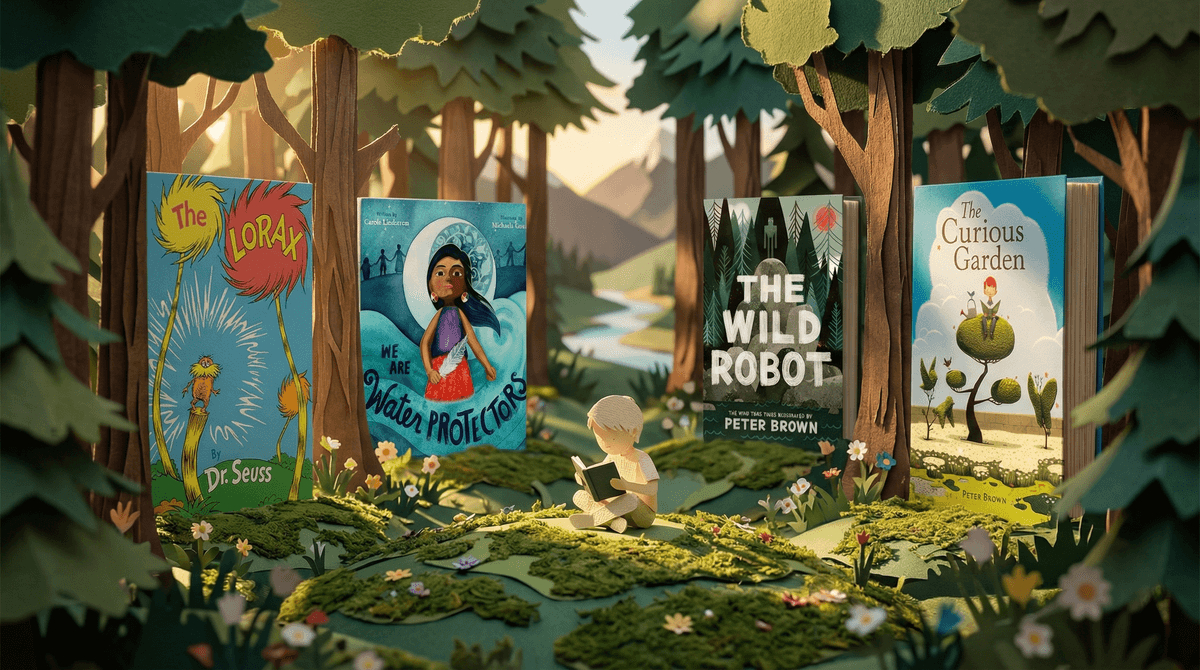
Environmental books for kids are stories, picture books, and chapter books that tackle topics like climate change, conservation, pollution, endangered species, and our relationship with nature. They range from "The Lorax" speaking for the trees to contemporary novels about kids organizing climate strikes.
But here's the thing: not all environmental books are created equal. Some are genuinely engaging stories that happen to have environmental themes woven in. Others are... well, they're basically textbooks disguised as picture books, and your kid will smell that from a mile away.
The best environmental books don't lecture. They inspire curiosity, show kids their agency, and make caring about the planet feel natural rather than overwhelming.
Let's be real: kids are inheriting a planet with some serious problems. And unlike previous generations, they're growing up with climate anxiety as a documented phenomenon. Studies show that eco-anxiety affects kids as young as 8, with many feeling helpless about environmental issues.
But here's where books come in clutch. Research shows that environmental literacy—understanding how natural systems work and how humans impact them—actually reduces anxiety while increasing pro-environmental behavior. Books give kids:
- Context without catastrophizing - Understanding problems without feeling paralyzed
- Models of action - Seeing characters (and real people) making a difference
- Language for their feelings - Putting words to what they're noticing and worrying about
- Connection to nature - Building love for what we're trying to protect
Plus, environmental books are a gateway to bigger conversations about justice, economics, science, and civics. They're not just about recycling—they're about systems thinking.
Ages 3-6: Wonder First, Worry Later
For little kids, focus on building love for nature before introducing problems. You want awe and connection, not anxiety.
The gold standard: The Lorax by Dr. Seuss. Yes, it's a classic for a reason—it introduces environmental consequences without being terrifying, and "Unless someone like you cares a whole awful lot, nothing is going to get better. It's not" is honestly perfect.
Other winners:
- "The Curious Garden" by Peter Brown - A boy transforms a city by planting a garden. Hopeful, beautiful, actionable.
- "We Are Water Protectors" by Carole Lindstrom - Indigenous perspective on protecting water, gorgeous illustrations, introduces environmental justice.
- "The Watcher" by Jeanette Winter - Based on Jane Goodall's childhood, shows how one person's curiosity can change the world.
Ages 7-10: Problems Meet Solutions
This age can handle more complexity. They're ready to learn about environmental challenges and see kids taking action.
Hoot by Carl Hiaasen is fantastic—funny, fast-paced, and features kids fighting to save endangered owls from a construction project. It's environmental activism that doesn't feel preachy because the story is genuinely entertaining.
Also great:
- "The Wild Robot" series by Peter Brown - A robot learns to survive in nature and eventually protect it. Explores technology's relationship with the natural world.
- "One Plastic Bag" by Miranda Paul - True story of women in Gambia turning plastic trash into purses. Shows grassroots environmental action in a global context.
- "The Girl Who Drew Butterflies" by Joyce Sidman - Biography of Maria Merian, who revolutionized our understanding of metamorphosis. Science + nature + girl power.
Ages 11-14: Real Talk About Real Problems
Middle schoolers can handle nuance, moral complexity, and the actual science. They're also at the age where they might want to do something.
"The Wild Robot Protects" continues to work here, but also try:
Hatchet by Gary Paulsen - While not explicitly environmental, it's one of the best books for showing humans as part of nature, not separate from it. The survival story creates deep respect for natural systems.
"Refugee" by Alan Greffat - Not traditionally an environmental book, but addresses climate migration and how environmental collapse drives human displacement. Important for understanding environmental justice.
"Dry" by Neal Shusterman - Near-future thriller about California running out of water. Terrifying but not hopeless, and gets kids thinking about resource management and climate adaptation.
For nonfiction lovers: "How to Change Everything" by Naomi Klein (Young Readers Edition) - Direct talk about climate change, capitalism, and youth activism. Not subtle, but neither is the climate crisis.
Don't Avoid the Hard Stuff
Some parents worry that environmental books will scare kids or make them anxious. But research shows that kids are already noticing—the weird weather, the news, the conversations adults have. Books give them a framework for processing what they're already experiencing.
That said, balance is key. For every book about problems, include books that show solutions, celebrate nature's resilience, or simply inspire wonder. You're building environmental literacy, not eco-anxiety.
Watch for Tokenism
Some environmental books are... not great. Red flags:
- Oversimplified solutions ("Just recycle and everything will be fine!")
- Individual action as the only answer (ignoring systemic issues)
- Savior narratives (especially white kids "saving" nature in non-white communities)
- Doom without agency (problems with no path forward)
The best books show both individual and collective action, acknowledge complexity, and center the voices of people most affected by environmental issues.
Use Books as Conversation Starters
Don't just read and move on. Ask questions:
- "What do you think about what [character] did?"
- "Have you noticed anything like this in our neighborhood?"
- "What would you do if you were in this situation?"
- "Does this make you want to do anything differently?"
And be ready to follow their lead into action—whether that's starting a compost bin, writing to a local representative, or learning more about youth climate activism .
.
Environmental books aren't just about saving the planet—they're about raising kids who understand systems, think critically, and believe they can make a difference.
The best environmental books for kids are, first and foremost, good books. They tell compelling stories, create memorable characters, and make kids want to keep reading. The environmental themes are woven in naturally, not slapped on like a bumper sticker.
Start with wonder. Build to understanding. End with agency. And remember: you're not trying to create perfect little eco-warriors who never use plastic straws. You're raising humans who care about the world and believe they can help shape its future.
That's worth reading about.
Looking for more ways to raise environmentally conscious kids? It's not just about books—it's about the shows they watch, the games they play, and the conversations you have. Explore how different types of media can support environmental literacy or find nature documentaries that inspire rather than terrify.