

Look, I get it. Most of us aren't putting on a show thinking "will this make my kid more grateful?" We're usually just trying to buy 22 minutes of peace to make dinner or answer work emails. But here's the thing: kids absorb everything they watch, and some shows actually do a surprisingly good job of modeling appreciation, empathy, and recognizing what matters.
Gratitude-inspiring TV isn't about saccharine "count your blessings" messaging that makes everyone roll their eyes. It's about stories that naturally show characters appreciating relationships, overcoming challenges with perspective, or recognizing the value of what they have. The kind of content where a character's arc involves learning to see their life differently, or where the whole vibe of the show celebrates connection over consumption.
And honestly? In a media landscape designed to make kids want MORE (more toys, more stuff, more attention, more everything), finding shows that pull in the opposite direction feels kind of revolutionary.
We're raising kids in an algorithm-optimized world where every swipe is engineered to trigger desire, comparison, and FOMO. YouTube thumbnails scream "YOU WON'T BELIEVE THIS!" TikTok shows them everyone else's highlight reel. Even kids' content is increasingly about unboxing, hauls, and "look what I got."
The research on gratitude is pretty clear: kids who regularly practice appreciation show better mental health, stronger relationships, and more resilience. But gratitude isn't really something you can lecture into existence. It's caught more than taught. And since the average kid is watching 2-4 hours of screen content daily, what they're absorbing during that time actually matters.
The good news? There are genuinely great shows that model gratitude without being preachy about it.
For Younger Kids (Ages 4-8)
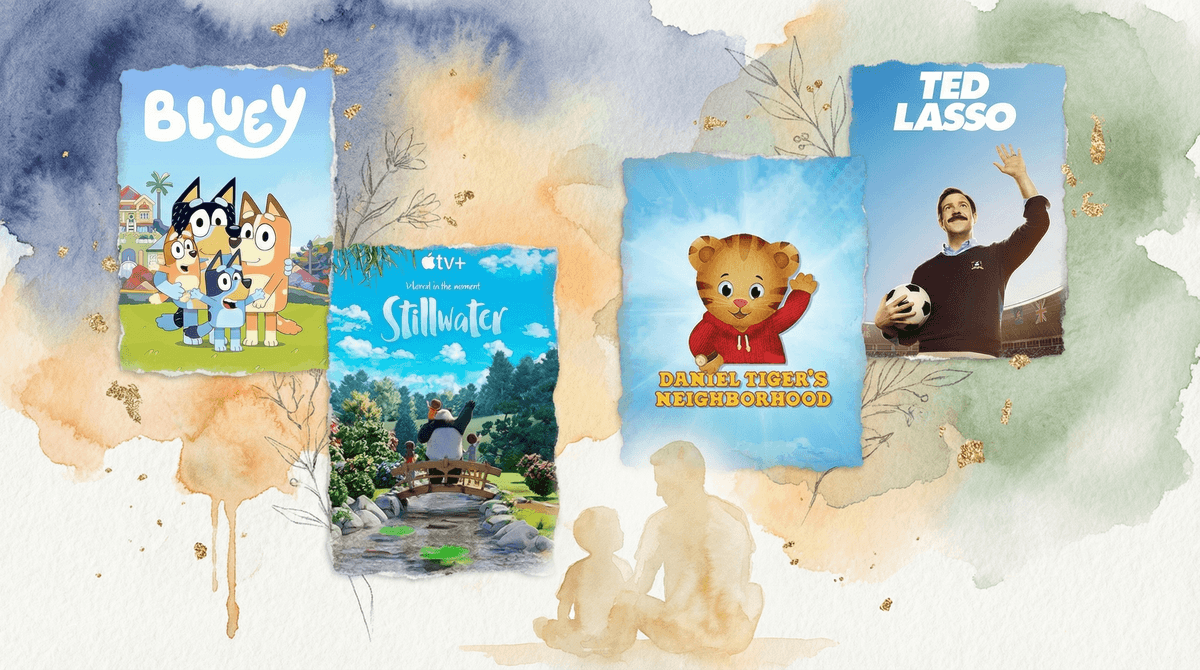
Bluey is the gold standard here. Every episode is basically a masterclass in appreciating the ordinary magic of family life. The Heeler family doesn't have the fanciest toys or go on exotic vacations—they play games with a balloon, turn chores into adventures, and find joy in each other. Kids watching Bluey absorb the message that the best things in life aren't things.
Daniel Tiger's Neighborhood explicitly teaches emotional skills, including gratitude. The "Think About Something Happy" song and episodes about saying thank you might feel a bit on-the-nose for adults, but for preschoolers learning to name their feelings? It works.
Stillwater on Apple TV+ is a quiet gem. It's based on Jon J. Muth's Zen stories, and each episode features a wise panda helping kids work through problems with mindfulness and perspective. The whole vibe encourages slowing down and appreciating what's in front of you.
For Middle Grade (Ages 8-12)
Anne with an E on Netflix shows a character who's been through genuine hardship (orphanages, abuse, poverty) and still chooses to see beauty and possibility everywhere. Anne's relentless optimism isn't toxic positivity—it's a conscious practice of finding wonder in the world. Fair warning: it deals with some heavy themes, but it's ultimately about resilience and appreciation.
The Great British Baking Show (yes, really) is shockingly wholesome. Contestants genuinely support each other, celebrate others' success, and show grace in disappointment. There's no manufactured drama or schadenfreude. It's just people being kind and appreciating craft, which is weirdly radical for reality TV.
Avatar: The Last Airbender might seem like an odd choice, but hear me out. The entire show is about characters learning to appreciate different perspectives, cultures, and ways of being. Uncle Iroh is basically a gratitude guru disguised as a tea-loving mentor. The show consistently emphasizes relationships and wisdom over power and stuff.
For Teens (Ages 13+)
Queer Eye is fundamentally about helping people recognize their own worth and appreciate what they already have (while getting a makeover, sure, but the emotional work is the real transformation). The Fab Five consistently model gratitude, vulnerability, and celebrating others.
Chef's Table showcases chefs who've dedicated their lives to their craft, often overcoming enormous obstacles. It's about passion, dedication, and deep appreciation for ingredients, culture, and tradition. Not a show about wanting more—it's about going deeper.
Ted Lasso is essentially a show about choosing optimism and gratitude even when things are hard. Ted's whole philosophy is about appreciating people and moments rather than focusing on winning at all costs. (Note: it's TV-MA for language and some mature themes, so preview before sharing with younger teens.)
Gratitude-inspiring content won't magically transform your kid overnight. If you're putting on Bluey hoping it'll stop the whining about wanting a new toy, you'll be disappointed. But over time, the stories kids absorb do shape their worldview.
The best approach is pairing screen content with real-world practice. Watch these shows together when you can, and occasionally point out moments: "I love how Anne found something beautiful even though she was having a hard day" or "Did you notice how everyone helped each other in that episode?"
Some of these shows deal with real hardship, which is actually part of the point. Gratitude isn't about pretending everything is perfect—it's about finding meaning and appreciation even when things are difficult. Shows like Anne with an E or Avatar don't shy away from challenges, and that context makes the gratitude more authentic.
Avoid the gratitude guilt trip. You know the "kids in other countries would be grateful for that dinner" lecture? Yeah, that doesn't work. It just makes kids feel bad without actually cultivating genuine appreciation. These shows work because they inspire rather than shame.
Not all screen time is created equal. While you probably can't (and shouldn't try to) eliminate all the dopamine-hit content from your kids' media diet, you can be intentional about including shows that model a different way of seeing the world.
The shows listed here won't lecture your kids about gratitude. They'll just tell good stories about characters who appreciate relationships, find joy in ordinary moments, and choose perspective over pessimism. And sometimes, that's exactly the kind of subtle modeling that sticks.
Will your kid still want the latest thing they saw advertised? Probably. But they might also start noticing the good stuff they already have. And in a world engineered to make everyone feel like they need more, that's actually pretty powerful.
Start with one show that fits your kid's age and interests. Watch an episode or two together. See what resonates. You're not trying to overhaul their entire media diet—you're just adding some content that pulls in a different direction.
And if you want to explore more options, check out alternatives to brain-rot content or how to talk to kids about gratitude .
.
The goal isn't perfection. It's just being a bit more intentional about what messages are coming through the screen. You've got this.