The 2D advantage
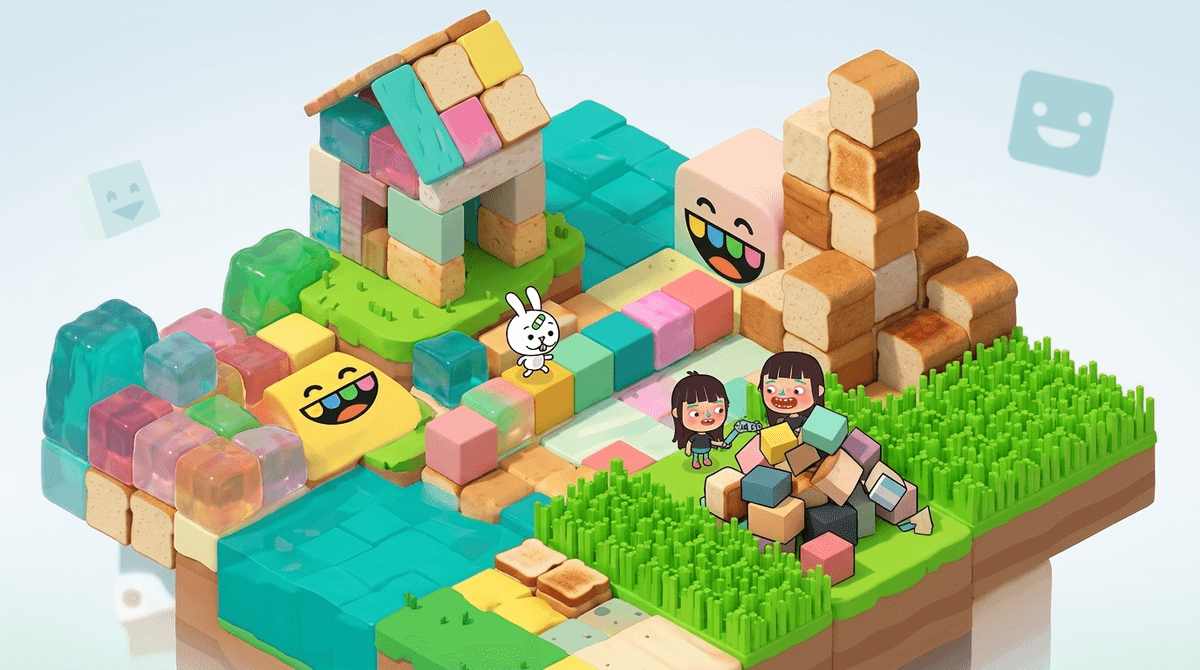
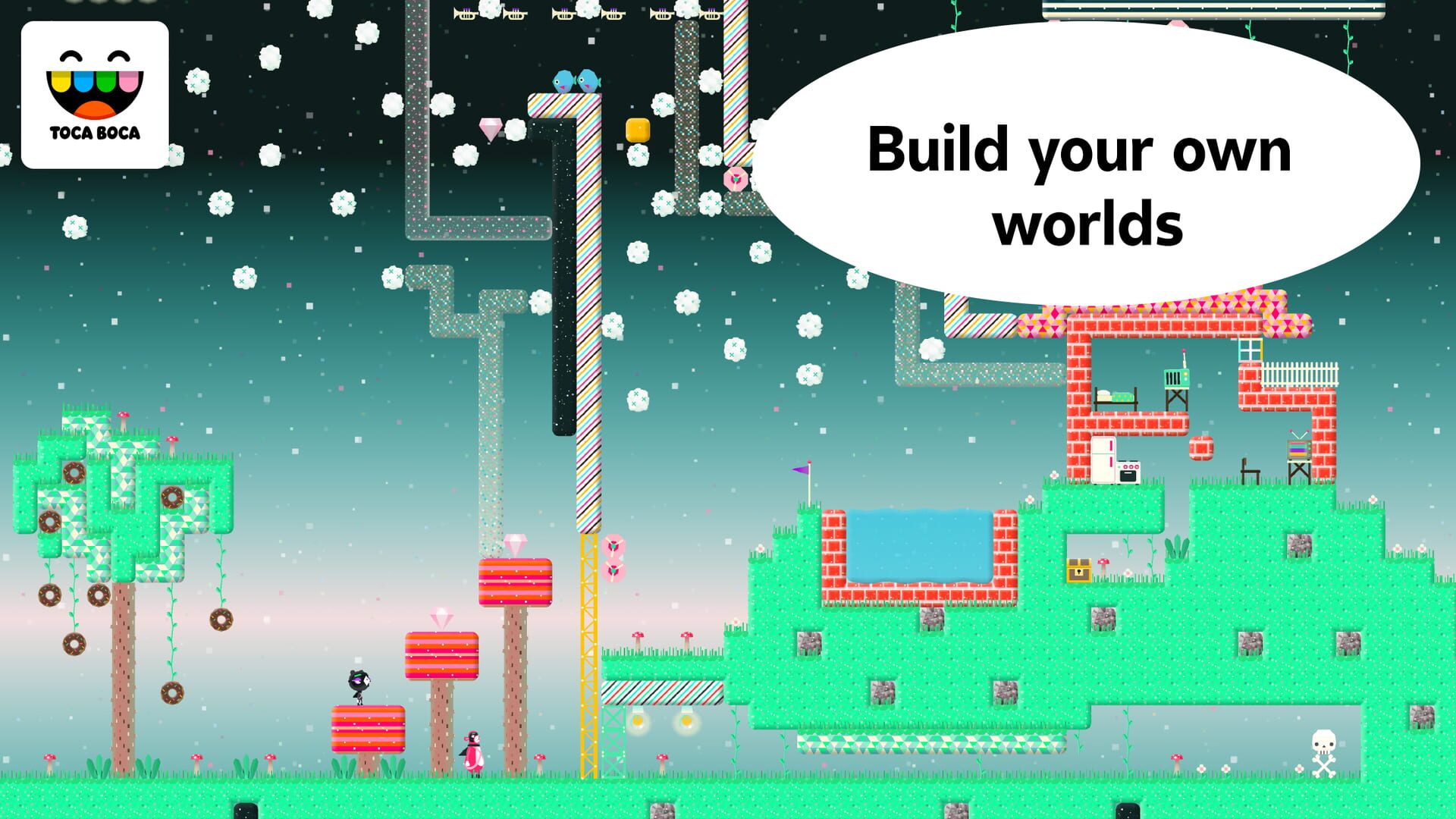
The first thing you’ll notice is that Toca Blocks doesn't try to be a 3D world. While every other building game is chasing the Minecraft aesthetic, this one stays firmly in a side-scrolling plane. For a five-year-old, that is a feature, not a bug. Navigating a 3D space with dual-stick controls or awkward touch-screen swipes is a high bar for tiny hands. By keeping everything on a 2D grid, the game removes the "how do I move?" frustration and lets kids get straight to the "what can I build?" part.
It’s also surprisingly deep for something that looks so simple. Most building apps are just digital sticker books where you place an object and it sits there. Here, the blocks have personalities. You have bouncy blocks, sticky blocks, and slippery blocks. When you start merging them, you get "functional" architecture. You aren't just building a house; you’re building a parkour course or a Rube Goldberg machine. If you're wondering how this stacks up against other building games, the answer is usually that it trades scale for experimentation.
Mixing as a mechanic
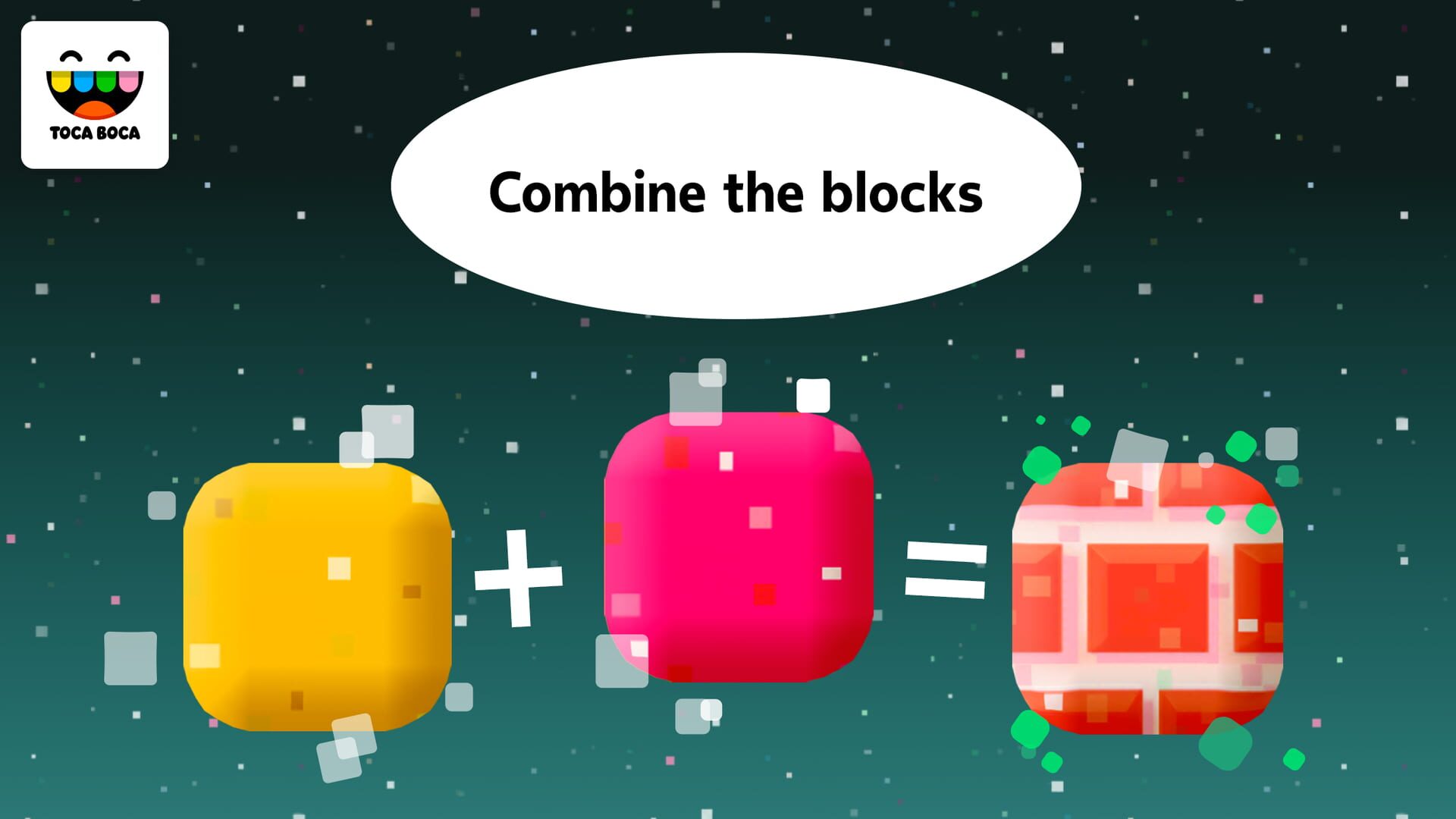
The secret sauce is the discovery system. When you stack different colored blocks on top of each other, they don't just sit there—they transform. Stacking a "sticky" block with a "water" block might give you a fish. It turns a creative sandbox into a light puzzle game where kids are incentivized to poke the world to see how it reacts.
This creates a "just one more experiment" loop that is rare in games for preschoolers. There are no high scores or timers, but there is a genuine sense of discovery. I’ve seen kids spend twenty minutes just trying to find every possible block combination before they even start building a "level." It rewards curiosity without the stress of a "game over" screen.
The subscription hurdle
We have to talk about the Piknik/Toca Boca Jr bundle. Back in the day, you could buy this app for a few bucks and own it forever. Now, it’s tucked behind a monthly subscription. If you only want Toca Blocks, $10 a month feels steep.
However, if you view it as a curated library, the math changes. The bundle includes heavy hitters like Toca Kitchen 2 and Toca Lab: Elements. If you have a kid in that 4-to-8 age range, this is essentially the "prestige TV" of the app store. You’re paying for the total absence of those "accidental" $99 in-app purchases and the weird, low-quality ads that plague free games. When you look at the full ranking of Toca Boca games, Blocks usually sits near the top because it has more longevity than the "roleplay" apps like Toca Hair Salon.
When to move on
There is a definitive shelf life here. Around age 8 or 9, most kids are going to start looking at Minecraft or Roblox because of the social element. Toca Blocks is a solitary experience. There is no multiplayer, no chat, and no way to visit a friend's world.
For a parent of a younger child, that's a relief. You don't have to worry about server moderation or strangers. But for a third-grader, it might start to feel like a "baby game" once their friends start building together elsewhere. Enjoy this phase while it lasts—it’s the last time their digital world-building will be this peaceful and private. You can find more details on the official Toca Boca site regarding their safety standards and how they handle cross-app play within their ecosystem.