The "Le Guin Wall"
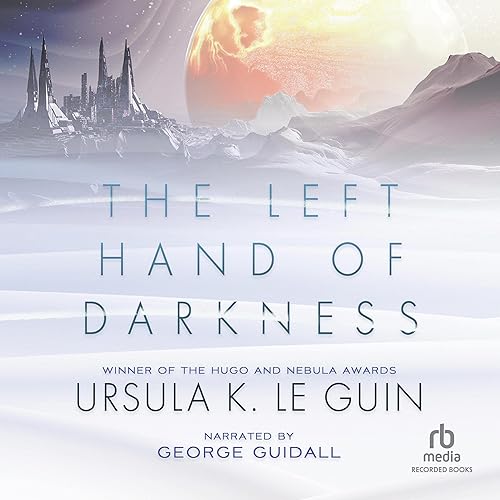
If your teen is used to the breakneck pacing of modern YA, they are going to hit a wall about 50 pages into this book. Le Guin doesn't do "hooks" in the traditional sense. She builds a world through anthropology, weather reports, and mythology. It’s a slow, quiet, and profoundly cold book. The first half is mostly political maneuvering in a frozen kingdom where the "alien" nature of the inhabitants isn't about tentacles or lasers, but about the fact that they have no fixed gender.
This isn't just a background detail; it’s the entire point of the exercise. For a generation of kids growing up with a much more fluid understanding of gender identity, this 1969 classic might actually feel less "radical" than it did to their parents, but it remains a masterclass in seeing the world through a non-binary lens. If they’ve already worked through some Sci-Fi Books for Teens: A Parent's Guide to Gateway Reads and are looking for something that respects their intelligence, this is the gold standard.
Why the 1969 perspective is a feature, not a bug
You’ll notice the emissary uses "he/him" pronouns for everyone on the planet Winter. Modern readers often find this jarring—why would a genderless society be described with masculine pronouns? Le Guin herself grappled with this in later years, but for a 16-year-old reader, this "flaw" is actually a great conversation starter. It forces the reader to confront their own biases. Are we viewing these characters as men because of the pronouns, or because of how they act?
The book wins because it doesn't lecture. It places a "normal" human man in a world where he is the weirdo, the "pervert" who is always in a state of sexual readiness while everyone else only experiences gender during a specific cycle. It’s a brilliant way to make a teen think about how much of our personality is tied to the roles society expects us to play.
The "Trek Across the Ice" litmus test
The final third of the book is essentially two people walking across a massive, lethal glacier. There are no space battles. There is no grand villain to defeat. It is just two individuals from different worlds trying to survive the cold and finally understanding one another.
If your kid enjoyed the intellectual heavy lifting and philosophical scale of The Three-Body Problem and Mind-Bending Sci-Fi for Teens, they will likely find this journey moving. If they found those types of stories boring or too detached, they will likely find the ending of The Left Hand of Darkness a slog.
This is a high-level book that earns its 4.4 Amazon rating not through thrills, but through a kind of haunting beauty. It’s the kind of story that stays in the back of your brain for decades, changing shape as you get older. Just don't expect them to finish it in a weekend. It’s a book to be chewed on, not swallowed whole.