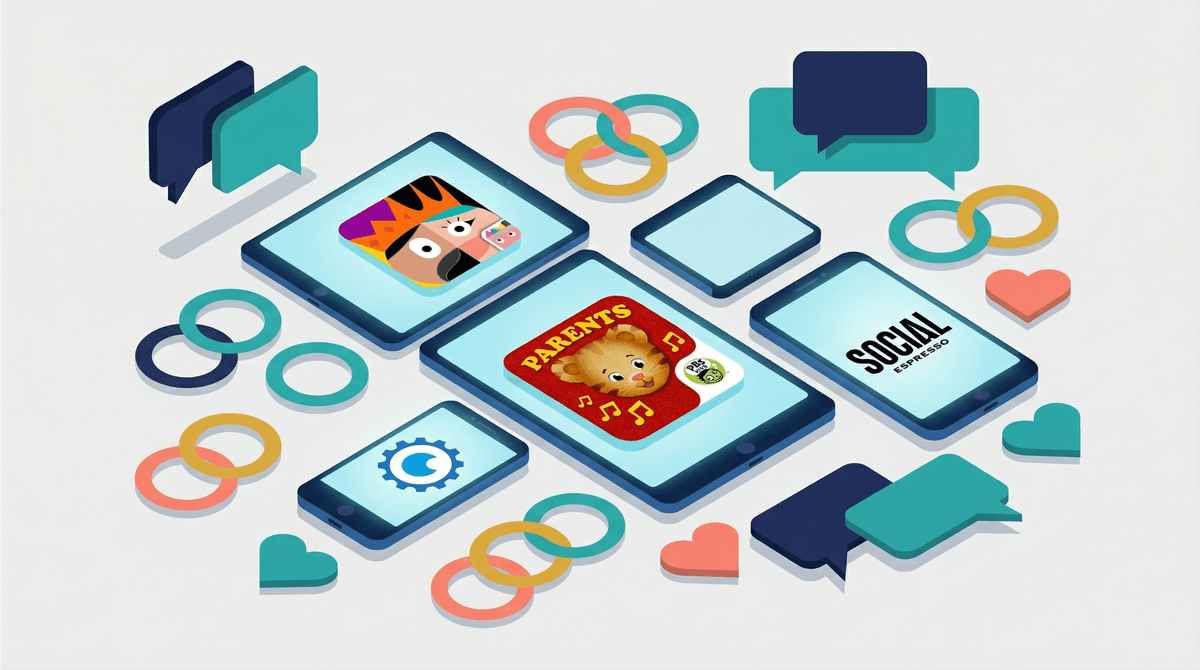
This is one of those rare apps that actually does what it promises: teaches social skills in a way that sticks. The animated scenarios give kids a safe space to explore how their actions affect others, which is gold for anyone who's watched their kid struggle to read a room.
It's not flashy or gamified, which is actually a strength here—the focus stays on learning rather than points or rewards. Parents consistently report real improvements in their kids' social awareness, and teachers find it genuinely useful for classroom discussions.
The catch? It works best as a co-viewing experience. Watch together, pause, talk through the choices. Used that way, it's a legitimately valuable tool for building emotional intelligence. Just sitting a kid in front of it solo? You'll get less bang for your buck.
Age Fit
Best for elementary through early middle school (roughly ages 6-12). The scenarios are most valuable for kids actively navigating playground politics and friendship dynamics, though some middle schoolers might find the content a bit young.
WISE Breakdown
Wholesome
88
The Social Express II (the actual app based on web search) teaches social-awareness skills through realistic day-to-day scenarios, helping kids understand consequences of behaviors and think from others' perspectives. Parents praise how well-constructed it is for teaching empathy and social thinking.
Imaginative
72
Uses animated scenarios and visual storytelling to present social situations, inviting kids to explore different behavioral outcomes. While not open-ended creative play, it encourages perspective-taking and imaginative thinking about how others experience situations.
Safe
92
Educational app focused on social skills with no concerning content. Parents and teachers report high quality, age-appropriate scenarios. No monetization red flags mentioned in reviews, and content is carefully designed for learning without manipulation or inappropriate themes.
Enriching
91
Explicitly designed to build social-awareness and emotional intelligence. Reviews consistently highlight its effectiveness in teaching kids to understand social cues, consequences, and empathy. Teachers use it successfully in 6th grade classrooms, and parents report real behavioral benefits even for 'average' kids.
Parent Info
✓
Why It Might Be Great
Teaches perspective-taking and empathy through realistic animated scenarios that show how different behaviors affect others
Parents report it's beneficial even for kids with 'average' social skills, not just those who struggle
Teachers use it successfully in middle school classrooms as conversation starters about social dynamics
Shows consequences and outcomes of different choices, helping kids think through social situations before they happen
High-quality visuals and animation make learning engaging rather than preachy
⚠
What to Watch For
Most effective when used as a conversation starter rather than solo screen time—talk through the scenarios together
Some 6th grade teachers felt stories skewed slightly young, so gauge whether the scenarios match your kid's social environment
Best for kids who benefit from explicit social coaching; naturally socially-fluent kids might find it redundant
Conversation Starters
""What do you think that character was feeling when their friend ignored them?""
""Have you ever been in a situation like that? What did you do?""
""If you could give that kid advice, what would you say?""
""Why do you think the other kids reacted that way?""
""What would you want someone to do if you were feeling left out like that?""