Our reviews and ratings are 100% unbiased. Screenwise is a Bookshop.org affiliate and an Amazon Associate, so if you buy a book through one of our links, we may earn a commission. Bookshop.org purchases also support independent bookstores.
Screenwise Verdict
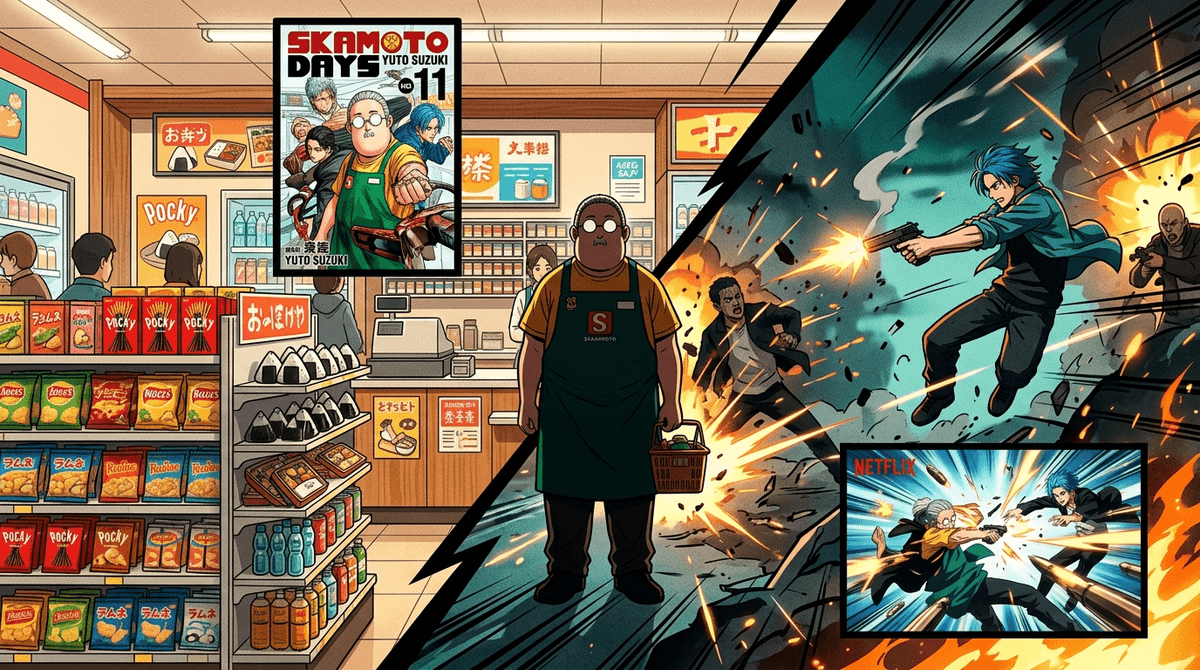
Imagine John Wick retired, put on fifty pounds, and opened a local convenience store—except he swore off killing forever and now has to defeat absurdly dangerous hitmen using whatever is on aisle 4. Sakamoto Days is one of the most visually inventive shonen manga running today, blending lightning-fast action panels with hilarious slapstick humor.
While the core dynamic is surprisingly sweet—focused on Sakamoto's devotion to his wife, daughter, and store employees—it is still a full-throttle assassin comic. Expect plenty of blood, gunfights, blade fights, and mild profanity. If your high schooler loves action-heavy manga like Demon Slayer or Jujutsu Kaisen but you prefer something with a lighter heart and a non-lethal protagonist, this is a top-tier pick.
Age Fit
Best for ages 13–14 and up. Sakamoto's non-lethal rule keeps things grounded in action-comedy territory, but the graphic novel still packs enough blood, profanity, and assassin violence to exclude middle-grade readers.
WISE Breakdown
Wholesome
48
Anchored by strong family devotion, loyalty, and a non-negotiable rule against killing, but offset by frequent assassin violence, profanity, and crude fatphobic humor.
Imaginative
88
Features extraordinarily inventive visual pacing and slapstick action choreography that turns ordinary convenience store items into high-stakes fight gear.
Safe
42
Frequent, stylized assassin violence with guns, blades, and blood, alongside profanity, smoking, and alcohol use. Not suited for younger kids.
Enriching
72
Offers masterclass visual storytelling and comic paneling alongside themes of redemption, peaceful life, and prioritizing family over past glory.
Parent Info
✓
Why It Might Be Great
Insanely creative action choreography that turns everyday convenience store items into slapstick high-stakes weapons.
Heartwarming family dynamic where Sakamoto's top priority is staying retired and making dinner with his wife and kid.
A strict ethical boundary built around his vow never to kill anyone again, no matter who comes after him.
⚠
What to Watch For
Stylized manga violence featuring constant gunfights, slicing, and blood spray that ramps up in intensity across volumes.
Crude gags and profanity including recurring jokes about Sakamoto's weight gain and casual underworld swearing.
Conversation Starters
"Sakamoto refuses to kill anyone, even when they are actively trying to kill him—does that rule make his fights harder or smarter?"
"How does the author use ordinary objects in the store to turn fight scenes into comedy?"
"What is the difference between doing something because you are good at it versus doing something because it is right for your family?"
Deep Dive
The Jackie Chan of Modern Manga
What sets Sakamoto Days apart from the standard Shonen Jump crowd isn't just its goofy premise—it's Yuto Suzuki's jaw-dropping fight choreography. In an era where many action manga rely on abstract magic systems or giant energy beams, Suzuki grounds his fights in physical space and improvised physics. A throat lozenge becomes a projectile; a price scanner becomes a weapon; a subway car becomes a pinball machine. It has the bouncy, visual logic of classic Jackie Chan films.
Blood vs. Heart
Parentally speaking, the series sits in an interesting middle ground. On one hand, the premise involves hitmen, sniper rifles, martial arts executioners, and a surprising amount of blood as the story escalates. On the other, Sakamoto's ultimate superpower is his complete refusal to break his wife's rule: no killing. Every fight is a puzzle where he has to disarm or subdue lethal killers without taking a single life.
If your teen is already diving into action manga, Sakamoto Days delivers high-octane visual storytelling anchored by a genuinely charming message about prioritizing family over past glory.