Our reviews and ratings are 100% unbiased. Screenwise is a Bookshop.org affiliate and an Amazon Associate, so if you buy a book through one of our links, we may earn a commission. Bookshop.org purchases also support independent bookstores.
Screenwise Verdict
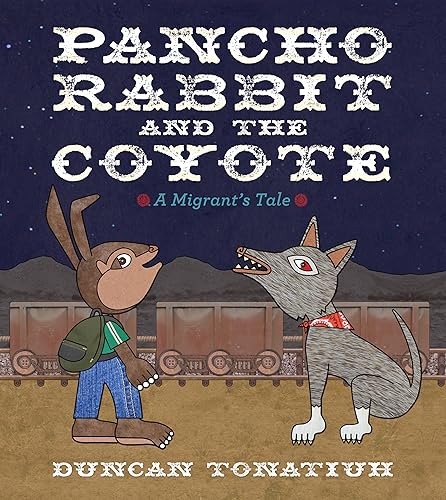
This isn't your typical 'fluffy bunny' bedtime story. Duncan Tonatiuh uses a unique, flat art style inspired by ancient Mixtec codices to tell a story that’s part folklore and part sobering documentary.
It’s a necessary read for parents who want to move past the headlines and help their kids understand the human side of migration. It’s gritty for a picture book, but handled with such craft that it feels essential rather than traumatizing. If you're tired of 'brain rot' and want something that actually sparks a real conversation at the dinner table, this is it.
Age Fit
Perfect for the 6-10 crowd. Younger kids will enjoy the 'brave rabbit' adventure, while older kids will pick up on the heavy subtext regarding the US-Mexico border.
WISE Breakdown
Wholesome
88
The core of the story is about deep family loyalty and a son's bravery to find his father. While the journey is perilous, the motivation is pure and grounded in love.
Imaginative
94
Duncan Tonatiuh’s art style is a total standout, drawing from ancient Mixtec codices. It turns a modern political reality into a folk-style fable with talking animals that feels both ancient and immediate.
Safe
85
It's a book, so no digital boogeymen here. However, the 'Coyote' is a menacing figure who demands payment and eventually threatens to eat Pancho. It’s a literal representation of a very real danger, which might be intense for very sensitive kids.
Enriching
96
This is a masterclass in using allegory to explain complex social issues. It builds empathy for the migrant experience without being a dry lecture, and the art alone is a history lesson in indigenous aesthetics.
Parent Info
✓
Why It Might Be Great
The artwork is incredible—it looks like a modern version of an ancient Aztec manuscript.
It humanizes the migrant experience in a way that kids can actually wrap their heads around.
It doesn't talk down to children; it respects their ability to handle a story with real stakes.
Great for teaching visual literacy and how art can tell a deeper story.
⚠
What to Watch For
The Coyote character is a bit of a creep—he's a smuggler who eventually turns on Pancho.
The ending is hopeful but realistic; it acknowledges that the struggle for migrant families doesn't just vanish.
Conversation Starters
"Why did Pancho's father have to leave the family in the first place?"
"The Coyote asks for Pancho's food in exchange for help. Do you think that was a fair deal?"
"How does the art in this book look different from other books we've read? Why do you think the author drew it that way?"
"What would you do if you were Pancho and felt scared but had to keep going?"