Why Opus Magnum Belongs in Every Logic-Lover's Library
Most educational games suffer from a core flaw: they sacrifice mechanical depth to force-feed an instructional curriculum. Opus Magnum flips that script. It isn't trying to teach your kid Python or JavaScript; it teaches the far more valuable foundational habit of algorithmic thinking.
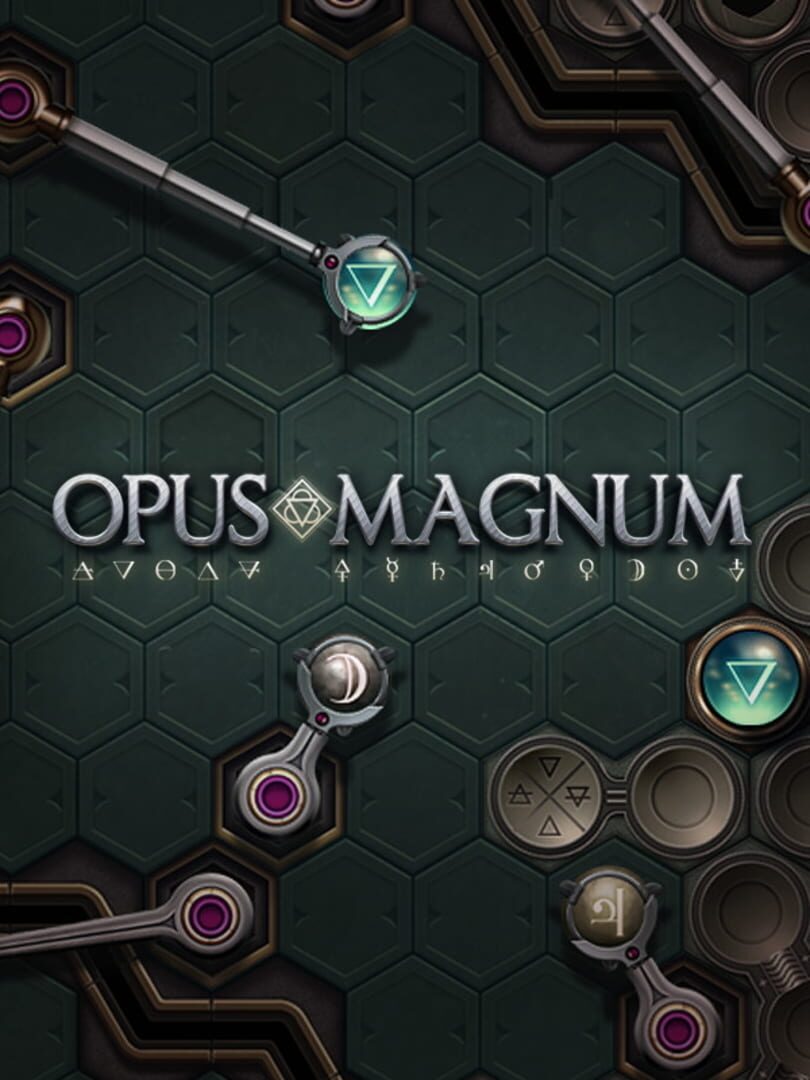
Every puzzle gives you a set of inputs (like lead or quicksilver) and a required target molecule. How you bridge the gap is entirely up to you. You might build an absurd, sprawling monstrosity with twelve mechanical arms fighting for space, or a tight, minimalist three-component loop that takes twice as long but costs a fraction of the gold.
"A beautiful exercise in freeform solutions, Zachtronics has created one of the most satisfying puzzle games ever made." — PC Gamer
The Optimization Loop
What makes the game stick is its histogram feedback after every solved level. The game graphs your solution against the rest of the world on three metrics:
- Cost: How few mechanical components did you place?
- Cycles: How fast does your machine spit out the product?
- Area: How compact is your footprint on the grid?
This single feature transforms a static puzzle game into an open-ended engineering lab. A kid who finishes a level in 200 cycles immediately sees that someone else did it in 45, prompting them to open the level back up and rethink their timing loops.
How to Introduce It
Sit beside your kid for the first two or three tutorial levels. The interface is clean, but understanding how to program arm movement sequences (grab, rotate, extend, release) takes five minutes of hands-on experimentation. Once they grasp the concept of clock cycles and arm synchronization, hand over the controls and let them debug their own logic jams.