Our reviews and ratings are 100% unbiased. As an Amazon Associate, Screenwise earns from qualifying purchases, so if you buy a book or game through one of our links, we may earn a commission. We don't get any credit if you just Google it instead :)
Screenwise Verdict
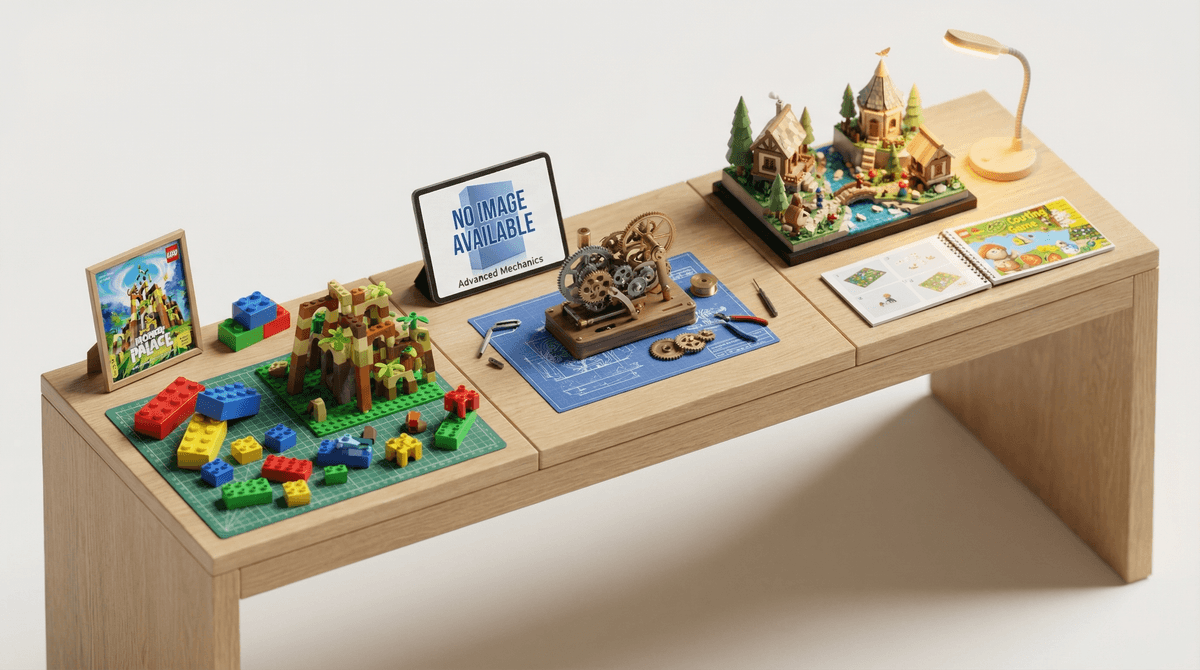
LEGO Monkey Palace is what happens when you cross a solid Euro-style board game with actual brick-building, and it works surprisingly well. The theme is goofy (clumsy monkey destroys palace, oops), but the gameplay has real depth—multiple scoring paths, resource management, and the physical building element that makes it feel different from your standard board game.
It's not revolutionary, but it's well-designed and the replayability is strong. Family gaming groups genuinely like it, which is a good sign—these are people who've played hundreds of games and aren't easily impressed. The 10+ age recommendation feels right; younger kids will struggle with the strategic layers.
The main knock? It's a bit niche. If your family loves both LEGO and board games, this is a no-brainer. If you're lukewarm on either, it might not get pulled off the shelf often enough to justify the price. But for the right family, it's a keeper.
Age Fit
Best for ages 10-16, though younger kids (8-9) who are strong with strategy games might handle it with some guidance. Adults will enjoy it as a family game night option, but it's not a deep strategy game that would hold hardcore gamers' interest solo.
WISE Breakdown
Wholesome
88
LEGO Monkey Palace is a cooperative-competitive game that balances helping rebuild a palace together while competing for points. The theme is lighthearted (a clumsy monkey accidentally destroys a palace), and the mechanics encourage strategic thinking without mean-spirited conflict. The building aspect is inherently satisfying and promotes patience.
Imaginative
85
The game combines physical LEGO building with strategic board game mechanics—players literally construct a staircase brick by brick while managing resources (Monkey Credits, Banana Points). Multiple game boards and varied paths to victory mean each playthrough feels different. The tactile building element adds a creative dimension beyond typical board games.
Safe
95
Board games are inherently safe, and this one has no mature themes, no concerning artwork, and reasonable social dynamics. The competitive element is balanced by the collaborative building theme. No gambling mechanics, no toxic interactions. The physical LEGO pieces are age-appropriate for 10+ (no choking hazards at this age). Amazon rating of 4.4/5 suggests solid quality control.
Enriching
78
Develops spatial reasoning, strategic planning, and resource management. The building component adds fine motor skill practice and engineering thinking. Multiple scoring paths teach flexible problem-solving. However, it's primarily entertainment rather than deeply educational—it's a fun game that happens to build skills, not a learning tool disguised as a game.
Parent Info
✓
Why It Might Be Great
Combines the tactile satisfaction of LEGO building with strategic board game mechanics—you're actually constructing something while you play
Multiple paths to victory and variable game boards mean strong replayability; no single dominant strategy
Hits the sweet spot between cooperative (rebuilding the palace together) and competitive (scoring those banana points)
Develops spatial reasoning, resource management, and strategic planning without feeling like homework
Family gaming groups report it works well across ages—kids and adults both stay engaged
⚠
What to Watch For
The 10+ age recommendation is real—younger kids may struggle with the multi-layered strategy and resource management
Setup and teardown involve actual LEGO building, so plan for a bit more time than typical board games
Competitive players might get frustrated if they're expecting pure strategy—the building element adds a physical skill component that can level the playing field
Conversation Starters
"What strategy are you using—going for quick banana points or building up your monkey credits first?"
"If you could design your own LEGO board game, what would you build and how would you score it?"
"Which part do you like better—the building or the strategy? Why?"
"Should we try a different game board next time to mix things up?"