

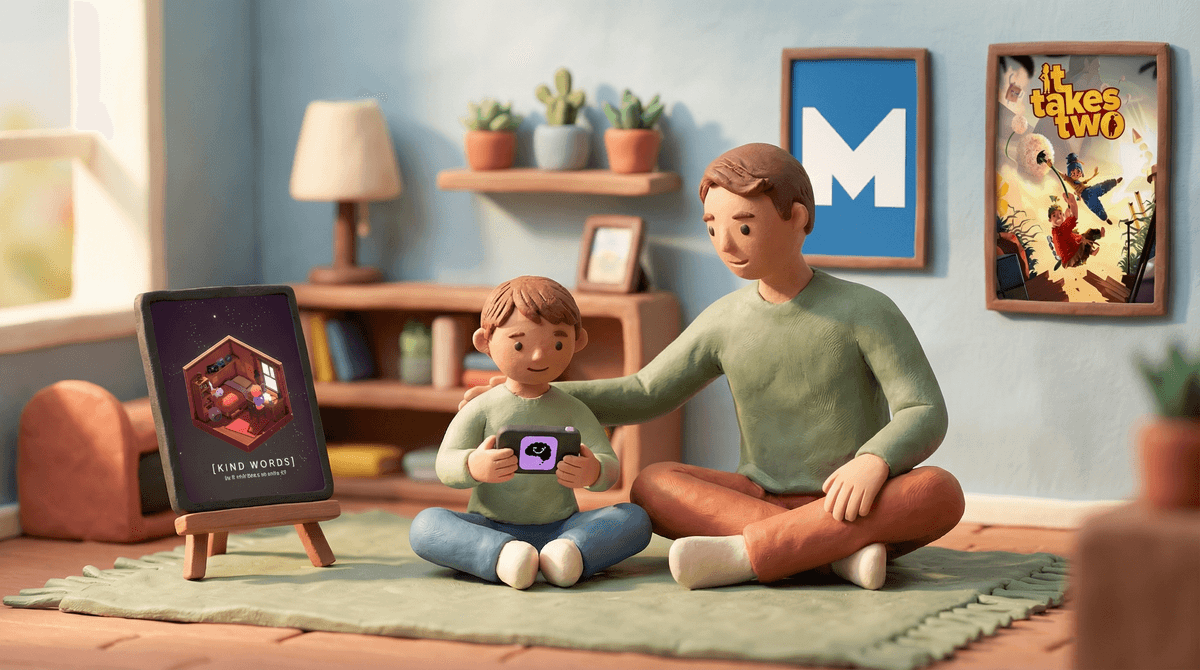
Social-emotional learning (SEL) games are basically the opposite of "let's see how many zombies we can headshot in 60 seconds." They're games—video games, board games, apps, activities—designed to help kids practice the messy, complicated work of being a human who has to exist alongside other humans.
We're talking about skills like recognizing emotions (in yourself and others), managing big feelings without throwing controllers, working through conflicts, showing empathy, and making responsible decisions. The kind of stuff that determines whether your kid becomes someone who can handle disappointment when they lose at Mario Kart or melts down for 45 minutes.
The beauty of SEL games is that they let kids practice these skills in low-stakes environments. Messing up in a game about making friends? Way better than messing up actual friendships at recess.
Here's the thing: we spend a lot of time worrying about screen time and whether Fortnite is rotting our kids' brains. But not all screen time is created equal, and not all games are just digital candy.
Research consistently shows that kids with strong social-emotional skills do better academically, have healthier relationships, and are more resilient when life gets hard. They're better at regulating their emotions, which means fewer meltdowns over homework and sibling conflicts that don't escalate into full WWE matches.
The challenge? These skills don't just magically appear. They need practice. And for a lot of kids, especially those who struggle with social situations or have anxiety, games provide a safer space to experiment than the chaos of the playground.
Ages 4-7: Building Emotional Vocabulary
[Kimochis](https://screenwiseapp.com/media/kimochis-app These plush toys come with feeling faces and cloud cards that help little kids name emotions. The accompanying games are simple but effective—kids practice identifying feelings and talking about what makes them feel different ways. It's surprisingly powerful for preschoolers who are still learning that "mad" and "frustrated" aren't the same thing.
Zones of Regulation This isn't technically a game, but the framework has been turned into tons of activities and apps. Kids learn to identify which "zone" they're in (blue/sad, green/calm, yellow/anxious, red/angry) and practice strategies for getting back to green. Works great for kids who need concrete visuals for abstract feelings.
Daniel Tiger's Grr-ific Feelings If your kid is in the Daniel Tiger demographic, this board game is solid. It uses the show's familiar strategies (like "when you feel so mad that you want to roar, take a deep breath and count to four") in game format. Not groundbreaking, but effective for this age.
Ages 8-12: Practicing Perspective-Taking
Ungame This has been around forever, but it still works. There's no winning or losing—just conversation cards that prompt kids (and adults) to share thoughts and feelings. Questions range from silly to surprisingly deep. It's great for families who want structured conversation time that doesn't feel forced.
Social Detective Specifically designed for kids who struggle with social cues, this game teaches "social thinking" concepts—how to read body language, understand context, and figure out what others might be thinking or feeling. Super helpful for neurodivergent kids or anyone who finds social situations confusing.
Kind Words (Ages 10+) This is a video game where you write and receive anonymous letters from other players. You can request advice, offer support, or just share what's on your mind. It's surprisingly wholesome and teaches empathy in a digital context. The anonymity actually helps some kids be more vulnerable and genuine.
Life is Strange (Ages 13+) Okay, this is rated T for Teen and deals with some heavy topics (bullying, mental health, tough choices), but it's an incredible narrative game about consequences and empathy. Your choices actually matter, and you see how they ripple through relationships. Play it with your teen and talk about the decisions together.
Ages 8+: Cooperative Games That Build Teamwork
Pandemic Yeah, maybe too on-the-nose post-2020, but this cooperative board game is fantastic for teaching kids how to work together, communicate clearly, and handle stress. Everyone wins or loses together, which completely changes the dynamic from competitive games.
Forbidden Island Same concept as Pandemic but simpler and faster. Great for younger kids (8+) who are ready to learn that sometimes helping your teammate is more important than being the hero yourself.
It Takes Two This video game literally cannot be played alone—you need a partner. It's designed to require constant communication and cooperation. Some parents play it with their kids as bonding time. Fair warning: it's rated T and has some relationship drama in the storyline, but the gameplay itself is about working together.
Digital Apps Worth Considering
Mightier This is a biofeedback video game system that helps kids practice emotional regulation in real-time. They wear a heart rate monitor, and when they start getting worked up during gameplay, they have to use calming strategies to keep playing. It's pricey, but for kids who struggle with anger or anxiety, some families swear by it.
Smiling Mind Free mindfulness app with programs specifically designed for kids. Not exactly a "game," but gamified enough that kids will actually use it. Good for teaching self-awareness and emotional regulation.
Not all kids will love these games, and that's okay. Some kids (especially teens) will think they're cheesy or feel like they're being tricked into therapy. That's valid. The key is finding what resonates with your specific kid.
Playing together matters more than the game itself. You can buy every SEL game on the market, but if you're just handing them to your kid and walking away, you're missing the point. The learning happens in the conversation, the modeling, the debriefing after the game.
Watch for "teaching moments" in regular games too. You don't need special SEL games to practice these skills. Any game that involves taking turns, handling losing, or working with others is an opportunity. Minecraft multiplayer can teach cooperation (or expose where your kid needs help with it). Animal Crossing is essentially a low-key empathy simulator.
Some kids need more explicit instruction. Neurotypical kids often pick up social-emotional skills through osmosis. Neurodivergent kids, kids with anxiety, or those who've experienced trauma might need more direct teaching. That's what these games are for—making the implicit explicit.
Social-emotional learning games aren't magic. They won't turn your kid into a perfectly emotionally regulated human who never has conflicts. (If you find that game, please let me know immediately.)
But they can provide structured practice for skills that our kids genuinely need and that schools are increasingly expected to teach but often don't have time for. They give you a framework for conversations that might otherwise feel awkward or forced.
The best SEL "game" is still probably just living life together—talking through conflicts, modeling healthy emotional expression, creating space for feelings. But if a board game or video game can make that work a little easier or more accessible? That's a win.
Start with one game that matches your kid's age and interests. Play it together at least a few times before deciding if it's working. And remember: the goal isn't perfection. The goal is just a little more awareness, a little more practice, and maybe fewer sibling fights that end with someone crying.
If you're looking for more structured guidance, learn more about how to choose games that match your family's values or explore alternatives to competitive games that might be creating more stress than fun in your house.