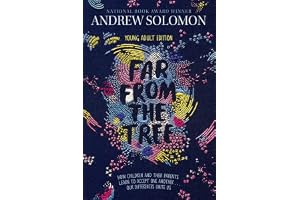
Andrew Solomon spent a decade interviewing these families, and the result is a piece of work that fundamentally changes how you look at parenting and identity. The YA edition, adapted by Laurie Calkhoven, focuses on the narratives that will resonate most with young people who are currently in the thick of figuring out who they are relative to their families.
The Concept of Horizontal Identity
The core of the book is the distinction between vertical identities (things we inherit from our parents, like race or language) and horizontal identities (traits that make us different from our parents but connect us to a peer group). For a teen, this is a revolutionary way to think about their own quirks or struggles. It validates the feeling of being an alien in your own home while showing that parents are often doing their level best to bridge that gap.
Not Just for 'Different' Kids
You don't need a specific diagnosis in the family to get something out of this. It’s a book about the human condition. It covers prodigies who feel the pressure of their own talent just as much as it covers kids with Down syndrome or those born into the Deaf community. By seeing the common threads across these wildly different lives, readers start to see the universal struggle for belonging.
A Note on the Heavy Stuff
Because this is a 'Young Adult' edition, parents might assume it's been sanitized. It hasn't. It still deals with the reality of how society treats these families, the medical ethics of 'fixing' people, and the stories of parents whose children have committed violent crimes. It’s honest, which is why it works. If your kid is ready for real-world complexity, they're ready for this.
The grown-up original: This is the official young readers adaptation of Far from the Tree by Andrew Solomon — Andrew Solomon's own retelling, at a length and reading level a middle-schooler can finish. When they close this one and want more, the original is the natural next step.