Our reviews and ratings are 100% unbiased. As an Amazon Associate, Screenwise earns from qualifying purchases, so if you buy a book or game through one of our links, we may earn a commission. We don't get any credit if you just Google it instead :)
Screenwise Verdict
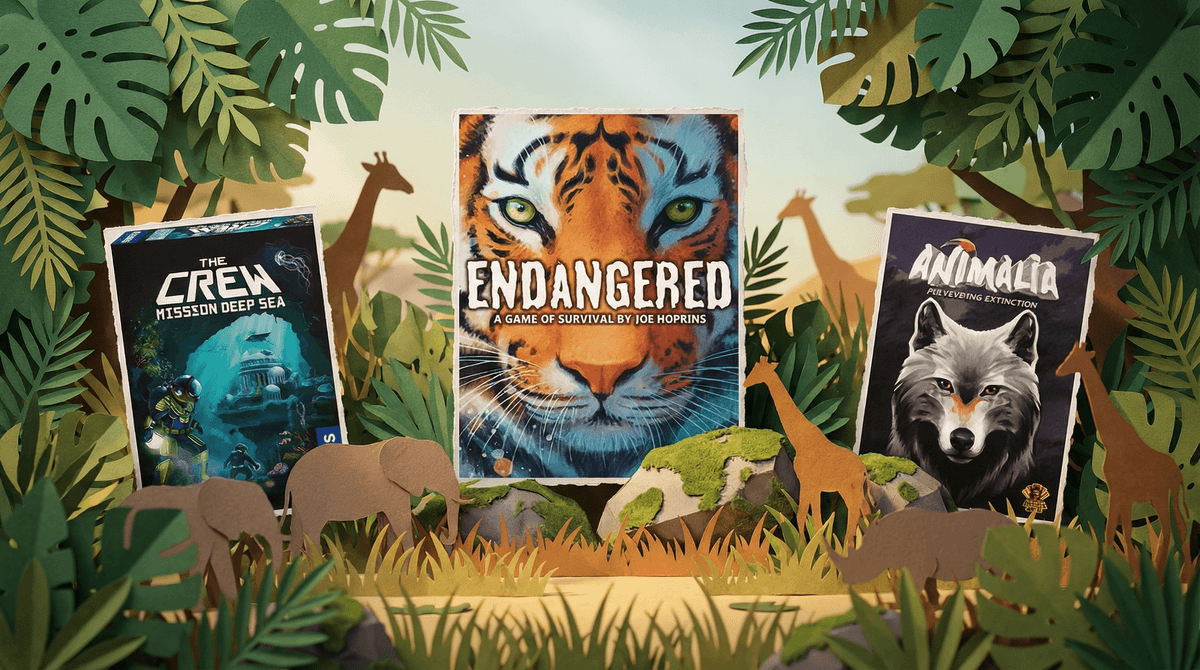
Endangered is that rare thing: a board game with a Message that doesn't feel like homework. The conservation theme is earnest without being preachy, and the gameplay is tight enough that you're thinking about dice probabilities and action efficiency, not just saving the pandas (though you are definitely trying to save the pandas).
The cooperative structure is clutch for family game night—no one flips the board because their sibling bankrupted them. You're all in it together, which means strategic discussions instead of tears. The difficulty scales well, so you can dial up the challenge as kids get better.
It's not perfect—losses can sting, and the learning curve means the first game might feel clunky. But reviewers consistently call it engaging and replayable, and the educational value is real without being forced. If your kid cares about animals or climate stuff, this is a no-brainer. If they don't yet, this might be the game that sparks it.
Age Fit
Best for ages 10-16, though adults genuinely enjoy it too. The cooperative structure and conservation theme appeal to middle-schoolers who want something more meaningful than Monopoly, while the strategic depth keeps parents engaged. Younger kids (8-9) can play with help.
WISE Breakdown
Wholesome
88
A cooperative game centered on conservation and teamwork, with no conflict between players—everyone wins or loses together. The theme models environmental stewardship and collective action. Roles like Environmental Lawyer and Lobbyist introduce kids to real-world conservation careers. The cooperative structure rewards collaboration over competition, making it emotionally healthy family time.
Imaginative
79
The dice-worker-placement mechanism is creative—rolling dice to determine available actions adds strategic variety. Five distinct conservationist roles with unique powers encourage players to think tactically about how to leverage their strengths. The theme is compelling and less common in board games (most co-ops are fantasy/sci-fi), though the execution is more mechanical than open-ended creative. It's strategic imagination rather than narrative or world-building imagination.
Safe
95
Board games don't get much safer than this. No mature content, no problematic social dynamics (pure co-op means no backstabbing or player elimination), no gambling mechanics. The theme—saving endangered animals—might create some emotional investment in outcomes, but that's healthy tension, not harmful stress. The BGG weight of 2.53 means it's accessible without being frustrating for the 10+ crowd.
Enriching
85
This is an 'educational game' that actually works. Kids learn about real conservation challenges (habitat loss, pollution, poaching) through gameplay. The Impact cards are well-researched and thematic. Strategic thinking, resource management, and collaborative problem-solving are all baked in. Parent reviews specifically call out the educational value. It builds systems thinking—understanding how actions cascade and how to prioritize under pressure. The 60-90 minute playtime is meaty enough to develop skills without overstaying its welcome.
Parent Info
✓
Why It Might Be Great
Pure cooperative gameplay means families succeed or fail together—no hurt feelings, just shared problem-solving
Actually teaches conservation concepts (habitat destruction, lobbying, public awareness) through smart thematic integration
Five unique roles keep replayability high and let kids experiment with different strategies
Nominated for 2020 Golden Geek Best Cooperative Game—it's well-designed, not just well-intentioned
The dice-worker-placement twist adds just enough luck to keep things tense without feeling random
⚠
What to Watch For
You can lose, and sometimes brutally—species go extinct, and that's emotionally real for animal-loving kids
The 60-90 minute runtime requires commitment; not a quick filler game
Medium complexity means younger players (under 10) might need adult guidance for the first few rounds
At ~$50-60, it's pricier than mass-market games, though reviewers say the component quality justifies it
Conversation Starters
"Which animal should we focus on saving first, and why? What happens if we try to save them all at once?"
"What are some real-world things people do to help endangered species? Have you heard of any conservation success stories?"
"If you could be one of the conservationist roles in real life, which would you pick and why?"
"The game has Impact cards showing threats like deforestation and climate change—which of these do you think is hardest to solve in the real world?"