The visual shorthand of trauma
The smartest thing about Cruel Summer isn't the "who-saw-what" mystery; it’s the color palette. Since the show jumps between three different years in every single episode, the creators use a visual filter to tell you exactly where you are. In the first season, 1993 is bright and sun-drenched, 1994 is a sickly, jaundiced yellow, and 1995 is a cold, desaturated blue.
This isn't just a gimmick for the cinematography nerds. It’s a vital tool for you as a viewer. It allows the show to move fast without leaving you behind. You can see a character walk through a door in 1993 and come out the other side in 1995, and you immediately understand the transformation that took place in between. It makes the show feel like a puzzle you’re actually capable of solving rather than a chaotic mess of flashbacks.
Why this beats the average teen soap
If you’ve sat through other high school mysteries, you know the drill: the plot relies on characters being too "cool" to talk to each other or parents who are conveniently invisible. Cruel Summer is different because it focuses on the obsession that comes with being a teenage girl. It’s about the desire to be someone else and the fallout when you actually get what you wished for.
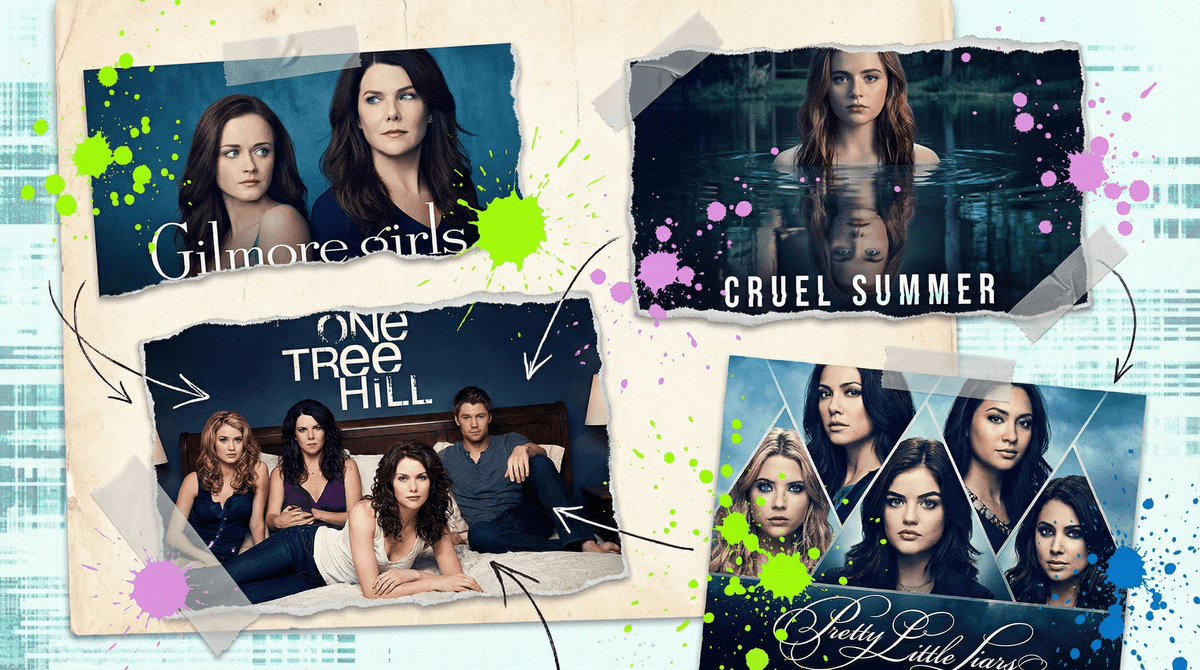
Critics and fans on Reddit often compare it to Pretty Little Liars, but that’s almost an insult to the writing here. While PLL often felt like it was making up the rules as it went along, Cruel Summer feels like a tight, intentional thriller. It’s closer to a prestige drama than a soap opera. If your teen is looking for something more substantial than a standard romance, this is one of the best binge-worthy teen dramas streaming on Hulu. It treats its audience like they have an attention span.
The specific friction of Season 1 vs. Season 2
As an anthology, the show resets after the first ten episodes. Season 1 is the clear standout, focusing on a kidnapping and the social execution of a girl who may or may not have known about it. It’s high-stakes and emotionally draining.
Season 2 moves the clock forward to the Y2K era (1999–2001). While it keeps the three-timeline structure, the mystery involves a different set of crimes and a heavy focus on the early internet and tape-trading culture. Some fans found the second season a bit slower, but it still lands the "whodunnit" plane with a solid landing. If you’re trying to decide if the show is worth the time commitment, Season 1 is the essential watch. If they’re hooked after that, Season 2 is a decent follow-up, but it doesn't quite reach the same fever pitch.
Navigating the "heavy" stuff
The show carries a TV-14 rating, and it’s definitely one of the more mature titles among the best shows for teens on Hulu. The friction for parents isn't usually about sex or violence—it’s the psychological manipulation.
The "villain" isn't a masked slasher; he’s a charismatic authority figure who uses his position to isolate a child. Watching this with your teen might be uncomfortable because the show forces you to see how easily people are fooled. It’s an "obsession machine" that works because it makes you question your own judgment. You’ll find yourself liking characters who are objectively doing terrible things, which is exactly why it’s a great jumping-off point for talking about how real-world predators operate. It doesn't moralize; it just shows you the wreckage.