The 'Anti-LEGO' Logic
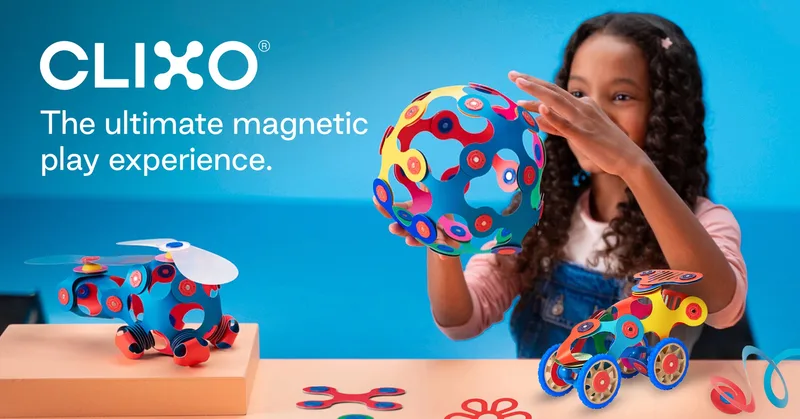
Most building toys are about rigid structures—bricks, beams, and stiff plastic. Clixo flips that by using a flexible, paper-like synthetic material with powerful magnets at the nodes. This allows kids to explore topology rather than just architecture. They can build spheres, wearable crowns, and articulated snakes that actually wiggle. It’s a completely different mental model for spatial awareness.
Why it wins on travel
If you've ever tried to bring a bin of LEGOs or magnetic tiles on a plane, you know the pain. They’re heavy, they’re loud, and they roll under the seat of the person in 14B. Clixo pieces stack perfectly flat. You can fit a 20-piece set in a jacket pocket, and because the magnets are strong and the pieces are light, they tend to stay 'clumped' together rather than scattering across the cabin floor.
Comparison: Clixo vs. Magna-Tiles
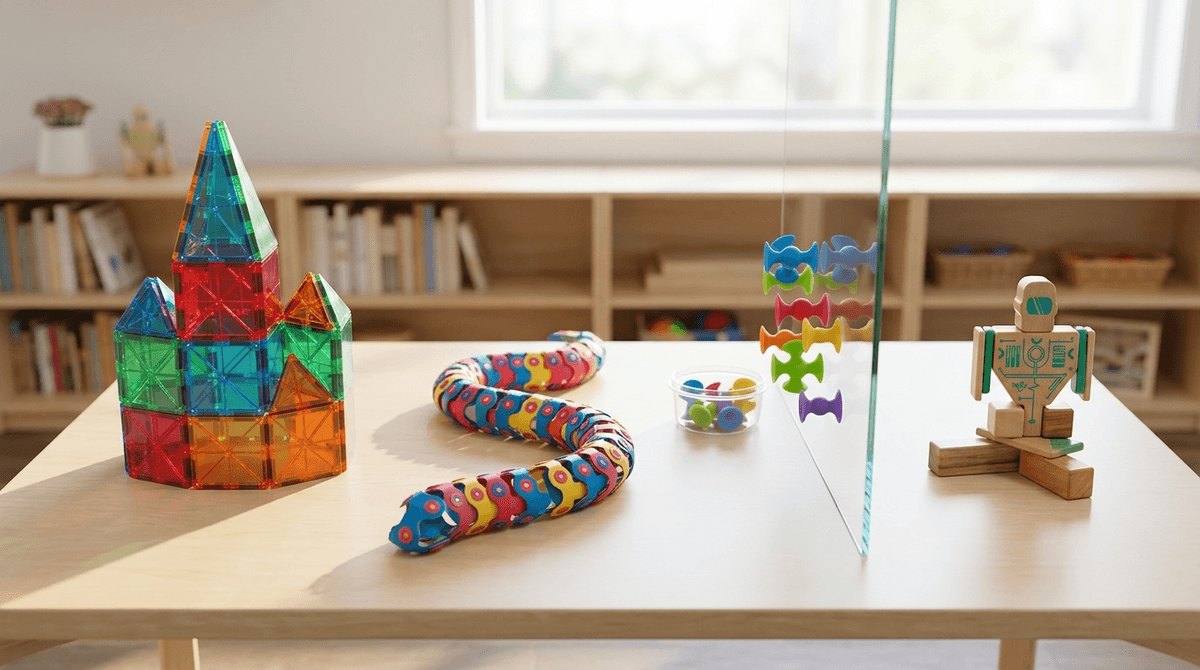
Magna-Tiles are great for building houses and towers. Clixo is better for building things. If your kid likes to make costumes, animals, or wearable gear, Clixo is the superior choice. The magnets are also polarized (red and blue), which teaches a subtle, hands-on lesson about how magnetism actually works—you have to flip the pieces to get them to 'stick' or 'repel.'
"Clixo represents a shift toward toys that prioritize the 'feel' of the play as much as the result. It's as much a sensory tool as it is a construction set."
It’s also worth noting the durability. You can literally step on these, wash them in the sink, and throw them in a backpack without worrying about cracks or lost magnetic strength. For families trying to move away from 'disposable' plastic toys, this is a solid investment in longevity.