The "Reverse Engineering" of Angry Birds
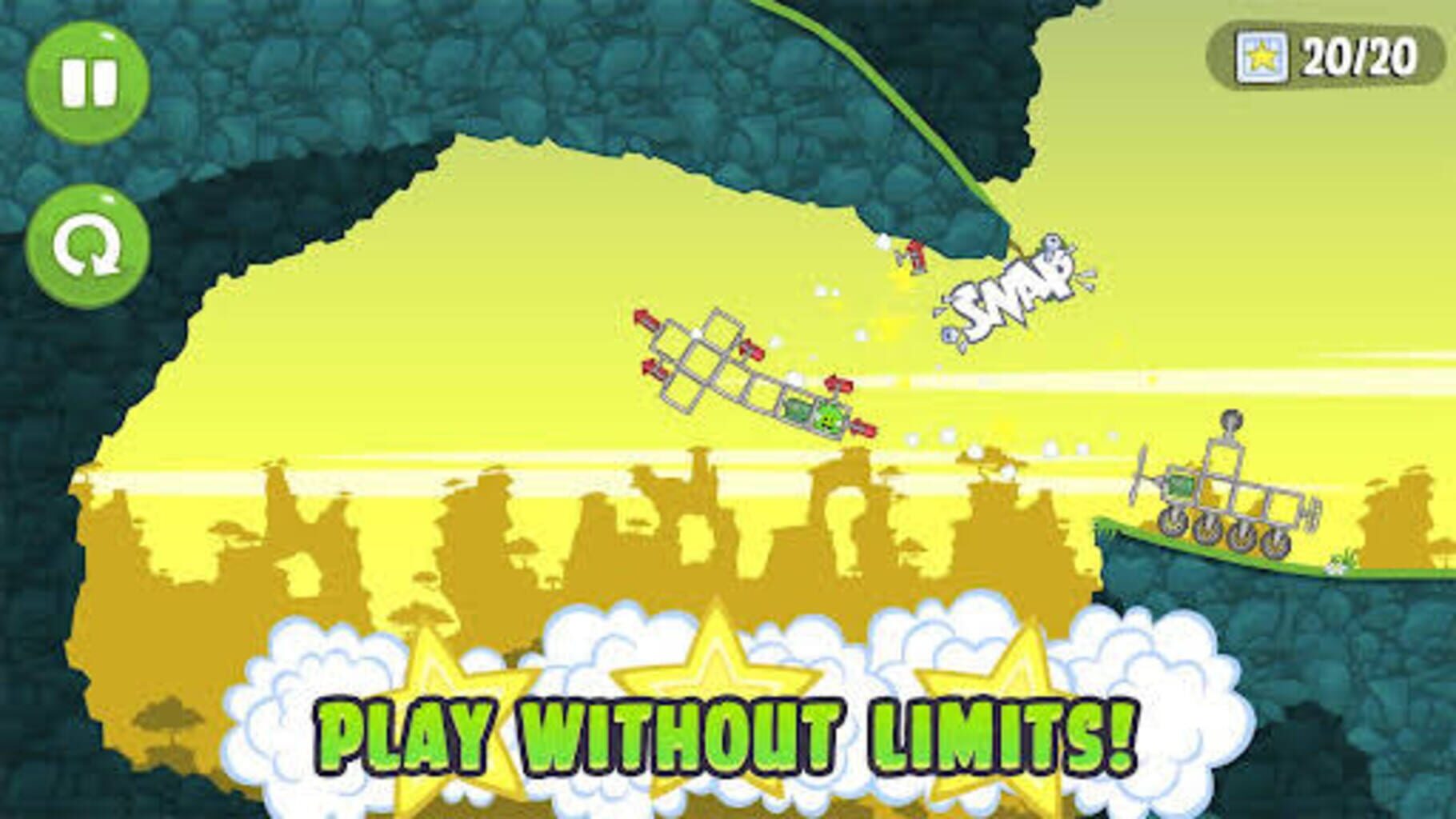
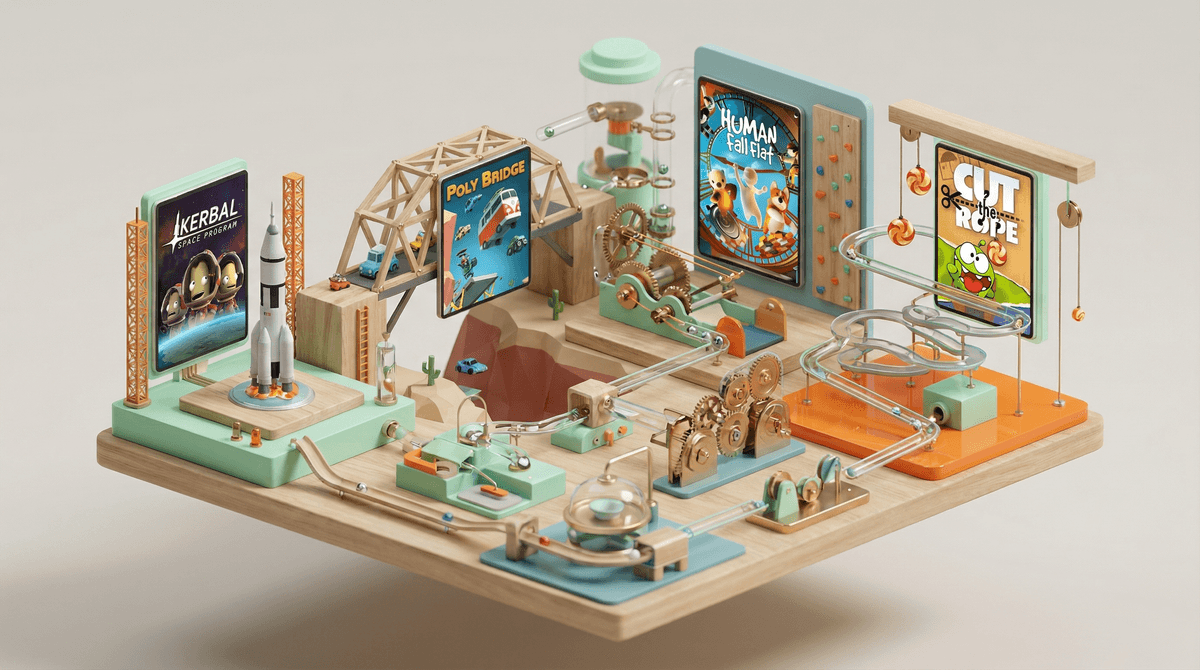
Most mobile games in the early 2010s were about destruction, but Rovio took a hard pivot with this one. Instead of the "aim and fire" simplicity of the main series, you're essentially playing a 2D version of Kerbal Space Program. You aren't just trying to get from point A to point B; you’re trying to figure out why your wooden cart keeps disintegrating the moment you activate a soda bottle rocket.
It’s a game that respects a kid’s ability to handle failure. In many games like Angry Birds, the solution is about timing or angles. Here, the solution is about logic. If the pig keeps rolling backward, do you add a motor or change the center of gravity? This shift from "smash" to "build" makes it one of the better gravity and physics games for younger kids who aren't quite ready for the high-stakes engineering of PC simulators.
The Sandbox vs. The Wall
While the main levels follow a standard three-star progression, the Sandbox mode is where the real value lives. It removes the rigid "solve this specific puzzle" pressure and lets kids just mess around with the parts they’ve unlocked. This is vital because, as critics and parents have noted, the difficulty curve is steep.
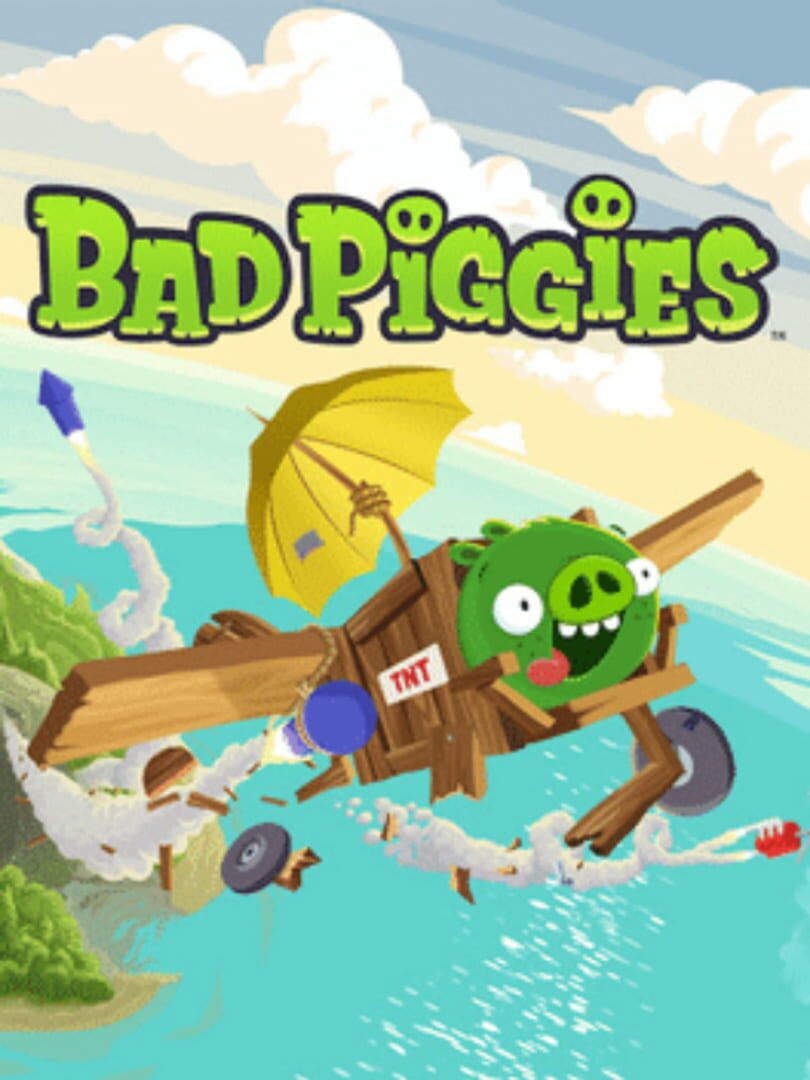
The IGDB score of 68 reflects a bit of that frustration. It isn't a "flawless" experience. The physics can feel inconsistent, and the building interface is occasionally clunky on smaller screens. You will likely see your kid hit a wall where they can’t figure out how to use an umbrella and a fan to navigate a specific gap. That’s usually the moment they’ll retreat to the sandbox to build a TNT-powered flying machine that has no hope of winning but is a lot of fun to watch explode.
A 2012 Time Capsule
Playing this today feels like a relief compared to the current state of the App Store. Because it’s a "premium" title from a different era, it lacks the aggressive monetization and constant ad-breaks that define modern mobile gaming. You pay for the game, and you get the game. There are no "energy bars" forcing you to wait four hours to play again, and no "loot boxes" to hide the best parts.
The "violence" is so stylized it barely registers as such. When a contraption hits a wall at eighty miles per hour, the pig doesn't get hurt; it just looks a little dizzy and the level resets. It’s the kind of consequence-free experimentation that encourages kids to try the "wrong" thing just to see what happens, which is often the best way to learn how the game’s internal physics actually work. If your kid is the type to spend three hours with a bucket of LEGOs building a car that doesn't actually roll, they are the target audience for this.