

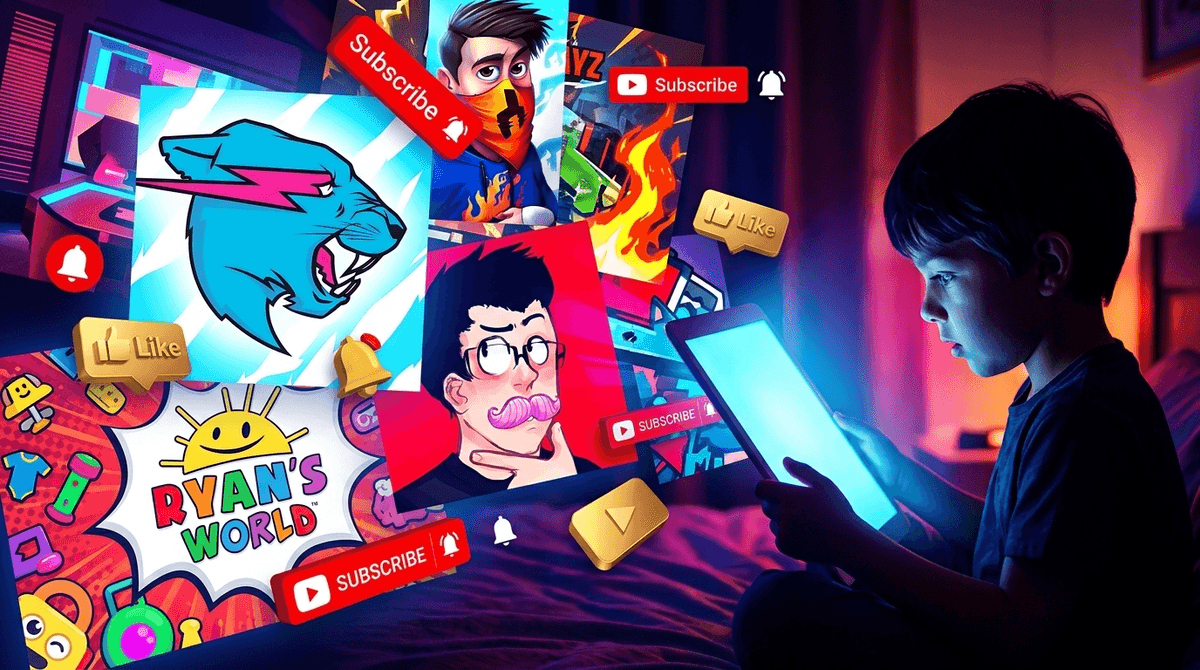
TL;DR: Your child isn’t just "watching" a video; they are hanging out with a friend who doesn’t know they exist. This is a parasocial relationship, and in 2026, it’s the primary way kids consume media. While it can build community, it also makes them vulnerable to clever marketing and emotional burnout.
Quick Links to Navigate the YouTube Rabbit Hole:
- MrBeast — The king of the "best friend" vibe and high-stakes stunts.
- PrestonPlayz — High-energy gaming that feels like a constant FaceTime call.
- Markiplier — Great for older kids, but the emotional bond is intense.
- YouTube Kids — The "walled garden" that sometimes lets the weeds in.
- Ryan's World — The OG parasocial trap for the preschool set.
If you’ve ever felt a genuine pang of sadness when a celebrity died or felt like you "knew" a fictional character, you’ve experienced a parasocial interaction. For our kids, however, this isn't a side effect of media—it’s the entire point.
A parasocial relationship is a one-sided psychological bond where a viewer invests emotional energy, interest, and time into a digital creator. To the creator, the viewer is an anonymous data point in a "view count." To the viewer, the creator is a mentor, a big brother, or a "bestie."
In 2026, this has evolved. Creators no longer just talk at the camera; they talk to the camera. They use "we" instead of "I." They share "vulnerable" moments (often scripted) to build trust. When MrBeast says, "I spent $10 million to give you the best video ever," your kid feels personally included in that gift.
If your kid calls something "Ohio" (weird/cringe) or talks about "skibidi" nonsense, they likely picked it up from a creator they trust more than their teachers. Kids crave connection. In an era where physical "third places" (like malls or parks) are disappearing, the YouTube comment section and the creator’s Discord server have become the new neighborhood.
Creators provide:
- Consistency: They are there every Tuesday at 4:00 PM, unlike a busy parent or a friend who might be grounded.
- Validation: "Like and sub if you love your mom!" makes a kid feel like they are part of a "good" group.
- A Shared Language: Knowing the latest Roblox meme from Unspeakable is social currency at school.

Not all creators are created equal. Some use this bond to teach, while others use it to drain your bank account through Robux scams or endless merch drops.
Jimmy Donaldson is the master of the parasocial. He’s built an empire on being the "nice guy" who gives away money. But parents should be aware: his content is designed to be addictive. The fast cuts, the high stakes, and the constant "friend" framing can make kids feel like they owe him their loyalty.
- The Vibe: Philanthropy meets a carnival barker.
- The Risk: Kids may develop a skewed sense of money and "charity" as something that only happens if a camera is rolling.
If your kid is into Minecraft, they know Preston. He’s high-energy, generally clean, and very good at making his audience feel like they are part of his inner circle.
- The Vibe: The cool older cousin who drank too much Red Bull.
- The Risk: Heavy cross-promotion of merch and other channels. It’s a 24/7 commercial disguised as a friendship.
For the younger crowd (ages 3-7), Ryan is the ultimate parasocial "playdate."
- The Vibe: Unboxing toys and "family fun."
- The Risk: This is basically brain rot for toddlers. It’s pure consumerism. It trains kids from a very young age to equate "friendship" with "getting new stuff."
Better for teens, Mark Fischbach is a great example of a creator who uses his platform for good, but the parasocial bond here is intense. His fans are fiercely protective of him.
- The Vibe: Genuine, funny, and often surprisingly deep.
- The Risk: Emotional over-investment. If Mark is having a bad day, his millions of "friends" have a bad day too.
We often hear that watching Roblox YouTubers teaches kids about "entrepreneurship." Let’s be real: usually, it just teaches them how to want things.
When a creator says, "I'm only dropping this hoodie for 24 hours, don't miss out, guys!" they are leveraging that "friendship" to create artificial scarcity. Your kid isn't buying a hoodie; they are buying a piece of their "friend."
The Reality Check:
- Roblox/Fortnite: Creators often get a "Support-A-Creator" code. When your kid uses it, the creator gets a cut of the V-Bucks or Robux.
- The Lesson: Talk to your kids about how these creators are businesses. A friend doesn't charge you $40 to wear a shirt with their face on it.
- Ages 4-7: Stick to YouTube Kids or, better yet, PBS Kids. At this age, they cannot distinguish between a commercial and a show. Parasocial bonds here are purely manipulative.
- Ages 8-12: This is the peak "MrBeast" era. Start using the word "parasocial." Explain that the creator is talking to 100 million people, not just them.
- Ages 13+: Discuss the "Creator Economy." Help them understand the production behind the "authenticity."
The biggest danger of a parasocial relationship is the "Halo Effect." If a kid thinks a creator is their "best friend," they will defend that creator's bad behavior.
In 2024 and 2025, we’ve seen major creators face serious allegations—ranging from toxic work environments to inappropriate contact with minors. When a child’s digital "best friend" is "canceled," it can feel like a real-life grief event.
What to watch for:
- Isolation: Is your child choosing "hanging out" with a YouTuber over hanging out with real-life friends?
- Aggression: Do they get angry if you criticize the creator?
- Secretive Behavior: Are they joining "private" Discord servers or Telegram groups linked by the creator? (This is a major red flag for grooming).
Don't start with "That guy is fake." You'll lose them immediately.
Instead, try:
- "I noticed MrBeast has a huge team of editors. How many people do you think it takes to make one video look that 'real'?"
- "It’s cool that Preston is so excited, but do you think he’s actually that loud in real life, or is that his 'work character'?"
- "Why do you think he asks everyone to 'smash that like button' every five minutes? What happens to his bank account when you do that?"
Parasocial relationships aren't inherently "evil." They can provide a sense of belonging and inspiration. However, they are commercial transactions dressed up as friendships.
Your job isn't to ban YouTube—it’s to be the "media critic" in the room. Help your child see the invisible strings of the algorithm and the marketing. When they realize that MrBeast is a brand and not a buddy, they can enjoy the content without losing their sense of reality.
- Audit the Subscriptions: Sit down with your kid and look at who they follow. If you see Skibidi Toilet or low-effort "brain rot" channels, it might be time to suggest some educational alternatives.
- Set a "Merch" Budget: If they want the hoodie, make them earn the money. It breaks the "he's my friend" spell when they have to work for the "gift."
- Watch Together: Spend 20 minutes watching their favorite creator. Ask them what they like about the person. You’ll learn more about your kid’s emotional needs than you will about the video itself.
Check out our guide on how to spot "Brain Rot" content early