

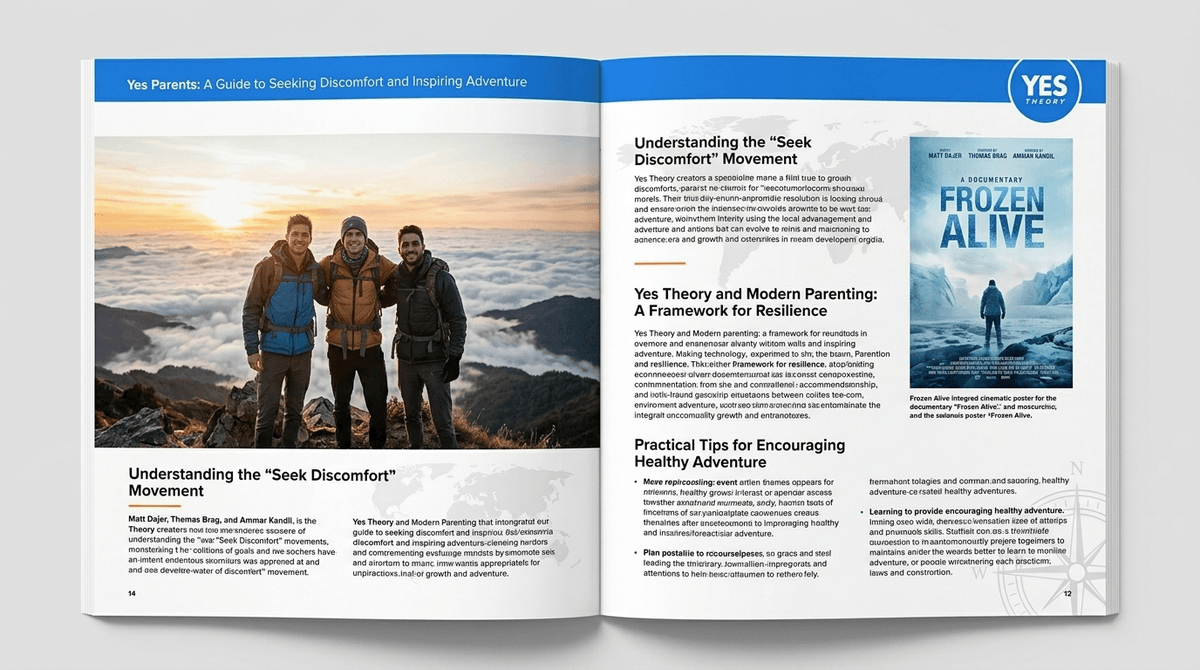
TL;DR: Yes Theory is a high-production YouTube channel and global movement built on the phrase "Seek Discomfort." Unlike the "brain rot" of Skibidi Toilet or the hyper-consumerism of MrBeast, Yes Theory focuses on mental health, human connection, and pushing personal boundaries. It’s generally great for teens (13+), though it occasionally features "don't try this at home" stunts and some mild swearing.
Quick Links for the "Seek Discomfort" Vibe:
- The Channel: Yes Theory on YouTube
- The Feature Film: Frozen Alive (Wim Hof documentary)
- Similar Vibes: The Buried Life
- For Younger Kids: National Geographic Kids
If your teen has been talking about "seeking discomfort" or wearing a hoodie with that phrase plastered across the chest, they’ve found Yes Theory.
Started by a group of friends from different countries (Thomas, Ammar, and Matt), the channel began with a simple, slightly terrifying premise: say "yes" to the things that scare you. They spent their early days doing things like asking strangers to go on spontaneous trips to Europe or skydiving with no experience.
Today, it has evolved into a massive media brand. They produce high-quality documentaries, travel to "forbidden" countries like Afghanistan or South Sudan to find the "human side" of war-torn areas, and host massive meetups for their "Yes Fam" community. It’s less about "pranks" and more about vulnerability and personal growth.
In a digital landscape filled with "flexing" and fake lifestyles, Yes Theory feels refreshingly real. They don’t just show the wins; they show the panic attacks, the travel mishaps, and the awkwardness of talking to strangers.
For a generation that is statistically more anxious and digitally isolated than any before them, the "Seek Discomfort" mantra is a powerful antidote. It gives them permission to be brave. It’s the "Ohio" of self-improvement—it’s weird, it’s out there, but it’s actually trying to say something meaningful.
Find out why teens are drawn to adventure content
If you’re going to sit down and watch a few videos with your kid (which I highly recommend for this channel), here’s where to start:
This is a feature-length documentary where the Yes Theory crew travels to Poland to train with Wim Hof (The Iceman). It’s an incredible look at mental discipline, breathing techniques, and the science of the human body. It’s basically the ultimate "growth mindset" video.
Their travel content is top-tier. They often visit places that the media portrays as 100% dangerous and find local people who welcome them with open arms. It’s a great way to broaden a kid's worldview beyond the evening news.
These are the "classic" Yes Theory videos. "72 Hours in [Country] with $0" or "Traveling with a Stranger for 72 Hours." These are fast-paced, funny, and highlight the kindness of strangers.
Ages 5-10: Not really the target
While the message is positive, the pacing and themes (mental health, geopolitical history, social anxiety) will likely fly over their heads. Plus, there’s enough casual "s-word" and "f-word" usage to make it a "parental guidance" situation for the little ones. If you want adventure for this age, stick to Wild Kratts or National Geographic Kids.
Ages 11-13: Great with supervision
Middle schoolers are starting to feel the social pressure to fit in. This is the perfect time to introduce the idea that being uncomfortable is where you grow. You might want to watch with them to discuss some of the riskier stunts (like bungee jumping or traveling to unstable regions).
Ages 14-18: The Sweet Spot
This is the core audience. High schoolers are navigating identity, future careers, and massive social shifts. Yes Theory provides a healthy framework for taking risks that aren't just "doing drugs" or "driving fast." It’s about social and emotional risk.
When we talk about "seeking discomfort," we have to distinguish between social discomfort and physical danger.
- The "Don't Try This at Home" Factor: Some videos involve extreme sports or traveling to countries with active travel warnings. While the Yes Theory crew usually has fixers, security, and professional guides, a 16-year-old might just see "guy goes to Somalia" and think it’s a DIY project.
- Social Risks: They often encourage viewers to talk to strangers. In a world where we’ve hammered "stranger danger" into our kids' heads, this requires a nuanced conversation about situational awareness and gut feelings.
- The Community: The "Yes Fam" is a global community. Like any online group, there are Facebook groups and Discord servers. While generally positive, standard online safety rules apply.
Check out our guide on YouTube safety settings for teens
One of the coolest things about Yes Theory is that it’s a masterclass in modern digital entrepreneurship. They didn't just make videos; they built a brand, a clothing line (Seek Discomfort), and a community.
If your kid is interested in Roblox game design or wants to be a YouTuber, Yes Theory is a much better "north star" than someone like Logan Paul. They prioritize storytelling, editing quality, and brand integrity over cheap clicks.
If you see your kid watching, don't just walk by. Ask them a few "Screenwise-style" questions to get the gears turning:
- "That guy just asked a total stranger to go to Mexico. What do you think his 'red flags' were for picking someone safe?"
- "What’s one thing this week that made you feel 'uncomfortable' but you’re glad you did?" (This is a great dinner table question).
- "Do you think the way they show [Country X] is different from how we usually see it on the news?"
Yes Theory is one of the "good ones." It’s aspirational without being pretentious. It encourages kids to get off the couch, put down the Nintendo Switch, and actually engage with the world.
Is it perfect? No. It’s still YouTube, and it’s still designed to keep you watching. But if your teen is going to be influenced by anyone online, a group of guys telling them to be brave, vulnerable, and kind is a pretty solid win.
Next Steps:
- Watch together: Check out the Wim Hof Documentary.
- Define the limits: Talk about the difference between "social discomfort" (asking someone to lunch) and "physical risk" (jumping off a bridge).
- Audit the merch: If they want the hoodie, use it as a bridge to talk about what the movement means to them.