

X Games 2026: What Parents Need to Know About Extreme Sports Culture
TL;DR: X Games 2026 is happening June 25-28 in Ventura, California, and if your kid is suddenly asking for a skateboard or talking about "going pro," this event is probably why. The good news? Extreme sports culture can actually teach resilience, creativity, and calculated risk-taking. The less good news? It also comes with hours of YouTube rabbit holes, expensive gear requests, and some genuinely dangerous stunts to monitor.
Quick links: Tony Hawk's Pro Skater | Skate | Free Solo | The Crash Reel
X Games is ESPN's annual extreme sports competition featuring skateboarding, BMX, motocross, and other action sports. Think Olympics, but with more air tricks and significantly more likelihood of someone attempting a 1080 on a skateboard. The 2026 event marks a return to California after years of venue rotation, and it's already generating massive buzz among kids who've discovered extreme sports through YouTube, TikTok, and video games.
Here's what makes this different from traditional sports: X Games athletes are often accessible personalities who post their training, their failures, and their lifestyle online. Your kid isn't just watching a competition—they're following athletes' Instagram stories, watching their YouTube channels, and probably seeing a highly curated version of extreme sports culture that makes it look both achievable and incredibly cool.
The appeal is pretty straightforward: extreme sports look absolutely sick (yes, that's still what kids say when something is cool). But there's more going on here than just aesthetics.
Authenticity and accessibility: Unlike traditional sports with rigid hierarchies and gatekeeping, action sports culture emphasizes progression, creativity, and personal style. Kids see 14-year-olds landing tricks that would've been impossible a decade ago. The barrier to entry feels lower—you don't need a team, a coach, or even a gym membership to start skateboarding.
The content ecosystem: According to our community data, 42% of families report their kids using YouTube solo (unsupervised), with another 38% using it with supervision. That's 80% of kids who have access to an endless stream of extreme sports content. And the algorithm is really good at serving up progression videos, crash compilations, and gear reviews once your kid watches one skateboarding video.
Video game crossover: Games like Tony Hawk's Pro Skater, Skate, and [Descenders](https://screenwiseapp.com/media/descenders-app have introduced millions of kids to action sports. These games are actually pretty great—they reward creativity, teach trick names and techniques, and don't have the toxic competitive culture of some other gaming genres.
Counter-culture appeal: For kids who don't fit into traditional team sports, action sports offer an alternative identity. The culture celebrates individuality, artistic expression, and a certain amount of rebellion. That's catnip for middle schoolers trying to figure out who they are.
Here's where things get complicated. Our data shows families averaging 4.2 hours of daily screen time (4 hours on weekdays, 5 on weekends). X Games and extreme sports culture can easily push those numbers higher through:
YouTube rabbit holes: One skateboarding video leads to another, then to gear reviews, then to vlogs, then to crash compilations. The "just one more video" trap is real. Learn more about managing YouTube time .
.
Streaming the actual event: X Games broadcasts are long. We're talking multiple hours per day over four days. If your kid wants to watch live, that's a significant chunk of screen time.
Gaming inspiration: After watching X Games content, kids often want to play related video games to practice tricks virtually. This isn't necessarily bad—Tony Hawk's Pro Skater is legitimately fun and age-appropriate—but it adds to the total.
The trade-off: Here's what's interesting though. If watching X Games content actually motivates your kid to go outside and practice skateboarding, scootering, or BMX, you might see a net positive. The question isn't just "how much screen time?" but "what's the screen time inspiring?"
Let's be honest: extreme sports are called extreme for a reason. Kids will break bones. They will get scraped up. They will attempt things they're not ready for because they saw someone do it on YouTube.
What the research actually says: Studies on youth action sports show that when kids have proper equipment, supervision during the learning phase, and progressive skill development, injury rates aren't dramatically higher than traditional sports like soccer or basketball. The key phrase there is "proper equipment and progressive skill development."
The YouTube problem: Kids see athletes landing incredible tricks but don't see the years of progression, the foam pits, the protective gear during practice, or the hundreds of failed attempts. They see the highlight reel and think they can replicate it at the local skate park.
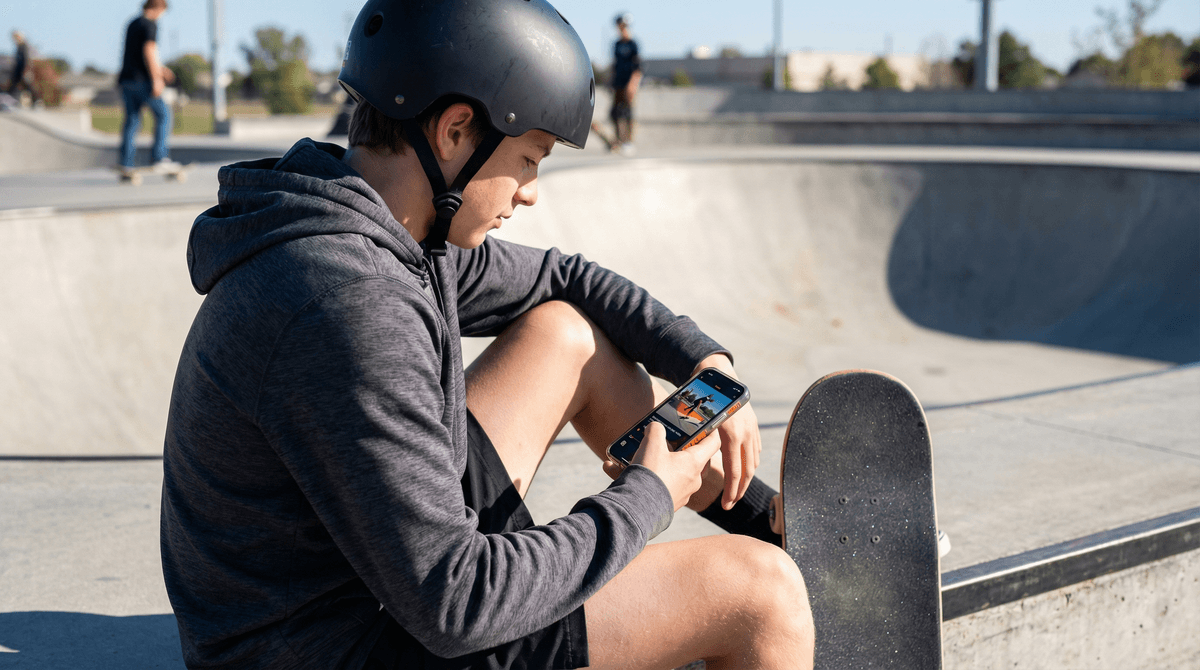
Protective gear is non-negotiable: Helmets, pads, and wrist guards aren't optional, no matter how "uncool" your kid thinks they look. This is the hill to die on. Check out our guide on sports safety equipment.
Ages 6-9: This age group can enjoy X Games as entertainment and might want to try beginner-level activities like scootering or basic skateboarding. Keep expectations realistic—they're learning balance and coordination, not attempting kickflips. Games like Tony Hawk's Pro Skater 1+2 are great for this age (rated E10+, but honestly fine for younger kids who can handle mild cartoon violence).
Ages 10-13: Peak obsession years. They'll want to watch everything, try everything, and probably convince you that they're going to go pro. This is actually a great age to channel that energy into lessons or camps where they can learn proper technique. The YouTube consumption needs boundaries though—set specific times for watching action sports content rather than unlimited access.
Ages 14+: Old enough to understand risk assessment (theoretically) and make more informed decisions about their own skill level. They might actually have the physical capability and coordination to attempt more advanced tricks. This is when having them involved in the local skate park community can be really positive—older skaters often mentor younger ones and provide reality checks about progression.
Extreme sports culture gets a bad rap, but there are genuinely great aspects:
Resilience and persistence: Landing a new trick takes dozens or hundreds of attempts. Kids learn that failure is part of the process, not a reason to quit. This is actually one of the best lessons action sports teach.
Creative problem-solving: Unlike sports with rigid playbooks, action sports reward innovation. Kids learn to see their environment differently—that rail isn't just a rail, it's a potential grind spot.
Supportive community: Despite the competitive nature of X Games, the broader action sports community is surprisingly supportive. Kids cheer each other's progress and help each other learn.
Physical activity: If X Games inspiration gets your kid off the couch and onto a board, that's a win. Even with the screen time involved in watching content, the net effect can be more physical activity.
Goal-setting and progression: Action sports have clear skill progressions. Kids can set concrete goals (land a kickflip, drop in on a ramp) and work toward them systematically.
The gear costs: A decent beginner skateboard setup runs $100-150. BMX bikes start around $300. Protective gear is another $50-100. This isn't a cheap hobby, and kids will outgrow equipment. Budget accordingly, and maybe start with used gear to see if the interest sticks.
Lessons are worth it: YouTube can teach your kid bad habits that are hard to unlearn. A few sessions with an instructor at a local skate park or action sports facility will fast-track their learning and keep them safer. Many cities have youth programs that are surprisingly affordable.
The culture varies by location: Some skate parks have great communities with older kids looking out for younger ones. Others... don't. Visit first, watch the vibe, talk to other parents.
Not all content is equal: Some extreme sports YouTubers are great role models who emphasize safety and progression. Others glorify recklessness and have content that's really not appropriate for kids. Find age-appropriate extreme sports channels.
The video game bridge: If your kid isn't ready for physical extreme sports yet, games like Riders Republic or OlliOlli World can scratch that itch while teaching trick names and building interest. OlliOlli World is particularly great—it's colorful, creative, and rated E for Everyone.
If your kid is into X Games, watching some actual extreme sports documentaries together can provide important context:
The Crash Reel: This documentary about snowboarder Kevin Pearce's traumatic brain injury is sobering and important. It shows the real consequences of pushing limits and the long recovery process. Ages 12+.
Free Solo: About rock climber Alex Honnold's preparation for climbing El Capitan without ropes. It's an incredible look at calculated risk-taking versus recklessness. Ages 10+.
Dogtown and Z-Boys: The history of skateboarding culture in 1970s California. Great for understanding where this all came from. Ages 10+.
If your kid wants to watch X Games 2026, here's a reasonable framework:
Pick specific events: They don't need to watch 20+ hours of coverage. Let them choose 3-4 events they're most interested in and watch those.
Watch together when possible: You'll get a better sense of what they're seeing and can have real-time conversations about safety, skill progression, and the difference between pro athletes and beginners.
Balance screen time with action time: For every hour of X Games watching, they need to spend time actually practicing (with proper safety gear) or doing other physical activity.
Set YouTube boundaries: Use the supervised accounts that 38% of families in our community use. Create playlists of approved channels rather than letting the algorithm take over.
Discuss the highlight reel effect: Talk explicitly about how these athletes train, the protective gear they use in practice, and the years of progression that led to their current skill level.
X Games 2026 is going to be everywhere your kid looks this summer. Rather than fighting it, think about how to channel that energy productively. Extreme sports culture, despite its reputation, can teach valuable life skills—persistence, creativity, calculated risk-taking, and resilience.
The key is balancing the inspiration from screen content with actual physical practice, maintaining non-negotiable safety standards, and helping kids understand the difference between professional athletes and themselves.
If your kid wants to watch X Games, set clear boundaries around screen time. If they want to try action sports, invest in proper safety equipment and instruction. If they're content with video games like Tony Hawk's Pro Skater or Skate, that's honestly fine too.
-
If they want to watch X Games 2026: Create a viewing plan together. Which events? How much total time? What other activities will balance it out?
-
If they want to try action sports: Research local skate parks, beginner lessons, and proper safety equipment. Start with one session to gauge actual interest versus fleeting enthusiasm.
-
If screen time is already high: Use X Games as motivation for a trade-off. "You can watch this event if you spend equal time outside practicing" or "You can watch X Games highlights after you finish your homework and chores."
-
Talk about risk: Have an explicit conversation about the difference between professional athletes with years of training and kids learning new skills. Watch The Crash Reel together.
-
Curate their content: Help them find age-appropriate extreme sports YouTube channels
that emphasize safety and progression rather than just highlight reels.
X Games 2026 doesn't have to be a parenting nightmare. With the right framework, it can be the start of a genuinely positive hobby that gets your kid moving, building resilience, and learning that failure is just part of the process. Just make sure they're wearing a helmet.