

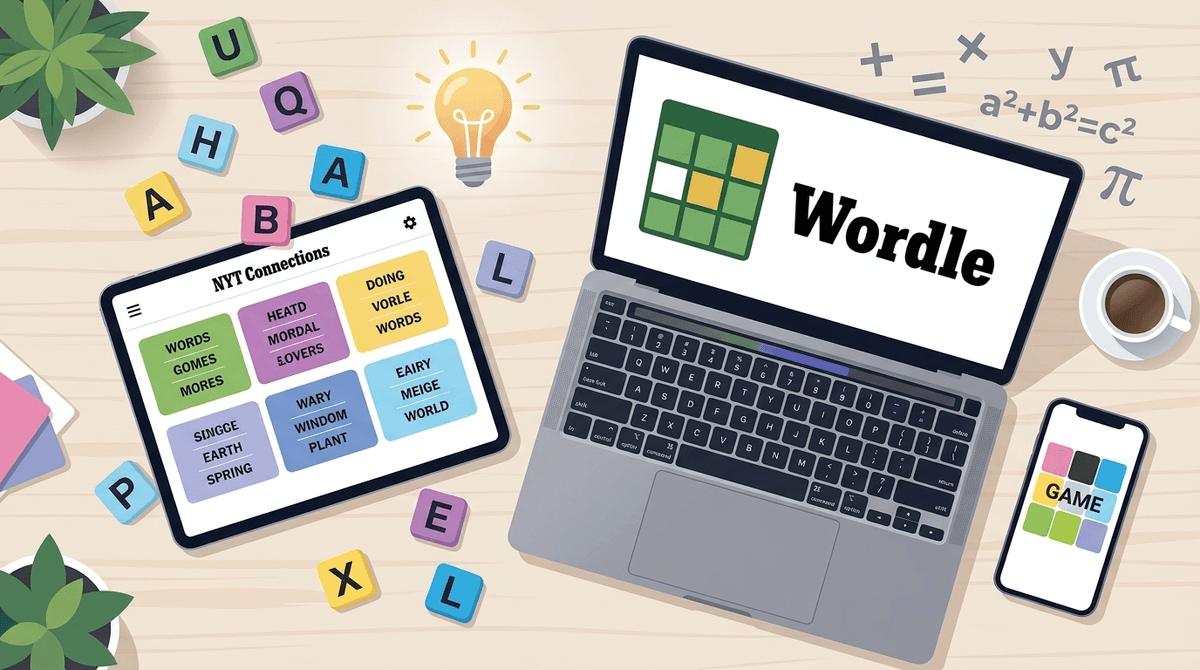
TL;DR: Wordle is the rare "green flag" in the digital world. It’s a five-minute daily brain teaser that builds vocabulary and logic without the predatory "addiction loops" found in most modern apps. Best for ages 8+, it's a perfect morning routine or "bus stop" game. If the OG version is too tough, check out Wordle for Kids for shorter words or SpellTower for a more arcade-style experience.
If you managed to miss the 2022 craze, Wordle is a simple word-guessing game owned by The New York Times. You have six tries to guess a secret five-letter word. After each guess, the tiles change color: green means the letter is in the right spot, yellow means the letter is in the word but the wrong spot, and gray means it’s not in the word at all.
It’s a "one-and-done" game. Once you solve the daily puzzle, you can’t play again until tomorrow. In a world of infinite-scroll "brain rot" on TikTok and the high-pressure social dynamics of Roblox, Wordle is a refreshing breath of intentionality.
In 2026, we are all fighting a losing battle against the "Ohio" of it all—that weird, chaotic energy of modern internet culture. Wordle is the opposite of that. It feels "smart" to kids. It’s a low-stakes way for them to flex their vocabulary and logic skills.
The real hook for kids isn't just the puzzle; it’s the streak. Seeing that number go up every day provides a sense of accomplishment that doesn't feel as hollow as leveling up a battle pass in Fortnite. Plus, the "share" feature—those little colored squares—allows them to participate in a social trend without needing a full-blown social media account.
If your kid is ready to move beyond "Skibidi" jokes and start actually using their brain, here are the best daily puzzles to check out:
The gold standard. It’s clean, it’s free (for now), and the vocabulary is generally sophisticated but accessible. Ages 9+ (The words can occasionally be obscure, like "TAPIR" or "CAULK").
This is a simplified version where the words are usually 3 to 4 letters long and the vocabulary is pulled from standard elementary school lists. It’s a great "on-ramp" for younger siblings who want to be like the big kids. Ages 6-8
Also from the NYT, this game asks you to find four groups of four items that share something in common. It’s less about spelling and more about lateral thinking and categories. It’s often much harder than Wordle because it uses wordplay and double meanings. Ages 10+
If your kid finds the "once a day" limit frustrating, SpellTower is an incredible alternative. It’s like Tetris meets a word search. It's visually beautiful and very satisfying to play. Ages 7+
For the kids who prefer numbers over letters. You have to guess a mathematical equation (e.g., 3 + 5 * 2 = 13). It follows the exact same logic as Wordle but uses "PEMDAS" instead of phonics. Ages 9+
While Wordle is technically "E for Everyone," there’s a developmental sweet spot.
- Grades K-2: They might find the OG Wordle frustrating. Stick to Wordle for Kids or physical board games like Zingo.
- Grades 3-5: This is the prime demographic. They have enough vocabulary to be competitive and enough logic to understand "process of elimination."
- Middle School & Up: They’ll likely want to compete with you. Setting up a family group chat where everyone posts their daily "squares" is a surprisingly wholesome way to stay connected.
In the grand scheme of the internet, Wordle is about as safe as it gets.
- No Chat: There is no way for strangers to contact your child through the game.
- No Microtransactions: You aren't going to find your kid accidentally spending $200 on "Wordle Coins."
- Privacy: Since it’s owned by the NYT, there is standard data tracking (cookies), but it’s not the predatory data-harvesting you see in free-to-play mobile apps.
- Content: The words are generally "G-rated." The NYT filters out offensive or highly controversial words from the solution list.
Check out our full safety review of the New York Times Games app
The biggest "risk" with Wordle isn't safety—it's the potential for a "meltdown" when a streak is lost. For some kids, especially those who struggle with perfectionism, losing a 50-day streak can feel like the end of the world.
Use this as a coaching moment. Talk about how "the game is the fun, not the number." If they get stuck, teach them about "starting words." (Pro-tip: "ADIEU" or "STARE" are the 2026 meta-favorites for a reason).
Instead of just letting them play in a silo, make it a conversation.
- "What was your starting word today?"
- "Did you get it in 3 or 4?"
- "I’ve never heard that word—let’s look up what it means."
It’s a rare bridge between their digital world and your "old school" vocabulary. It’s also a great way to introduce them to other high-quality websites like National Geographic Kids or Coolmath Games that offer value without the "brain rot" of the YouTube shorts algorithm.
Wordle is a "Yes" app. It’s one of the few pieces of media that actually delivers on the promise of "educational entertainment" without being boring or preachy. It encourages daily discipline, vocabulary growth, and logical deduction.
If you're looking for a way to transition your kid away from mindless scrolling and toward more intentional screen time, this is your best entry point.
- Bookmark it: Put the Wordle link on their tablet or laptop's home screen.
- Play together: For the first week, do the puzzle together at breakfast to show them the logic.
- Explore alternatives: If they love the logic but hate the words, try Nerdle.
- Set a boundary: Keep it as a "once a day" treat. Don't go hunting for "unlimited Wordle" clones—the beauty of the game is its scarcity.