

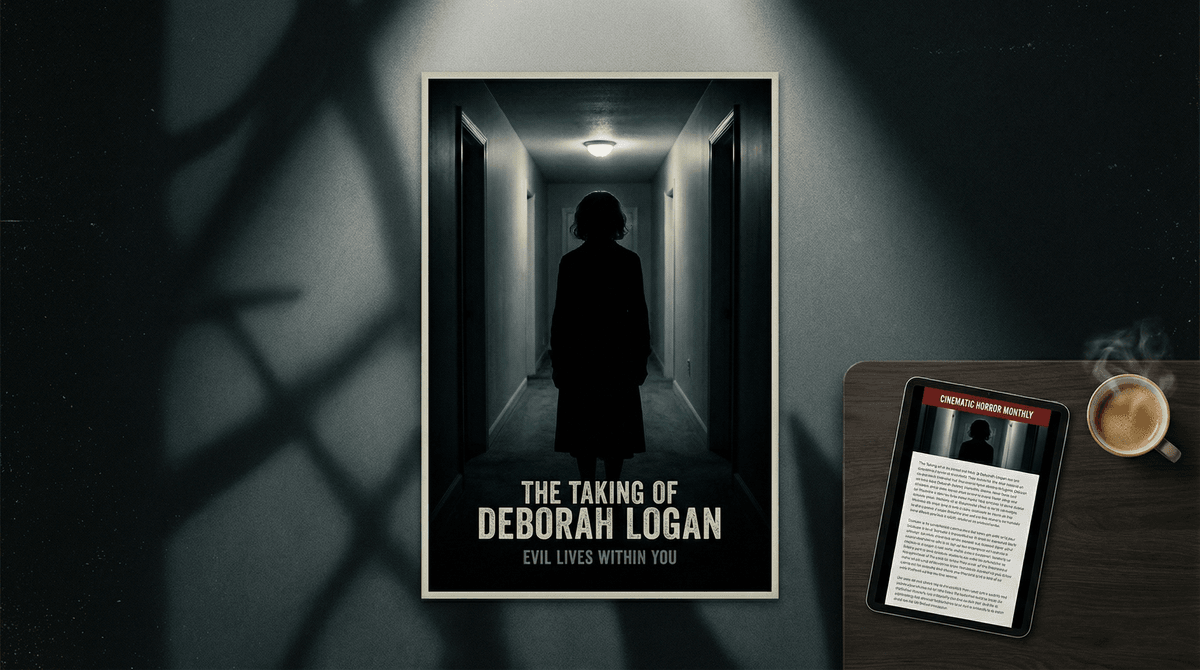
The Taking of Deborah Logan: Should Your Teen Watch This R-Rated Horror?
TL;DR: The Taking of Deborah Logan is a genuinely unsettling found-footage horror film that uses dementia as a vehicle for supernatural terror. It's well-crafted and legitimately scary, but the R rating is earned—this isn't for younger teens. If you've got a 16+ horror fan who can handle intense body horror and deeply disturbing imagery, this might be worth discussing. For everyone else, there are better horror options for teens.
Released in 2014, this found-footage film follows a documentary crew filming Deborah Logan, an elderly woman with Alzheimer's disease, and her daughter Sarah. What starts as a medical documentary quickly spirals into something far more sinister as Deborah's condition reveals itself to be more than just dementia.
The film sits in that sweet spot of found-footage horror where the format actually serves the story rather than just being a budget-saving gimmick. Think The Blair Witch Project meets a psychological thriller about aging and loss of control.
Here's what makes this film stand out from the sea of mediocre found-footage horror: it's genuinely scary because it starts from a place of real human fear. The first act isn't about jump scares or supernatural nonsense—it's about watching someone lose themselves to dementia, which is terrifying in its own right.
The film earns its scares by grounding them in something relatable. Many teens have grandparents dealing with aging-related illnesses, and this movie weaponizes that familiarity. When things go supernatural, the foundation of real-world dread makes everything hit harder.
Jill Larson's performance as Deborah is genuinely excellent—she moves from confused elderly woman to something deeply wrong in a way that feels earned rather than campy. For teens interested in filmmaking or acting, this is actually a masterclass in commitment to a difficult role.
Let's be clear: this movie earns its R rating multiple times over. Here's what you're dealing with:
Disturbing imagery: There's a scene involving a child that will stick with you (and not in a good way). Without spoiling it, let's just say the film goes to some genuinely dark places regarding violence toward minors—it's implied rather than shown, but it's still deeply unsettling.
Body horror: Deborah's physical transformation gets increasingly grotesque. We're talking dislocated jaws, contorted bodies, and some truly nightmare-inducing practical effects.
Psychological intensity: The slow burn of watching someone deteriorate—whether from illness or possession—is heavy. This isn't fun horror; it's dread-inducing horror.
Language and adult themes: Standard R-rated language throughout, plus themes of death, possession, and historical violence.
Ages 13-15: Hard pass. Even mature 15-year-olds are likely to find this more disturbing than entertaining. The combination of realistic dementia portrayal and supernatural horror creates a uniquely unsettling experience that younger teens aren't ready for.
Ages 16-17: Maybe, if they're genuine horror fans. If your teen has watched and handled films like Hereditary or The Conjuring, they can probably handle this. But if they're just getting into horror, start with something less intense.
Ages 18+: Green light for horror fans.
The key question: Has your teen had experience with family members dealing with dementia or Alzheimer's? If so, this movie might hit differently (and potentially harder) than other horror films. It's worth having that conversation before they watch.
There's been a lot of talk about "elevated horror" in recent years—films like Get Out, The Babadook, and It Follows that use horror to explore deeper themes. The Taking of Deborah Logan fits this category.
The film is fundamentally about:
- Loss of autonomy and identity
- The horror of watching loved ones change beyond recognition
- The burden of caregiving
- Historical violence and its echoes
For teens interested in filmmaking, this is actually a great example of how to make a low-budget horror film that doesn't feel cheap. The found-footage format serves the story, the performances are committed, and the scares are earned through atmosphere rather than just loud noises.
If your older teen does watch this, here are some discussion points that go beyond "was it scary?":
The documentary format: How does the film use the "making a documentary" premise? When does it start to break its own rules, and does that work?
Dementia representation: Is it ethical to use a real illness as the foundation for a horror movie? Does the film treat the subject with respect, or does it exploit it?
Found footage effectiveness: Why does found footage work for some horror stories and not others? What makes this more effective than, say, Paranormal Activity 4?
Practical vs. digital effects: The film relies heavily on practical makeup and effects. How does that impact the viewing experience compared to CGI-heavy horror?
If your teen wants to explore horror but isn't ready for The Taking of Deborah Logan's intensity, try these instead:
- A Quiet Place (PG-13): Tense and scary without being gratuitously disturbing
- The Sixth Sense (PG-13): Psychological horror with heart
- Coraline (PG): Genuinely creepy animated film that doesn't pull punches
- The Others (PG-13): Atmospheric ghost story with minimal gore
For more options, check out our guide to age-appropriate horror for different maturity levels.
One thing worth discussing with teens: why does found footage still work when we all know it's fake?
The Taking of Deborah Logan is a good case study because it commits fully to its premise. The cameras make sense (documentary crew), the characters' decisions to keep filming are mostly justified, and the escalation feels organic rather than forced.
Compare this to found-footage films where you're constantly asking "why are they still filming?" and you'll see why this one succeeds. For teens interested in filmmaking and storytelling, this is actually a valuable example of format serving content.
If your teen is getting into horror movies, understand that there's a huge difference between enjoying being scared in a controlled environment and being desensitized to violence. Horror fans aren't broken or disturbed—they're engaging with fear in a safe space.
That said, not all horror is created equal. There's a difference between suspenseful horror (The Conjuring), psychological horror (Get Out), and torture porn (Saw sequels). The Taking of Deborah Logan falls into the first two categories—it's scary and disturbing, but it's not gratuitous.
If you're concerned about your teen's horror consumption, here's how to talk about media violence in a way that doesn't shut down the conversation.
The Taking of Deborah Logan is a well-crafted horror film that absolutely earns its R rating. It's genuinely scary, thoughtfully made, and features committed performances—but it's also deeply disturbing in ways that go beyond standard horror fare.
For 16-17 year olds who are serious horror fans: This is worth watching, but have a conversation first about the themes and intensity. Make sure they understand this isn't fun horror—it's dread horror.
For younger teens: There are better entry points into horror that won't potentially traumatize them. Start with our guide to teen-appropriate horror and work up to this.
For parents: If you're watching with your older teen, be prepared for some genuinely uncomfortable moments. This isn't background viewing—it demands attention and might spark some heavy conversations about aging, autonomy, and family responsibility.
The film is a found-footage masterpiece because it understands that the scariest monsters are the ones that could be real—at least until they very definitely aren't. Whether that makes it appropriate for your teen depends entirely on their maturity level, their experience with horror, and their ability to process disturbing content.
When in doubt, watch it yourself first. At 90 minutes, it's not a huge time investment, and you'll know immediately whether your teen can handle it.