

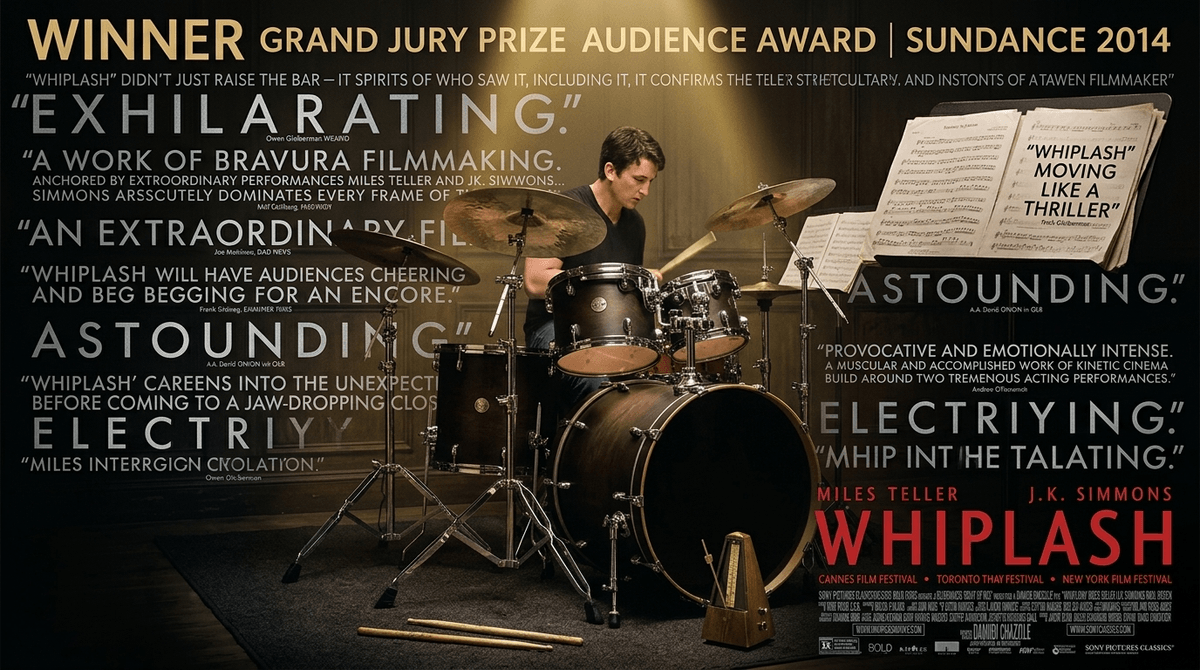
Whiplash is rated R, and it earns every bit of that rating through a relentless barrage of high-intensity verbal abuse, weaponized homophobic slurs, and a depiction of "mentorship" that looks a lot more like a psychological war zone than a music lesson.
TL;DR: Whiplash is rated R primarily for pervasive "f-bombs" and targeted derogatory language used to break a student's spirit. While it lacks nudity or drug use, the film’s intense psychological trauma and depiction of toxic perfectionism make it most appropriate for mature teens (ages 15+) who can handle the emotional weight of a "mentor" using slurs and physical intimidation as teaching tools. Screenwise recommends this as a phenomenal film for older teens to watch with parents to spark a conversation about the difference between being pushed to excel and being abused.
If you’re expecting a feel-good movie about a kid learning to play the drums, you’re in for a massive shock. Directed by Damien Chazelle (who also did La La Land), Whiplash is a 2014 psychological thriller disguised as a jazz drama. It follows Andrew Neiman, a first-year jazz drumming student at the prestigious Shaffer Conservatory, and his instructor, Terence Fletcher.
Fletcher isn't just a tough teacher; he’s a monster who uses fear, humiliation, and physical violence to "find the next Charlie Parker." The movie is a high-octane, sweat-soaked descent into what happens when the pursuit of greatness crosses the line into total self-destruction. It’s one of the best movies of the last 15 years, but it’s definitely not a "family movie night" pick for the elementary school crowd.
When parents see an R rating, they usually look for "the big three": sex, drugs, or gore. Whiplash has almost none of those. There is zero nudity, no sex scenes, and no one is doing drugs.
The R rating comes almost entirely from the language. We aren't just talking about a few stray "f-bombs." According to our analysis, the word "f*ck" and its derivatives are used over 80 times. But it’s not just the quantity; it’s the quality of the vitriol. Fletcher uses language as a scalpel. He intentionally uses homophobic slurs, sexist insults, and personal attacks about a student's family or financial status to get a reaction.
For a parent, the most jarring part isn't the swearing itself—it’s the cruelty behind it. Fletcher calls students "faggots," "retards," and "worthless" with a level of venom that can be genuinely upsetting to watch.

Beyond the language, Whiplash is physically and emotionally exhausting.
- Physical Toll: There is a lot of blood. Andrew drums until his hands blister and bleed, eventually soaking his drum kit and dipping his hand into a pitcher of ice water that turns red. It’s a visceral depiction of physical self-harm in the name of art.
- Violence: Fletcher throws a chair at Andrew’s head in an early scene. There is also a significant car accident involving Andrew that results in him crawling out of a wreckage, covered in blood, and trying to perform on stage anyway.
- Toxic Perfectionism: This is the "brain rot" of the elite academic world. The movie explores the idea that being "great" justifies treating people like garbage. For younger kids who are still developing their sense of self-worth, this message can be confusing if not discussed in context.
At Screenwise, we talk a lot about "intentional consumption." We don't think you should ban Whiplash just because it's rated R. In fact, for a high schooler dealing with the pressures of sports, AP classes, or competitive arts, this movie is a vital watch.
It's a "horror movie for high achievers." It shows the logical conclusion of the "win at all costs" mentality. If your teen is a musician or an athlete, they will likely find it riveting. The key is making sure they understand that Fletcher is the villain, even if the movie’s ending is famously ambiguous about whether his methods "worked."
Better Alternatives for Younger Kids
If your kid is under 14 and wants a "music movie," there are better ways to go that don't involve J.K. Simmons screaming slurs:
- Soul: A beautiful, deep look at the "spark" of life and jazz without the trauma.
- Sing Street: A fantastic, feel-good movie about kids starting a band in 1980s Dublin.
- School of Rock: The classic "cool teacher" movie that is actually about the joy of music.
If you decide to watch Whiplash with your teen, don't just turn the TV off when the credits roll. This movie is built for a post-game breakdown.
- The "Good Job" Debate: Fletcher says the two most harmful words in the English language are "good job." Do you agree? Does praise make people lazy, or does it give them the confidence to keep going?
- The Cost of Greatness: Andrew gives up his girlfriend, his relationship with his dad, and his mental health to be "one of the greats." Was it worth it?
- Defining Abuse: Where is the line between a coach or teacher "pushing you" and a teacher being abusive? How would you react if a teacher spoke to you the way Fletcher speaks to his students?
Q: Is Whiplash okay for a 12-year-old?
Generally, no. While a particularly mature 12-year-old might handle the plot, the sheer volume of homophobic slurs and the intensity of the verbal abuse are usually too much for middle schoolers. Screenwise recommends waiting until at least age 14 or 15.
Q: Why is Whiplash rated R if there's no sex or drugs?
The MPAA gave it an R rating for "strong pervasive language." This includes over 80 uses of the f-word and several derogatory slurs. The rating also reflects the film's intense psychological tone and "thematic elements" involving abuse.
Q: Is there any nudity in Whiplash?
No, there is absolutely no nudity or sexual content in Whiplash. The focus remains entirely on the relationship between the drummer and his teacher and the music they create.
Q: Does Whiplash show self-harm?
It depicts a form of "occupational" self-harm. The protagonist drums until his hands are raw and bleeding, and he continues to play through the pain. There is also a scene where he is in a serious car accident and attempts to perform while severely injured.
Whiplash is a masterpiece, but it’s a "hard" R. It’s not a movie you put on in the background; it’s a movie that demands your full attention and a long conversation afterward. If your teen is ready for a deep dive into the darker side of ambition—and you’re ready to hear a lot of swearing—it’s an essential watch. If you’re looking for something to inspire a young musician without giving them nightmares about jazz band, stick with Soul for now.