

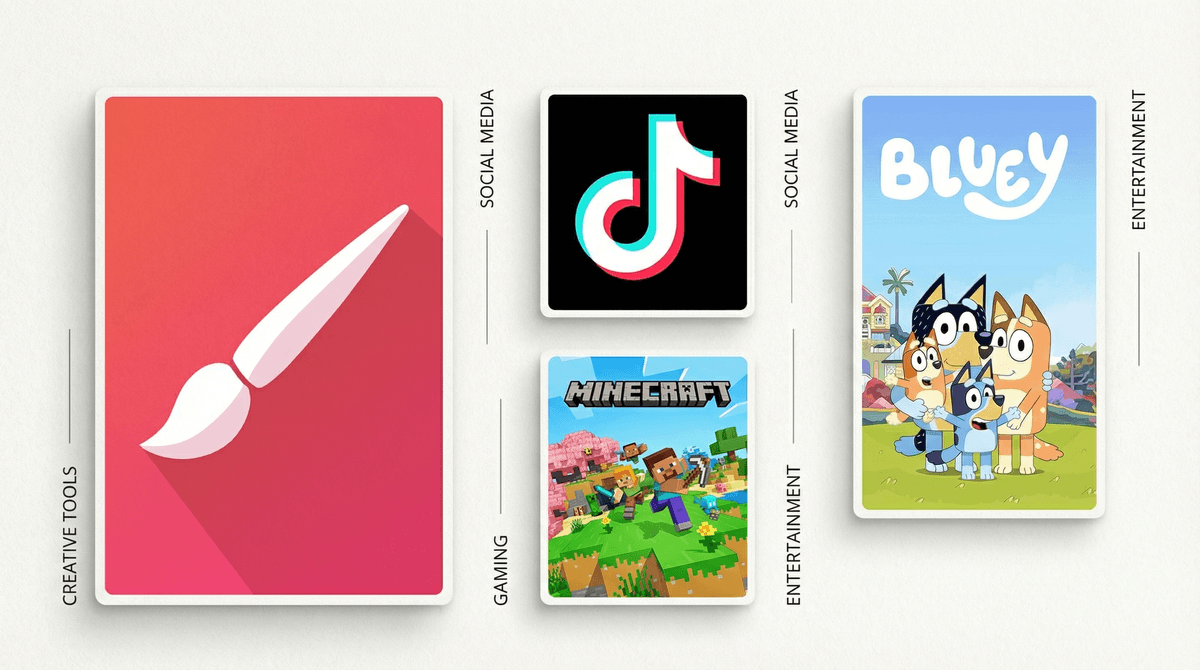
Let's just say it: the "screen time" conversation is basically broken. We're still talking about screens like it's 2010, when the biggest worry was whether your kid watched too much SpongeBob. But watching a nature documentary, doomscrolling TikTok, video chatting with grandma, and playing Fortnite with friends are wildly different experiences that happen to occur on the same rectangle.
The good news? Research has actually caught up, and we now know that not all screen time is created equal. The bad news? It's more nuanced than a simple time limit, which means we actually have to think about it.
The American Academy of Pediatrics shifted their guidance a few years ago to focus less on raw minutes and more on the quality and context of screen use. Here's the framework that actually makes sense:
1. Passive Consumption
This is the classic "zombie scroll" — watching random YouTube videos, scrolling TikTok or Instagram feeds, binge-watching shows without much thought or discussion. It's not inherently evil, but it's also not doing much for development. Think of it like digital junk food: fine in moderation, problematic as the main diet.
Examples: Random YouTube rabbit holes, endless TikTok scrolling, background TV that nobody's really watching
2. Interactive Content
This is where the screen responds to your kid's input in meaningful ways. Video games that require problem-solving, educational apps that adapt to skill level, coding platforms, even Duolingo where they're actively engaged and getting feedback.
Examples: Minecraft (especially creative mode), Khan Academy, Scratch for coding, puzzle games like Monument Valley
Research shows this type of engagement can actually build cognitive skills, especially when it involves strategy, creativity, or learning.
3. Communication and Connection
Video calls with family, playing online games with real-life friends, collaborative projects, group chats about shared interests. This is screen time that strengthens real relationships, not replaces them.
Examples: FaceTime with grandparents, playing Roblox with school friends, family movie nights where you're watching together and talking about it
Here's the thing about multiplayer games: if your kid is playing Among Us with their actual friends from school, that's fundamentally different than playing with random strangers. The social connection matters.
4. Content Creation
Making things, not just consuming them. Videos, digital art, music production, writing, coding, even building elaborate worlds in Minecraft. This is where screens become tools for creativity and self-expression.
Examples: Making videos, GarageBand, digital drawing apps like Procreate, writing stories, building in Roblox Studio
Instead of saying "two hours max" and calling it a day, you can actually look at what those two hours contain. An hour of your 10-year-old coding a game in Scratch, then 30 minutes of FaceTime with their cousin, then 30 minutes of YouTube? That's a pretty different day than two hours of random TikTok.
The research backs this up: studies show that interactive and creative screen time can support learning and development, while passive consumption (especially of fast-paced, attention-fragmenting content) is associated with attention problems, sleep issues, and displacement of other important activities.
Ages 2-5: At this age, co-viewing is everything. Even "educational" content like Bluey (which is genuinely great) is better when you watch together and talk about it. Interactive apps should be truly interactive, not just "tap anywhere to see colors." Passive watching should be minimal.
Ages 6-9: This is when interactive content can really shine. Games that require reading, problem-solving, and creativity. They can start creating simple content (drawing, basic videos). Communication should still be with known family/friends only. Passive consumption should be intentional (watching a specific show, not endless autoplay).
Ages 10-12: More independence, but with guardrails. They can handle more complex creative tools, collaborative online experiences with friends, and some self-directed learning. This is when you start having conversations about algorithmic feeds and how they work , because they're probably encountering them.
Ages 13+: The focus shifts to teaching digital citizenship and self-regulation. They need to understand how passive scrolling affects their mood and time, how to recognize when gaming is social vs. escapist, and how to balance creation with consumption.
Here's what actually matters more than the timer on your kid's iPad:
Displacement is the real issue. If screens are replacing sleep, physical activity, face-to-face social time, or homework, that's a problem regardless of whether it's "good" or "bad" screen time. A kid who codes for 4 hours but never goes outside still has a problem.
Context matters more than content sometimes. Watching Avatar: The Last Airbender alone in their room is different than watching it as a family and discussing the themes. Playing Mario Kart with siblings is different than playing alone.
The transition matters. How hard is it to get your kid off screens? If they can't stop without a meltdown, that's data. It might mean the content is too stimulating, the duration is too long, or they're using screens to avoid something else.
Your presence changes everything. Even passive content becomes more valuable when you're engaged. Watching YouTube together and talking about what you're seeing turns consumption into conversation.
Stop counting minutes like they're all equal. Start asking:
- Is this passive, interactive, social, or creative?
- Is it displacing something important?
- Can they stop when asked?
- Are they learning, connecting, or creating something?
A day with 30 minutes of Duolingo, 45 minutes of Minecraft with friends, and 30 minutes of family movie night is not the same as two hours of TikTok, even though they're both "screen time."
The goal isn't to eliminate screens or feel guilty about every minute. It's to be intentional about what those minutes contain and whether they're serving your kid's development and wellbeing.
Want to dig deeper into your family's specific screen habits? Screenwise can help you understand not just how much time your kids are spending on screens, but what kind of screen time it is and how it compares to their peers. Because "good" screen time isn't about perfection — it's about making choices that actually fit your family's values and your kid's needs.