

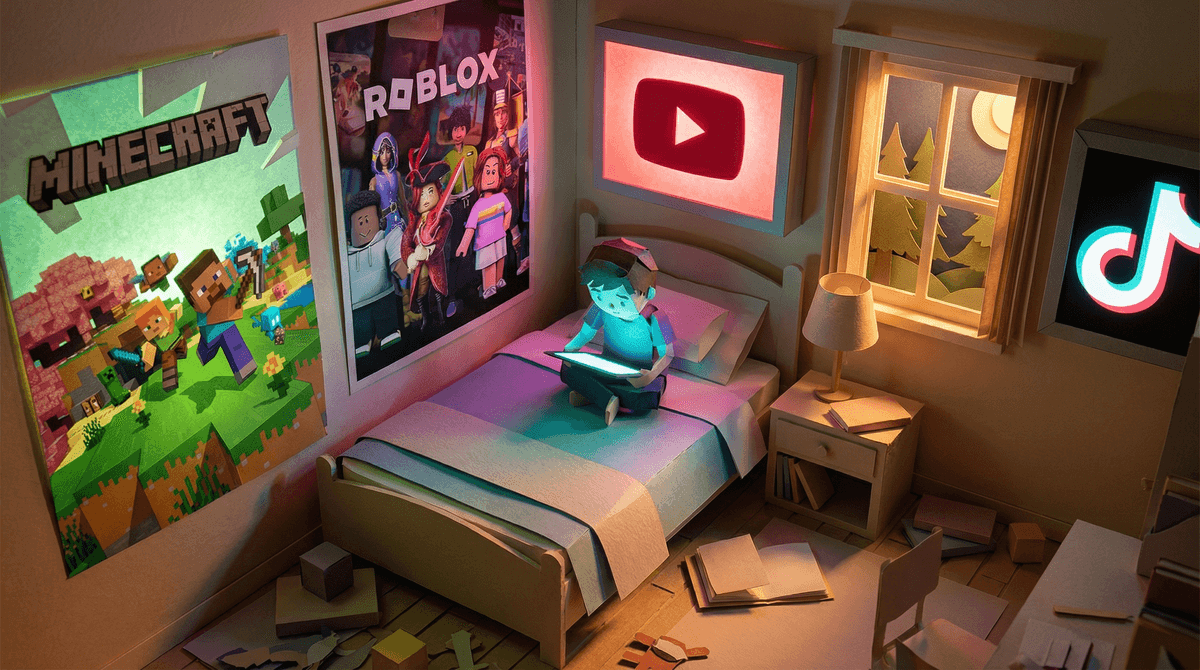
You know the moment. Your kid wakes up and immediately asks for the iPad. Breakfast? iPad. Car ride? iPad. You suggest going outside and they look at you like you've suggested eating dirt. Every conversation, every transition, every moment of potential boredom becomes a negotiation about screen time.
This isn't about a kid who enjoys screens (that's basically all kids). This is about when screens become the only thing that lights them up. When the Minecraft world feels more real than the actual world. When YouTube creators are more compelling than actual humans. When the idea of doing anything without a device triggers genuine distress.
And here's the thing—it's not your imagination, and you're not overreacting. When a kid's entire reward system gets recalibrated around digital stimulation, it's a real pattern that needs addressing. Not with shame or panic, but with intention.
Let's be clear: apps and games are designed by some of the smartest people on the planet to be as engaging as possible. We're not talking about evil corporations necessarily (though some practices are genuinely predatory), but we are talking about products engineered to capture and hold attention. Your kid's developing brain is up against recommendation algorithms, variable reward schedules, and social feedback loops that adults struggle to resist.
Add in a few factors:
- Pandemic habits that never got reset - Many families went survival mode in 2020-2021, and those emergency screen allowances became the new normal
- Peer culture - When everyone at school is talking about Roblox or watching the same YouTube creators, FOMO is real
- Legitimate dopamine hits - Screens provide instant gratification in a way that building a Lego set or reading a book simply doesn't match
- Easier for everyone - Let's be honest, screens keep kids occupied while we make dinner, answer emails, or just need a break
None of this makes you a bad parent. But it does mean that breaking the pattern requires actual strategy, not just willpower.
You've seen it—that specific look when they're deep in screen mode. Eyes unfocused, mouth slightly open, completely unresponsive to their name being called. Some parents call it "the glaze." Others call it "zombie mode."
What's happening neurologically is that their brain is in a state of passive consumption or hyper-focus that crowds out everything else. The longer they stay in this state, the harder it becomes for other activities to compete. The Minecraft village they're building triggers genuine creative satisfaction. The YouTube video provides social connection and entertainment. Fortnite gives them achievement and status with friends.
Real life can't compete with that unless we actively make it competitive.
The nuclear option—cold turkey screen removal—sometimes works, but often it just creates a different problem. You get massive pushback, sneaking, lying, and a kid who's physically present but mentally checked out, just waiting for screens to return.
Instead of deprivation, think about recalibration. You're not trying to eliminate screens (that's not realistic in 2026). You're trying to restore balance so that screens are one good thing among many good things, not the only source of joy and stimulation.
1. Start with honest observation, not judgment
Track what's actually happening for 3-4 days. When do they use screens? For how long? What are they doing? What happens when you suggest stopping? You need data before you can make a plan. Screenwise can help you understand your family's patterns in context.
2. Create structure, not restrictions
Instead of "no screens until I say so," try "screens are available from 4-5:30pm on weekdays." Kids do better with predictability. When they know screens are coming, the constant negotiation decreases. This isn't about being rigid—you can make exceptions—but having a baseline helps everyone.
3. Make the transition less painful
The moment right after screens end is the worst. Plan for it. Have a snack ready. Go outside immediately. Start a project together. The goal is to get through those first 5-10 minutes of "there's nothing to dooooo" without caving.
4. Compete with quality, not quantity
You can't beat YouTube with a boring board game. But you might beat it with Codenames, a family bike ride to get ice cream, or letting them help cook dinner in a genuinely collaborative way (not just "stir this"). Find the things that actually engage your specific kid.
5. Address the social piece
If all their friends are playing Roblox together after school, completely removing it creates real social isolation. Instead, maybe Roblox becomes a scheduled thing—Friday evenings, they can play with friends for 90 minutes. You're not eliminating their social life, you're containing it.
6. Boredom is not an emergency
This is hard, but critical: let them be bored. Boredom is where creativity lives. The first few times will be rough. They'll complain. They'll follow you around. They'll claim they're dying. But if you can hold the boundary, something interesting usually happens. They pull out old toys. They start building something. They read. They create.
7. Model different behavior
If you're on your phone constantly, the "screens are bad" message rings hollow. This doesn't mean you need to be perfect, but it does mean being intentional about your own habits. Put your phone away during dinner. Read a physical book where they can see you. Show them that adults also choose non-screen activities.
Ages 5-8: This age responds well to visual timers and clear routines. Use a Time Timer or similar tool so they can see time passing. Offer lots of sensory alternatives—play dough, building toys, outdoor play. Their brains are still pretty flexible.
Ages 9-12: They're old enough to be part of the solution. Have an actual conversation about what they've noticed about their screen use. What do they like about it? What do they miss doing? Can you problem-solve together? This age often responds to earning screen time through other activities—not as punishment, but as a way to ensure balance.
Ages 13+: Teens need autonomy and respect. Lecturing won't work. But you can still set household norms ("phones don't live in bedrooms overnight") and have genuine conversations about what they're noticing about their own habits. Many teens actually feel relieved when parents help them create structure they can't create for themselves.
Yeah, this is the tricky one. Is Minecraft educational? Is watching science videos on YouTube learning? Is coding on Scratch different from scrolling TikTok?
The honest answer: kind of, but also not really when it's compulsive. Yes, some screen time has more value than other screen time. But when a kid only wants screens—even educational ones—you're still dealing with a balance issue. A kid who only wants to read about sharks and refuses to do anything else also has a balance problem, even though reading is "good."
The goal isn't to rank screen activities by educational value. It's to help your kid develop a varied life where they have multiple sources of engagement, learning, and joy.
Normal kid stuff that needs adjustment:
- Asking for screens constantly
- Preferring screens to most other activities
- Grumpy when screens end but recovers within 10-15 minutes
- Still engages with family, school, and friends (even if they'd rather be gaming)
Potential red flags worth discussing with a professional:
- Complete withdrawal from all non-screen activities
- Significant sleep disruption due to screens
- Lying, sneaking, or stealing to get screen access
- Violent or extreme emotional outbursts when screens are removed
- Declining school performance or social isolation
- Signs of gaming addiction or compulsive use

Breaking the "only screens" pattern isn't about one dramatic intervention. It's about consistent, small shifts that help your kid remember that the real world is also pretty great. It's about creating space for boredom, providing compelling alternatives, and setting boundaries with love instead of shame.
You're not trying to raise a kid who never wants screens. You're trying to raise a kid who can enjoy screens without screens being their entire personality and source of happiness.
Some weeks you'll nail it. Other weeks you'll cave because you're exhausted and just need them occupied. That's real life. What matters is the overall trajectory—are things moving toward more balance, or further into the digital loop?
- Observe without changing anything for a few days. Get real data about what's happening.
- Pick one small change to start with. Maybe it's no screens until after breakfast. Maybe it's a device-free hour before bed. One thing.
- Plan for the transition moments. Have alternatives ready. Expect pushback. Hold the boundary anyway.
- Check in after two weeks. Is it helping? Does the plan need adjustment? Are you seeing any green shoots of non-screen engagement?
If you want to understand how your family's screen patterns compare to others in your community, take the Screenwise survey—it helps put your situation in context and gives you personalized guidance.
And remember: you're not alone in this. Every parent with a screen-loving kid is navigating the same tension between connection and control, between modern reality and our instincts about what childhood should include. You're doing better than you think.