

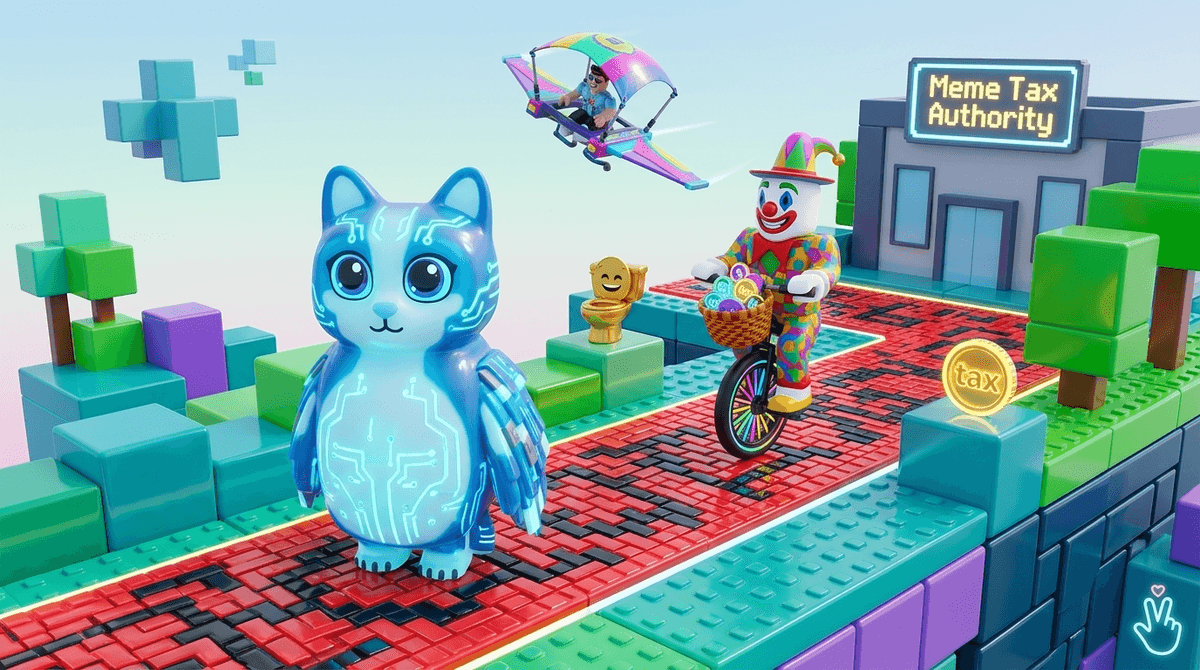
Steal a Brainrot: The Parent's Guide to Roblox's Viral Meme Game
TL;DR: "Steal a Brainrot" is a wildly popular Roblox game where kids raid bases, collect bizarre meme characters (think Skibidi Toilet, Grimace Shake), and engage in what they call "brainrot" culture. It's essentially a collection/raid game wrapped in Gen Alpha's surreal internet humor. About 60% of kids in our Screenwise community who use Roblox are playing on public servers where they can interact with strangers, so understanding what they're actually doing in there matters.
[Steal a Brainrot](https://screenwiseapp.com/media/steal-a-brainrot-app is a Roblox experience that's blown up in early 2026, racking up millions of plays. The premise is deceptively simple: players build and defend bases while raiding other players' bases to "steal" their collection of meme characters called "brainrots."
These aren't your standard game characters. We're talking about a collection of internet culture's most absurd creations:
- Skibidi Toilet (the singing toilet head phenomenon)
- Grimace Shake (the purple McDonald's mascot meme)
- Ohio references (because apparently Ohio = weird in Gen Alpha speak)
- Fanum Tax (a meme about stealing food)
- Various other TikTok and YouTube Shorts-born characters that make absolutely zero sense if you're over 25
The game loop is addictive: collect rare brainrots, upgrade your base defenses, form alliances (or betray them), and raid other players for their collections. Think of it as Pokémon meets home invasion, wrapped in a layer of internet chaos that would make any millennial's head spin.
The appeal is multilayered, and it's worth understanding what's actually drawing your kid in:
The Collection Hook: Like any good collection game, there are common, rare, and legendary brainrots. Kids are hunting for that ultra-rare character that only 0.01% of players have. This is the same psychological mechanism that makes Pokémon and trading card games so compelling.
Social Status: Having rare brainrots = bragging rights. Your kid isn't just playing a game; they're building social capital with their friends. "Did you get the Golden Skibidi yet?" is the playground currency right now.
The Meme Fluency: For Gen Alpha, these characters aren't random—they're a shared cultural language. When your kid talks about "stealing brainrot," they're participating in their generation's humor ecosystem. It's absurdist, self-aware, and intentionally nonsensical. (Yes, calling it "brainrot" is part of the joke—they know it's ridiculous content, and that's the point.)
The Raid Mechanics: There's genuine strategy involved. Kids are learning base design, resource management, and timing their attacks. Some are forming teams and coordinating raids like tiny military operations.
Let's address the elephant in the room: the term "brainrot" itself. Kids use this to describe low-quality, addictive, often surreal internet content—think rapid-fire TikToks, nonsensical YouTube Shorts, and meme compilations. They're not wrong that it's mindless content, but here's the twist: they're in on the joke.
Gen Alpha has a deeply ironic relationship with their media. They consume "brainrot" content while simultaneously mocking it and themselves for consuming it. The game "Steal a Brainrot" is essentially a celebration of this self-aware absurdism.
Should you be concerned? Maybe. The real issue isn't the memes themselves—it's the attention fragmentation these rapid-fire content formats create. Our Screenwise data shows kids are averaging 4.2 hours of screen time daily, and a significant chunk of that is short-form video content that trains brains for constant stimulation.
Roblox's Social Features: The bigger concern isn't the game itself—it's that 60% of kids in our community data are playing on public Roblox servers where they can chat with strangers. "Steal a Brainrot" includes chat features and the ability to join random players' bases.
Time Sink Potential: The collection mechanics are designed to keep players coming back. "Just one more raid" turns into three hours. With 55% of kids in our community actively gaming, setting clear boundaries matters.
Robux Pressure: While the base game is free, there are inevitably shortcuts and premium items available for Robux (Roblox's currency). If your kid is asking for Robux to get rare brainrots faster, you're not alone dealing with in-app purchase requests .
.
The Content Pipeline: Kids playing "Steal a Brainrot" are likely also consuming the source material—Skibidi Toilet videos, weird TikTok trends, etc. Some of this is harmless absurdist humor, but the algorithmic rabbit holes can lead to increasingly inappropriate content.
Under 8: Probably skip this one. The meme references won't make sense, and the social/raid mechanics are too complex. If they're in Roblox at all at this age, stick to single-player or parent-supervised experiences.
Ages 8-10: This is the target demographic. If you're allowing Roblox, "Steal a Brainrot" isn't notably worse than other popular experiences. Critical: Set up Roblox parental controls to restrict chat to friends-only and disable public server joining.
Ages 11-13: They're likely already playing or have friends who are. The game itself is relatively harmless—the real conversations should be about time limits, online interactions, and the difference between ironic meme consumption and actual brainrot.
14+: At this point, the game might actually be beneath their interest level, though some teens play ironically. Your focus should be on broader digital wellness patterns rather than specific games.
If you're greenlight "Steal a Brainrot" (or already discovering your kid plays it), here's your action plan:
-
Lock Down Chat Settings: Roblox settings → Privacy → Contact Settings → Set to "Friends" or "No one." This prevents random players from messaging your kid.
-
Disable Public Servers: In Privacy settings, you can restrict who can invite them to private servers. Consider friends-only.
-
Set Time Limits: Use Roblox's built-in time limits or your device's parental controls. Two hours is a reasonable max for a weekend day; 45-60 minutes on school nights.
-
Co-Play Initially: Sit with your kid for a session. Ask them to explain the game, show you their collection, walk you through a raid. You'll learn the mechanics and open dialogue.
-
Check Their Friend List: Periodically review who they're playing with. If you see usernames you don't recognize, ask about them.
Instead of lecturing about "brainrot" (which will just make them defensive), try this approach:
"I noticed you're really into Steal a Brainrot. Can you show me your collection and explain what makes certain characters rare?"
This opens dialogue without judgment. Then you can naturally transition to:
"I get why this stuff is funny—it's supposed to be ridiculous. But I'm curious: when you watch a lot of these short videos, do you ever feel like your brain gets kind of scattered?"
Many kids will actually admit that yes, after an hour of TikTok or YouTube Shorts, they feel unfocused. This creates space for them to self-reflect rather than you imposing rules.
For the Robux conversation: "I'm okay with you playing, but I'm not buying Robux for faster progress. Part of the game is the challenge of collecting without shortcuts. If you want Robux, let's talk about earning it through [chores/allowance system]."
If "Steal a Brainrot" feels like too much meme chaos for your family, here are collection-based games with less social complexity:
- Pokémon (the original collection obsession, available on Nintendo Switch)
- Stardew Valley (peaceful farming with collection elements, no strangers)
- Terraria (exploration and collection without the social pressure)
- Minecraft in single-player or family server mode (creative collection without public servers)
For kids specifically drawn to the base-building/raid mechanics, Clash of Clans has similar gameplay but with better age-gating and parental controls.
"Steal a Brainrot" is the latest example of Gen Alpha taking internet culture and gamifying it. The game itself isn't particularly harmful—it's strategic, social, and honestly pretty creative in how it packages meme culture into gameplay.
Your real concerns should be:
- Who your kid is interacting with in public servers (solvable with settings)
- How much time they're spending in collection-loop games (solvable with limits)
- Whether this is part of a broader pattern of attention-fragmenting content consumption (requires bigger conversations)
The term "brainrot" is actually a useful entry point for discussions about media literacy. Kids are already somewhat aware that constant meme consumption isn't great for them—they literally named it "brainrot." Use that self-awareness as your starting point.
About 25% of families in our Screenwise community have chosen not to use Roblox at all, 15% keep kids in offline/private modes only, and 60% allow public server access with varying levels of supervision. There's no single "right" answer—it depends on your kid's maturity, your family's values, and your bandwidth for active monitoring.
- Set up Roblox parental controls if you haven't already
- Read our full guide to Roblox safety for comprehensive platform understanding
- Explore alternatives to Roblox if you're looking for different gaming options
- See if Steal a Brainrot is appropriate for your kid about your family's situation
The internet is weird, Gen Alpha's humor is weirder, and yes, your kid is collecting meme characters in a video game. Welcome to 2026 parenting. You've got this.